She Blows! And Sparm at That!
William John Hopkins
THE CLASSIC COLLECTION · 1906
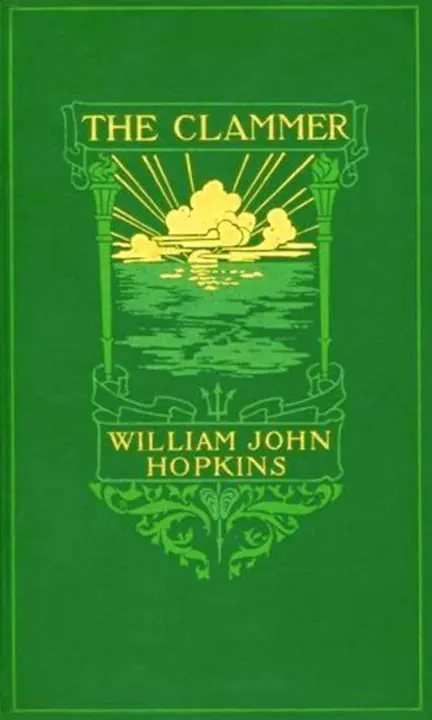
"The Clammer" by William John Hopkins is a novel written in the early 20th century. The story introduces us to Thomas, a passionate clam digger, who finds joy and solace in the simple act of clamming, a pursuit that others view as peculiar. The plot thickens with the arrival of Eve, the governess to a wealthy family, who unexpectedly crosses paths with Thomas, setting off a series of interactions that explore themes of class disparity, simplicity versus opulence, and the nature of true fulfillment. The opening of the novel establishes Thomas as a somewhat eccentric character, content with his solitary life and disdainful of the luxuries enjoyed by his wealthy neighbor, Goodwin. As Thomas engages in his beloved pastime, he encounters Eve, leading to a charming dialogue filled with playful banter and deeper questions about life and purpose. The initial connection between them hints at budding romance but also highlights their contrasting lives – the simplicity of a clammer versus the expectations placed upon a governess for the wealthy. As the story unfolds, the significance of this relationship becomes a central theme, examining the beauty of genuine human connection undeterred by societal status.
Introduction adapted from the source catalogue; source summaries may be automatically generated.
Free to read · English · 34,254 words · No account needed
MAKE TIME FOR A GOOD BOOK
On by default. Untick to stop anonymous reading totals. Each page counts after 10 seconds in view. How this works.
Anonymous counting is on unless you have switched it off.
“When we dig for clams at dawn.”
“And when will that day be?”
“In more than one week, and less than two.”
“And why not any day, Adam,--when I will?”
“The tide, Eve. Even a woman must wait for the tide. See, it has made
us late to-night.”
“Come, fisherman,” she said, “let us dig quickly, or it will be too
late.”
So I drew the boots from my basket, and she took them.
“Fisherman,” she said, “these are new. Where did you get them?”
“I had them,” I replied; which was true. I had had them since the
morning.
She sat behind a tree and put them on, and I heard her laughing to
herself. Then she came forth.
“They are too large,” she said, “but it does not matter.”
I might have known it. But what know I of women’s boots?
“My stock is small,” I answered. “I had no other size.” And that was
true, too.
So I showed her how to dig, and when her hoe broke through a shell, she almost wept. But she dug six.
“I am tired,” she said then. “I will dig no more to-night. Does your back get tired, too?”
“Not now,” said I, “but it did at first.”
Then she sat behind the tree and changed the boots, and we hung them in the tree against another time. And then we sat upon the bank, for the colors had not faded. And Eve sat silent, gazing at the water and the western sky; and I sat silent and gazed up at her.
“Eve,” said I.
She turned and looked at me, but did not speak.
“I think many things,” I said, “and some of them I would say.”
“No,” she answered, “do not say them. Watch the sky and the water while the colors last. See, it is almost dark.”
“The water and the sky are from everlasting to everlasting, Eve, so far as I am concerned. But you--no, I must make the most of what I have.”
“Fisherman,” she said, “you must not speak so to me.”
“And why not, governess? Does it displease you? May a fisherman not say his say to a governess? If I were a--what must I be, to rank with a governess? Would my speech offend you then?”
“Adam,” she answered, “I came here to dig for clams.”
“Truly,” said I, “we did, and to see the sun go down.”
“And the sun is gone, and the clams are digged, and I must go.”
“Eve,” I observed, “you are a logician.”
“I am not,” she replied. “I am a woman.”
“Heaven be praised for that!” I cried. “A perfect work!”
Your reading position is saved on this browser. Take it to another device with a library code. Reading pages adapt to text, rather than matching a printed edition.
William John Hopkins
William John Hopkins
William John Hopkins
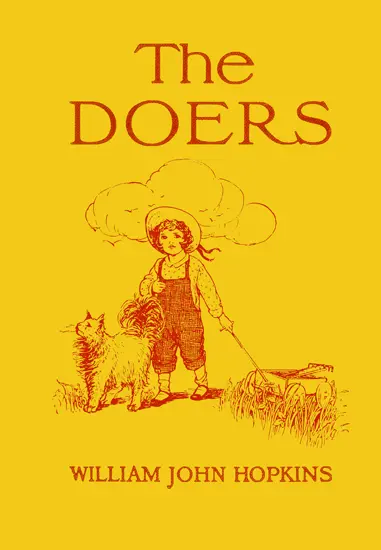
William John Hopkins
BEHIND THE BOOK
This eBook is for the use of anyone anywhere in the United States and most other parts of the world at no cost and with almost no restrictions whatsoever. You may copy it, give it away or re-use it under the terms of the Project Gutenberg License included with this eBook or online at www.gutenberg.org. If you are not located in the United States, you will have to check the laws of the country where you are located before using this eBook. Read the source licence.
The original source file, including credits and licence, is retained by this library. Request an original-format copy at no charge. Please include the book title and Project Gutenberg identifier #70399.
KEEP YOUR CURIOSITY GOING
Coulson Kernahan

Maurice Baring
Frances Wright
Cécile Tormay

Frederic Jesup Stimson

W. H. P. (William Henry Pope) Jarvis