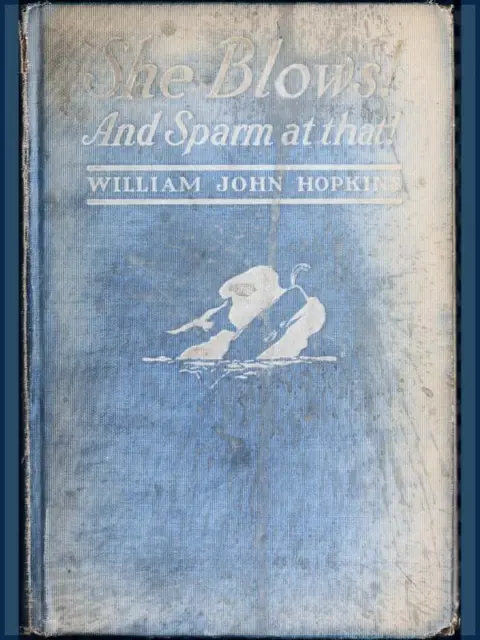
She Blows! And Sparm at That!
William John Hopkins
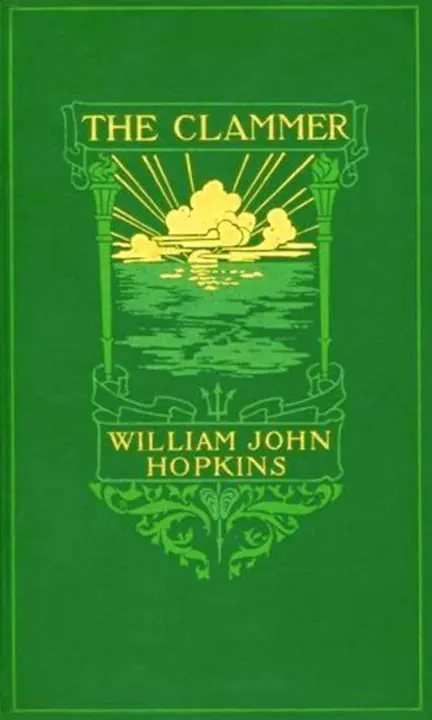
THE CLASSIC COLLECTION · 1906
"The Clammer" by William John Hopkins is a novel written in the early 20th century. The story introduces us to Thomas, a passionate clam digger, who finds joy and solace in the simple act of clamming, a pursuit that others view as peculiar. The plot thickens with the arrival of Eve, the governess to a wealthy family, who unexpectedly crosses paths with Thomas, setting off a series of interactions that explore themes of class disparity, simplicity versus opulence, and the nature of true fulfillment. The opening of the novel establishes Thomas as a somewhat eccentric character, content with his solitary life and disdainful of the luxuries enjoyed by his wealthy neighbor, Goodwin. As Thomas engages in his beloved pastime, he encounters Eve, leading to a charming dialogue filled with playful banter and deeper questions about life and purpose. The initial connection between them hints at budding romance but also highlights their contrasting lives – the simplicity of a clammer versus the expectations placed upon a governess for the wealthy. As the story unfolds, the significance of this relationship becomes a central theme, examining the beauty of genuine human connection undeterred by societal status.
Introduction adapted from the source catalogue; source summaries may be automatically generated.
Free to read · English · 34,254 words · No account needed
MAKE TIME FOR A GOOD BOOK
On by default. Untick to stop anonymous reading totals. Each page counts after 10 seconds in view. How this works.
Anonymous counting is on unless you have switched it off.
“Why, again,” she said, “one might find something under the stone if he
but looked.”
And she was silent for some while.
“Fisherman,” she said suddenly, “what is your name?”
“Thomas,” I answered; “and what is yours?”
She started, and for an instant she was angry. Then she laughed again, adorably, and blushed. “My name is Eve,” she said.
“Truly,” I said, “I should have known. And I was wrong, for mine is
Adam.”
“Now, fisherman,” she cried, “you presume.”
“I must,” I answered, “for it is the nature that God gave me.”
“And, Thomas,” she went on, “you dig in our--in Mr. Goodwin’s clam
beds.”
“I do not,” I cried, forgetting, in my anger, “they are m--, they belong to a queer fellow who lives near.”
“Oh,” she said. “And he lets you dig there?”
“He lets me.”
She mused and looked down at the clam beds. But the water was lapping on the flats by this, and the twilight waned.
“I wonder,” she said, and stopped.
“What?”
“I, too, would dig for clams.”
“Well,” I said, “why not? But not in that gown.”
“Would it be a waste, and wicked? But you said it was spotted already.”
“It may be cleaned,” I answered. “I wonder at you.” For I was impatient. What a spendthrift governess!
“There are so many things I do not think of,” she said contritely. “But I must learn. And what gown, then?”
“A short one,” I said, “and an old one, if you have such a thing. I never heard of so extravagant a governess.”
“Oh,” she said, and smiled again. And I saw the light in her eyes, though it was nearly dark. “And have you known many governesses, fisherman?”
“None,” said I. “But my name is Adam.”
“You said Thomas.”
“Eve,” I replied, with firmness, “I said Adam.”
“Well, then, Adam, what else?”
“Boots,” I answered,--“rubber boots. See mine.”
It was not light enough, but she had seen.
“Yes,” she said, “but governesses do not have rubber boots.”
“They should,” said I, “for the grass is wet even now, and it is long. But I will bring you some.”
“Oh,” she began, and stopped. And I knew she blushed, though I could
not see.
“And I wonder,” she went on, “if that queer fellow would let me dig,
too.”
“He would.”
“You seem very sure, fisherman.”
“Adam,” I corrected.
“Well, then, Adam.”
“I am sure,” I said; “and besides, I shall not tell him.”
“It is very dark,” she observed. “The twilight is quite gone.”
“Not quite gone. See the west.” Indeed, there was a light streak in the west, and the bearded hill was marked against it.
Your reading position is saved on this browser. Take it to another device with a library code. Reading pages adapt to text, rather than matching a printed edition.
William John Hopkins
William John Hopkins
William John Hopkins
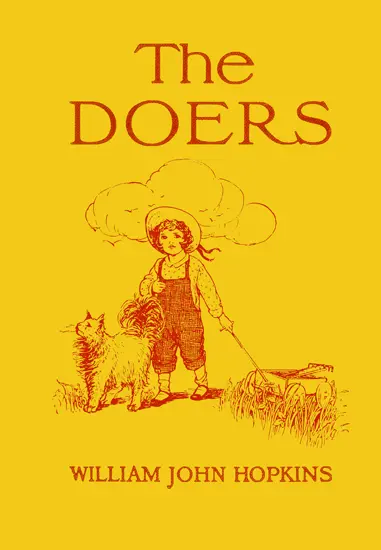
William John Hopkins
BEHIND THE BOOK
This eBook is for the use of anyone anywhere in the United States and most other parts of the world at no cost and with almost no restrictions whatsoever. You may copy it, give it away or re-use it under the terms of the Project Gutenberg License included with this eBook or online at www.gutenberg.org. If you are not located in the United States, you will have to check the laws of the country where you are located before using this eBook. Read the source licence.
The original source file, including credits and licence, is retained by this library. Request an original-format copy at no charge. Please include the book title and Project Gutenberg identifier #70399.
KEEP YOUR CURIOSITY GOING
Coulson Kernahan

Maurice Baring
Frances Wright
Cécile Tormay

Frederic Jesup Stimson

W. H. P. (William Henry Pope) Jarvis