She Blows! And Sparm at That!
William John Hopkins
THE CLASSIC COLLECTION · 1906
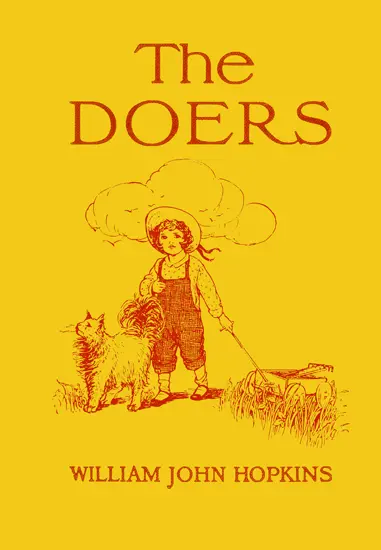
"The Clammer" by William John Hopkins is a novel written in the early 20th century. The story introduces us to Thomas, a passionate clam digger, who finds joy and solace in the simple act of clamming, a pursuit that others view as peculiar. The plot thickens with the arrival of Eve, the governess to a wealthy family, who unexpectedly crosses paths with Thomas, setting off a series of interactions that explore themes of class disparity, simplicity versus opulence, and the nature of true fulfillment. The opening of the novel establishes Thomas as a somewhat eccentric character, content with his solitary life and disdainful of the luxuries enjoyed by his wealthy neighbor, Goodwin. As Thomas engages in his beloved pastime, he encounters Eve, leading to a charming dialogue filled with playful banter and deeper questions about life and purpose. The initial connection between them hints at budding romance but also highlights their contrasting lives – the simplicity of a clammer versus the expectations placed upon a governess for the wealthy. As the story unfolds, the significance of this relationship becomes a central theme, examining the beauty of genuine human connection undeterred by societal status.
Introduction adapted from the source catalogue; source summaries may be automatically generated.
Free to read · English · 34,254 words · No account needed
MAKE TIME FOR A GOOD BOOK
On by default. Untick to stop anonymous reading totals. Each page counts after 10 seconds in view. How this works.
Anonymous counting is on unless you have switched it off.
“It is my father, Adam,” she replied. “He is here and would see a clambake, so I asked him.”
“Your father, Eve? Do governesses have fathers? And is he here to help
you?”
“I hope that he will help me,” she said. “I think he will.”
And she smiled brightly.
My heart grew cold, and froze beneath my ribs. “Then,” I said, “you will not need help from a fisherman, governess.”
“Adam,” she said, reproaching, “let us enjoy our clambake.”
“That is good doctrine, Eve,” said I, “and I will do my best. But how will your father know”--
“It is for him to find it,” she answered, “and he may, for he has eyes and a nose. Now I might find my way straight enough, for I see a smoking mound upon that point, beneath the pine. It seems a pleasant place, Adam.”
“That queer fellow that I mentioned let me use it,” I said in haste. “He is from home just now.”
“He seems a good friend of yours,” she said.
“At times I think he is,” I said, “and at other times he is the poorest
friend I know.”
As we talked we walked along the shore. And we climbed the steep path and stood beneath the pine. The dome of seaweed still smoked bravely, and before the seat against the pine was set a little table, upon stakes. It was just large enough for two, and upon it were all things fitting--and no more. No cloth, only the bare white boards of pine, rubbed smooth.
“Now, governess,” I said, “the bake is done. Do you sit there, and I
will serve you.”
“No, Adam,” she cried, “for I must help.”
She always had her will, that red-haired governess. So I took my fork and opened the smoking dome, and together we set upon the table corn and sweet potatoes and a chicken and a fish and the lobsters; and, last of all, a great pan of clams. And the rest, upon the hot stones, I covered again with seaweed. And as I pitched the weed, I heard Eve laughing.
“Adam,” she said, “look here. And there are two of us.”
I turned and saw the table filled to overflowing, and no place left large enough to set a plate; and Eve sitting on the seat, and laughing so that tears stood in her eyes.
“I should have made the table larger,” I said. “But we need no plates. What would the first man have done with a plate, Eve?”
“Or with baked clams?” she asked. “But we are not in Eden.”
“I am,” I said.
Your reading position is saved on this browser. Take it to another device with a library code. Reading pages adapt to text, rather than matching a printed edition.
William John Hopkins
William John Hopkins
William John Hopkins
William John Hopkins
BEHIND THE BOOK
This eBook is for the use of anyone anywhere in the United States and most other parts of the world at no cost and with almost no restrictions whatsoever. You may copy it, give it away or re-use it under the terms of the Project Gutenberg License included with this eBook or online at www.gutenberg.org. If you are not located in the United States, you will have to check the laws of the country where you are located before using this eBook. Read the source licence.
The original source file, including credits and licence, is retained by this library. Request an original-format copy at no charge. Please include the book title and Project Gutenberg identifier #70399.
KEEP YOUR CURIOSITY GOING
Coulson Kernahan

Maurice Baring
Frances Wright
Cécile Tormay

Frederic Jesup Stimson

W. H. P. (William Henry Pope) Jarvis