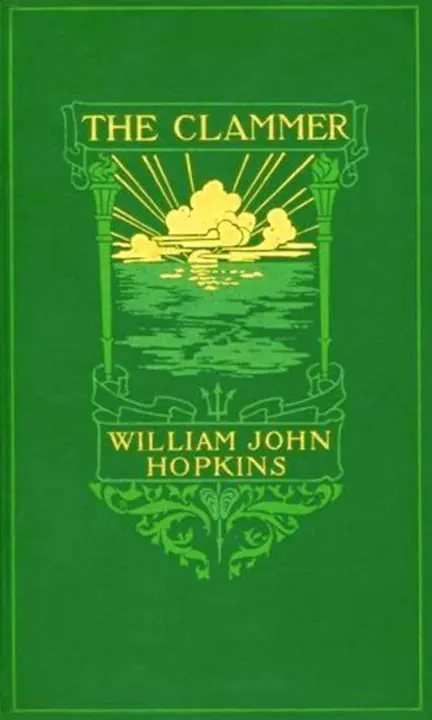
The clammer
William John Hopkins
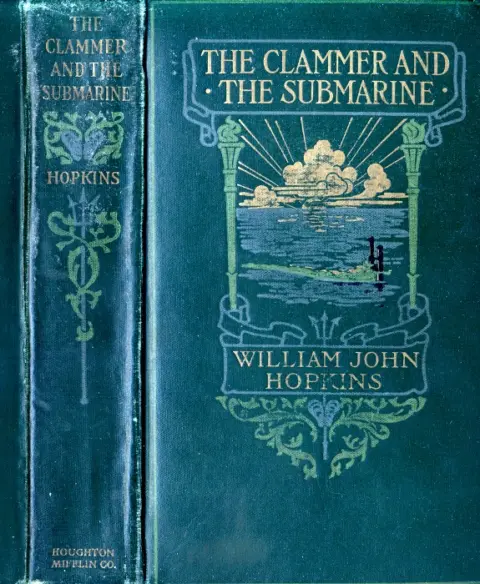
THE CLASSIC COLLECTION · 1917
"The Clammer and the Submarine" by William John Hopkins is a juvenile novel written in the early 20th century. The story is set against the backdrop of World War I and centers around the life of Adam, a clam digger, and his interactions with his family, particularly his wife Eve and their children. The narrative reflects Adam's thoughts on war, peace, and the idyllic life he wishes to maintain despite the tumultuous times. The opening of the novel introduces Adam as he sits under a great pine tree, contemplating the beauty of his surroundings while simultaneously grappling with his thoughts on the war. His musings reveal a man caught between his peaceful domestic life and the distant yet looming presence of conflict. The serene setting hints at his simple, rural lifestyle, which is contrasted by the encroaching realities of the war and how it impacts even the most civilian of lives. The arrival of his wife Eve and their daughter Tidda further grounds Adam in familial concerns, as he reflects on the duties of fatherhood and the uncertainty of the times, framing their everyday life amid the backdrop of global conflict.
Introduction adapted from the source catalogue; source summaries may be automatically generated.
Free to read · English · 44,325 words · No account needed
MAKE TIME FOR A GOOD BOOK
On by default. Untick to stop anonymous reading totals. Each page counts after 10 seconds in view. How this works.
Anonymous counting is on unless you have switched it off.
"Oh, Adam, Adam!" she cried low. "I love you--you don't know how much. And I don't wish that I was twenty-three. Do you know why?"
I could not guess.
"At twenty-three I was not married," said Eve. "I did not even know
you."
What I did then any may guess. No doubt it was imprudent too. And we were once more sitting decorous, and about Eve's lips and in her eyes was that smile of joy and happiness.
"You will see, Adam," she said. "It will all come right."
"What will come right?" asked a voice. "Is anything wrong?"
And we turned, and there was Jack Ogilvie.
"I do not know what Eve meant," I answered him, "unless she referred to my signalling. No doubt that is wrong enough."
He shook his head. "Nothing wrong about that. You do it very well."
Then I asked him for the latest news from the seat of war.
"Well," he said, "we are forbidden to tell the news, although there isn't any. But if you were to go to Newport you would see a big British cruiser lying there. And if you had your glass with you you could read her name." He gave her name, but I have forgotten it. "It is supposed to be a secret, and has not been in the papers, but everybody at Newport knows it. They can't help it. The officers go about very swagger and very stiff, carrying little canes. You may see me carrying a little cane one of these days, but I have not yet arrived at that dignity--or folly, whichever you call it."
I smiled. "Did you never carry a little cane in college?"
"Oh, sometimes, for the sake of doing it, because I had a right to. But
this is real."
"When you come back from England, or France, or wherever you are going, perhaps you will carry a cane." He seemed startled, but only for a moment.
"What makes you think I am going over?"
"Bobby told us--in confidence. When?"
He seemed relieved. "If Bobby told you that lets me out. I was afraid I might have dropped it somehow. I don't know when, but soon, I think."
"Jack," said Eve suddenly--it was the first time I had heard her call Ogilvie Jack--"Jack, we will have a clambake for a farewell. I hope they will give you some days' notice of your going."
"Thank you," he returned, smiling. "It is more likely to be hours' notice. But I will come to your clambake if I can."
"And can you bring," Eve asked, "your yeogirl? I invite her, and ask you to deliver the invitation."
Your reading position is saved on this browser. Take it to another device with a library code. Reading pages adapt to text, rather than matching a printed edition.
William John Hopkins
William John Hopkins
William John Hopkins
William John Hopkins
BEHIND THE BOOK
This eBook is for the use of anyone anywhere in the United States and most other parts of the world at no cost and with almost no restrictions whatsoever. You may copy it, give it away or re-use it under the terms of the Project Gutenberg License included with this eBook or online at www.gutenberg.org. If you are not located in the United States, you will have to check the laws of the country where you are located before using this eBook. Read the source licence.
The original source file, including credits and licence, is retained by this library. Request an original-format copy at no charge. Please include the book title and Project Gutenberg identifier #39456.
KEEP YOUR CURIOSITY GOING
Cécile Tormay

Moritz Busch
Coulson Kernahan
John L. Ransom

Maurice Baring
Frances Wright