
The Truth About an Author
Arnold Bennett
THE CLASSIC COLLECTION · 1900
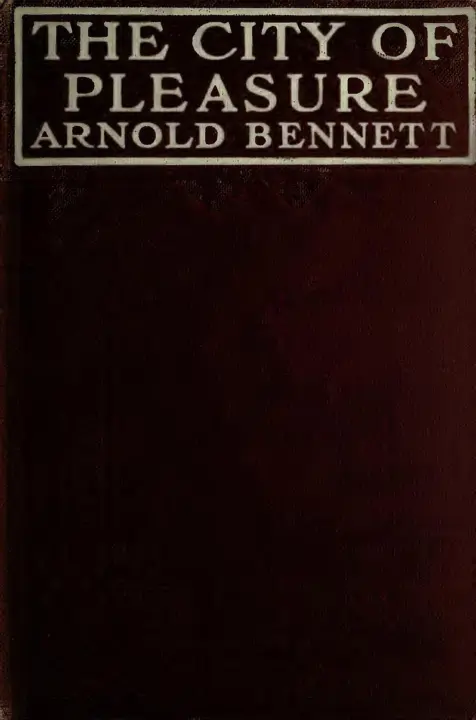
"The City of Pleasure: A Fantasia on Modern Themes" by Arnold Bennett is a novel written in the early 20th century. The book presents a vivid depiction of an amusement park called the City of Pleasure, showcasing the complex interplay between its founders, Josephus Ilam and Charles Carpentaria, as they navigate their ambitions and artistic visions. Central to the narrative are the mount of conflicting personalities, as well as the thrilling, and often chaotic atmosphere of their grand opening day. The opening of the novel introduces us to the bustling environment of the City of Pleasure on its inaugural day. The story begins with Carpentaria overseeing the balloon ascents, embodying a mix of excitement and determination. However, under the bright facade of this new entertainment venture, tensions simmer between him and Ilam. As the chapters unfold, we are immersed in their interactions, revealing a deeper narrative woven with themes of ambition, jealousy, and the pursuit of artistic integrity amid the spectacle. The first chapter builds a scene of anticipation as the characters and the city itself prepare for the energy of the crowd, setting the stage for drama that is yet to unfold.
Introduction adapted from the source catalogue; source summaries may be automatically generated.
Free to read · English · 61,699 words · No account needed
MAKE TIME FOR A GOOD BOOK
On by default. Untick to stop anonymous reading totals. Each page counts after 10 seconds in view. How this works.
Anonymous counting is on unless you have switched it off.
“I should think so,” said Rivers, aghast. “Can you not see that you have got yourself into a dreadful mess? You are an accessory after the fact. You have been guilty of a gross illegality. I don’t know what the penalty is; I’m not very well up in medical jurisprudence; but I know it’s something pretty stiff. Why, you might be accused of the murder.”
“Yes, I am aware of all that,” answered Carpentaria. “But I was very curious; and I didn’t want any police meddling here.”
“You are going just the way to bring them here.”
“Not at all. When you have made your examination I shall simply put the body where I found it. No one will be the wiser.”
“And theft?”
“Then--we shall see. It will depend on your examination.”
“But, really, Mr. Carpentaria, I cannot lend myself-----”
“Not to oblige me?”
Carpentaria smiled an engaging smile, and they descended together to the
outhouse.
The outhouse was not more than eleven feet square, and the barrow with its burden was stretched across it diagonally, so that when the two men were inside, the place was full and the door would scarcely close. A small window gave light.
Rivers gently pulled the black cloth aside.
“This is just such black cloth as photographers use,” he remarked.
“So it is,” said Carpentaria.
The eyes of the corpse were closed; he might have been a man asleep, this strange relic from which a soul had flown and which would soon resolve itself into its original dust.
“Poor fellow,” thought Carpentaria. “Once he lived, and had interests, and probably passions, and thought himself of some importance in the universe.”
The spectacle saddened Carpentaria, whereas the young doctor was not at all saddened, he was merely intensely interested.
“A blow on the head among other things,” he observed, indicating to Carpentaria the top of the skull which showed an abrasion together with an extravasation of blood, now clotted.
“Would that do it?” queried Carpentaria.
“Don’t know. Might. By Jove, the rigor is extraordinarily acute.”
“Rigor?”
“The stiffness that follows death. Great Scott!”
The doctor assumed an upright position, and stared, first at the corpse
and then at Carpentaria.
“Great Scott!” he repeated.
“What’s up?”
The doctor made no reply, but tried to lift the left arm of the body. He could not, without raising the entire body.
“This is most interesting,” he said.
“What is?”
Again Rivers did not answer. Instead, he took his watch from his pocket, and put it suddenly against the ear of the corpse.
The corpse twitched; its head moved slightly; the eyelid lifted the
eighth of an inch.
Your reading position is saved on this browser. Take it to another device with a library code. Reading pages adapt to text, rather than matching a printed edition.
Arnold Bennett

Arnold Bennett
Arnold Bennett
Arnold Bennett
BEHIND THE BOOK
This eBook is for the use of anyone anywhere in the United States and most other parts of the world at no cost and with almost no restrictions whatsoever. You may copy it, give it away or re-use it under the terms of the Project Gutenberg License included with this eBook or online at www.gutenberg.org. If you are not located in the United States, you will have to check the laws of the country where you are located before using this eBook. Read the source licence.
The original source file, including credits and licence, is retained by this library. Request an original-format copy at no charge. Please include the book title and Project Gutenberg identifier #55115.
KEEP YOUR CURIOSITY GOING
Coulson Kernahan

Maurice Baring
Frances Wright
Cécile Tormay

Frederic Jesup Stimson

W. H. P. (William Henry Pope) Jarvis