
The Truth About an Author
Arnold Bennett
THE CLASSIC COLLECTION · 1900
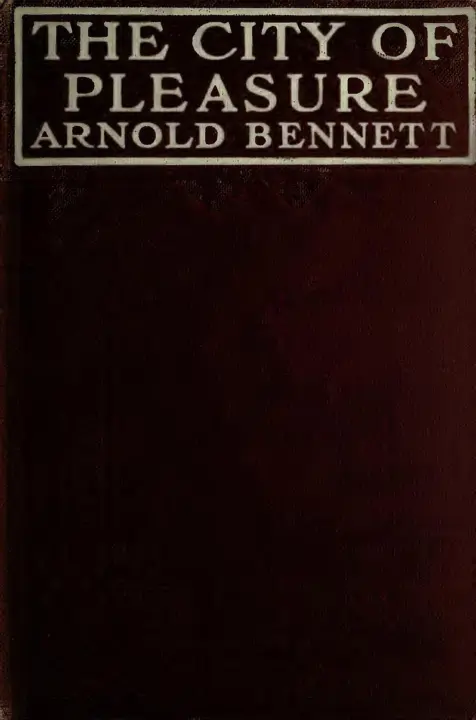
"The City of Pleasure: A Fantasia on Modern Themes" by Arnold Bennett is a novel written in the early 20th century. The book presents a vivid depiction of an amusement park called the City of Pleasure, showcasing the complex interplay between its founders, Josephus Ilam and Charles Carpentaria, as they navigate their ambitions and artistic visions. Central to the narrative are the mount of conflicting personalities, as well as the thrilling, and often chaotic atmosphere of their grand opening day. The opening of the novel introduces us to the bustling environment of the City of Pleasure on its inaugural day. The story begins with Carpentaria overseeing the balloon ascents, embodying a mix of excitement and determination. However, under the bright facade of this new entertainment venture, tensions simmer between him and Ilam. As the chapters unfold, we are immersed in their interactions, revealing a deeper narrative woven with themes of ambition, jealousy, and the pursuit of artistic integrity amid the spectacle. The first chapter builds a scene of anticipation as the characters and the city itself prepare for the energy of the crowd, setting the stage for drama that is yet to unfold.
Introduction adapted from the source catalogue; source summaries may be automatically generated.
Free to read · English · 61,699 words · No account needed
MAKE TIME FOR A GOOD BOOK
On by default. Untick to stop anonymous reading totals. Each page counts after 10 seconds in view. How this works.
Anonymous counting is on unless you have switched it off.
When Pauline, standing outside Carpentaria’s bungalow, had communicated to Carpentaria the fateful fact that all Ilam’s servants had disappeared from their rooms, and had given expression to the vague and terrible fear that was beginning to take possession of her, the musician said in reply:
“You have every reason to be afraid, and yet I shall ask you to try to calm your apprehensions. Whether the servants are there or not, nobody can get into your house without our knowing it, and when anybody starts to attempt to get in, there will be plenty of time for you to alarm yourself then.”
“But Rosie alone there with poor Mrs. Ilam!” sighed Pauline.
“Mrs. Ilam can’t do her any harm, at any rate,” said Carpentaria
comfortingly.
And with that he commenced a cautious perambulation of the exterior of Ilam’s house, Pauline following him.
“I wish you would go to my sister until I have something to report,” he murmured. “You will take cold, and you will work yourself up into a fever, and do no good to anybody.”
“I shall not work myself up into a fever,” replied Pauline firmly. “I am capable of being just as calm as you are yourself. Let us go at once into the house--let us go to Rosie.”
“What!” expostulated Carpentaria, “and spoil whatever scheme is going on? No, my dear young lady, we have gone so far that we must go a little further. We must catch the schemers red-handed. If we do not, our night’s work will have been wasted.”
The idea of weakly and pusillanimously changing a course of conduct at the very moment when that course promised the most interesting adventures shocked all the artist in him.
They stared blankly at the house, whose form was clearly revealed in the misty moonlight, but none of whose windows showed the slightest glimmer of light. It was an extremely modern tenement, and its architecture was in no way startlingly original; nevertheless, in those moments it seemed to both of them the strangest, the most mysterious, the most insubstantial house that the hand of man had ever raised.
Suddenly Pauline clutched his arm.
“I hear some one walking somewhere in the grounds,” she said.
They both listened. In the stillness of the night regular steps sounded
plainly from a distance.
“It is the patrol on the terrace,” said Carpentaria.
“It is assuredly on the terrace--the sound of heavy boots on stone
flags, isn’t it?”
“Yes,” Pauline agreed, loosing his arm.
They were twenty or thirty yards from the house.
“I want you to be brave and to do something for me.”
Carpentaria turned to her.
“What is it?”
Your reading position is saved on this browser. Take it to another device with a library code. Reading pages adapt to text, rather than matching a printed edition.
Arnold Bennett

Arnold Bennett
Arnold Bennett
Arnold Bennett
BEHIND THE BOOK
This eBook is for the use of anyone anywhere in the United States and most other parts of the world at no cost and with almost no restrictions whatsoever. You may copy it, give it away or re-use it under the terms of the Project Gutenberg License included with this eBook or online at www.gutenberg.org. If you are not located in the United States, you will have to check the laws of the country where you are located before using this eBook. Read the source licence.
The original source file, including credits and licence, is retained by this library. Request an original-format copy at no charge. Please include the book title and Project Gutenberg identifier #55115.
KEEP YOUR CURIOSITY GOING
Coulson Kernahan

Maurice Baring
Frances Wright
Cécile Tormay

Frederic Jesup Stimson

W. H. P. (William Henry Pope) Jarvis