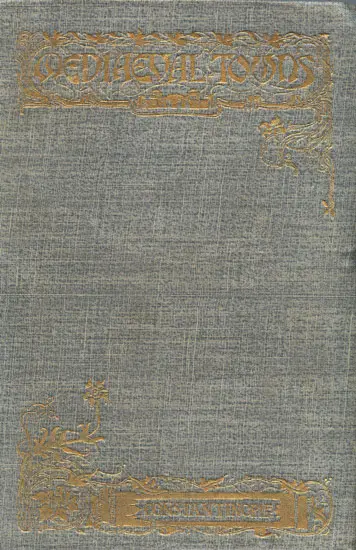
Constantinople: The Story of the Old Capital of the Empire
William Holden Hutton
THE CLASSIC COLLECTION · 1906
"The Church and the Barbarians" by William Holden Hutton is a historical account written in the early 20th century. This detailed narrative outlines the history of the Church from A.D. 461 to A.D. 1003, focusing on the interplay between Christianity and the various barbarian cultures that emerged during this transformative period in Europe. The author delves into how the Church sought to unify and convert these new populations, setting the stage for the eventual Christianization of Europe. The beginning of the book introduces the reader to the decline of the Roman Empire and the challenges the Church faced during the fifth century. Hutton discusses the Church's struggle to maintain unity amid the rise of new, often pagan, nations while also dealing with the remnants of imperial authority. He highlights the central theme of this era: the need for the Church to extend its influence and adapt to a changing world while striving for theological and organizational unity. The author sets the groundwork for a narrative that promises to explore the Church's missionary efforts, interactions with various barbarian tribes, and the emerging political complexities of the time.
Introduction adapted from the source catalogue; source summaries may be automatically generated.
Free to read · English · 60,925 words · No account needed
MAKE TIME FOR A GOOD BOOK
On by default. Untick to stop anonymous reading totals. Each page counts after 10 seconds in view. How this works.
Anonymous counting is on unless you have switched it off.
Facundus, bishop of Hermione, 106
Fasting Communion, 180; Saturday fast in tenth century, 131
Faustus, bishop of Riez, a semi-Pelagian, 72
Felix II., pope, 8
Felix, bishop of Urgel, 78-9, 168
Ferrand, African deacon, writer in the "Three Chapters"
controversy, 106
Feudalism, rise of, 44-5, 172-3
Filioque ("and [from] the Son"), word added to the Nicene Creed
in the West, leads to controversy with the East, 193-4
Fontaine, monastery, 55
Fontenelle, abbey, 57
Fortunatus, bishop of Carthage, 108
Frankfort, Council of (794), 79, 168
Franks in Gaul, 42; conversion of, 4, 43, 177; their imperfect
Christianity, 43-4, 54; staunch Catholicism, 42, 47-8, 177;
break up of their kingdom, 44; formative influence of the
Church, 45; relations with the Eastern Empire, 46-7; alliance
with the papacy, 49; their Church's relations with Rome,
50; greatly influenced by monasticism, 58; they invade
Spain, 74; laxity and corruption of their Church, 138, 144;
Karling reformation, 144; Frankish missal, 183; relations
with England, 186; Frankish clergy concoct the forged decretals, 195
Fredegund, wife of Chilperich I., 43
Frederic, Saxon bishop in Iceland, 132
Freeman, Edward Augustus, quoted, 3
Freising, see of, 138
Frisians, 197; English missionaries to, 136, 139
Fritzlar, abbey, 140
Fuero Jusgo, the Wisigothic code, 74, 76
Fulda, monastery, 81, 140
Fulgentius, S., African bishop, 105
Gaiseric (Genseric), king of the Vandals, 103-4
Gall, S., 56, 116
Gallican Church, 39, 41-59, see Franks, Gaul; Gallican liturgy
and ritual, 47, 181-3, 186, 188-90; influence on the English
liturgy, 186-7
Galswintha, wife of Chilperich I. of Neustria, 48
Gaul, Roman, 41; Christianity in, 41-59, 83, 176; Gregory
the Great in, 48-51, 65, 69; monasticism in, 171; feudalism,
172; Normans in, 196
Gelasian Sacramentary (so named from pope Gelasius I., 492-6), 182-3
Gelimer, Vandal king, 105
General Councils, first four, 76; Third (of Ephesus, 431), 96;
Fourth (of Chalcedon, 451), 2, 7, 9-10, 18, 24, 65-6, 79, 85-6,
89, 95; Fifth (of Constantinople, 553), 15, 17, 18, 20-2,
39, 63-4, 86, 106-7, 161; Sixth (of Constantinople, 680-1),
21, 84-5, 88; Seventh (of Nicaea, 787), 155, 165; Eighth
(of Constantinople, 869), 193-4; Eighth, according to the
Greeks (of Constantinople, 879-80), 194
Gentilly, Council of (767), 81
Georgia, Church of, 23, 95
Gerbert of Aurillac (Silvester II.), 200-2
Germanus, S., patriarch of Constantinople, 155
Gildas, British historian, 183
Glastonbury, monastery, 115, 119
Gnesen, archbishopric of, 125
Goidels, Celtic stock in Ireland, 53; Goidelic language, 119
Goths, Eastern (Ostrogoths), in Italy, 4, 29-32; Western, see
Wisigoths
Grado, archbishop of, 157
Gradual, 188
Greece, iconoclasm causes a rising in, 157; Greek Church, its
character, 6: the Eastern Empire in its religious aspect, 13.
See also Church, Constantinople, Eastern, Schism
Greenland, mission to, 132
Gregorian Sacramentary, 182
Gregory I., the Great, S., pope, 21, 25, 34, 40, 55, 76, 113, 134,
171, 180-2, 184, 186, 190, 192; his life and work, 60-71; his
relations to Gaul, 48-51, 65, 69; to Africa, 107; to missions, 69;
to monasticism, 69; to classical learning, 52, 70; his claim to
jurisdiction, 68; claimed no special authority for the use of
Rome, 187; his theology, 70-1; his writings, 35, 60, 63-5
Gregory II., pope, 136-7, 157
Gregory III., pope, 137, 147, 157
Gregory IV., pope, 130
Gregory V. (Bruno), pope, 199, 200
Gregory of Tours, bishop and historian, 43-5, 51-2, 58, 66 n.,
145, 171
Gregory, abbat of Utrecht, 136
Gregory, patrician, upstart emperor, 109
Guntchramn (Guntram), king of the Burgundian Franks, 55
Your reading position is saved on this browser. Take it to another device with a library code. Reading pages adapt to text, rather than matching a printed edition.
William Holden Hutton
BEHIND THE BOOK
This eBook is for the use of anyone anywhere in the United States and most other parts of the world at no cost and with almost no restrictions whatsoever. You may copy it, give it away or re-use it under the terms of the Project Gutenberg License included with this eBook or online at www.gutenberg.org. If you are not located in the United States, you will have to check the laws of the country where you are located before using this eBook. Read the source licence.
The original source file, including credits and licence, is retained by this library. Request an original-format copy at no charge. Please include the book title and Project Gutenberg identifier #22366.
KEEP YOUR CURIOSITY GOING
Cécile Tormay

Moritz Busch
John L. Ransom
Frances Wright
Cécile Tormay

Mabel Potter Daggett