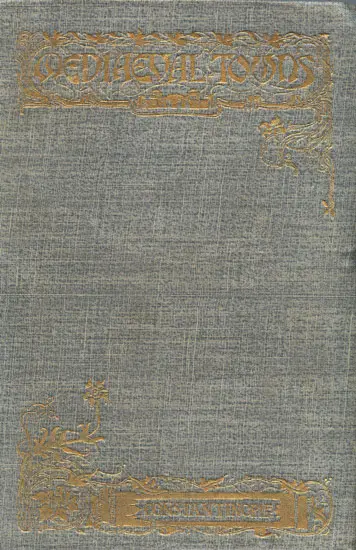
Constantinople: The Story of the Old Capital of the Empire
William Holden Hutton
THE CLASSIC COLLECTION · 1906
"The Church and the Barbarians" by William Holden Hutton is a historical account written in the early 20th century. This detailed narrative outlines the history of the Church from A.D. 461 to A.D. 1003, focusing on the interplay between Christianity and the various barbarian cultures that emerged during this transformative period in Europe. The author delves into how the Church sought to unify and convert these new populations, setting the stage for the eventual Christianization of Europe. The beginning of the book introduces the reader to the decline of the Roman Empire and the challenges the Church faced during the fifth century. Hutton discusses the Church's struggle to maintain unity amid the rise of new, often pagan, nations while also dealing with the remnants of imperial authority. He highlights the central theme of this era: the need for the Church to extend its influence and adapt to a changing world while striving for theological and organizational unity. The author sets the groundwork for a narrative that promises to explore the Church's missionary efforts, interactions with various barbarian tribes, and the emerging political complexities of the time.
Introduction adapted from the source catalogue; source summaries may be automatically generated.
Free to read · English · 60,925 words · No account needed
MAKE TIME FOR A GOOD BOOK
On by default. Untick to stop anonymous reading totals. Each page counts after 10 seconds in view. How this works.
Anonymous counting is on unless you have switched it off.
Dagobert I., Frankish king, son of Chlothochar II., 44, 58, 145
Danes ravage England and Scotland, 117-19, 121; settle, and
are converted, 118; Danish invasions, 122; conversion of
Denmark, 129, 131
David, S., 118
Decretals, false, 194-6
Deira, northern kingdom of England, 63
Denmark, conversion of, 129, 131
Desiderius (Didier) of Cahors, S., 58
Dionysius the Areopagite, Platonist so called, 89
Dnyepr (Dnieper), Russian river, baptisms in, 127
Dokkum, S. Boniface martyred at, 139
Donation of Constantine, 154; of Pippin, at Quierzy, 149, 151;
of Charles the Great, 151-2
Donatists, 103, 107
Double procession of the Holy Ghost, 76, 80-1, 193-4
Druidism favoured the growth of Christian monasticism, 53
Dublin, conversion of Danes at, 122; Norse king of, 132
Duchesne, Mgr., quoted, 40, 208
Dudden, F. H., quoted, 50, 75 n.
Dunstan, S., 115, 119-21
Durham, see of, 121
Eadgar, king of England, 119 East, the, large number of ecclesiastics in, 25 East and West, reunion of, after the quarrel of pope and emperor, in 519, 10; political severance completed, 149; breach widens, 191; divergence, Photian schism, 192-4; nominal reunion throughout tenth century, 194. See Schism Easter baptisms, 177; communion, 179; use of the alleluia, 182; Celtic Easter, 55, 114 Eastern Church, orthodox, securer than the West in its Christianity, 7; its intense conservatism, 27; dictates to the papacy under Vigilius and Pelagius, 40. See Church, Constantinople, Schism Ebbo, archbishop of Rheims, 129, 141 Ebroin, mayor of the palace in Neustria, 146 Ecthesis, issued by Heraclius, 87, 89 Edessa, 93, 96, 110 Education, 166-7, 175. See Learning Egbert, archbishop of York, 167, 179 Egypt, 9; National Church, 13; Monophysite Church, 23; sects, 110; Church, 112; Holy Communion, 180; Muhammadan invasion, 84, 108. See Alexandria, Coptic Einhard, biographer of Charles the Great, 142, 153, 167 Eligius, S., 58 Elipandus, archbishop of Toledo, 78-9, 168 Ellesthaeos, Ethiopian king, 112 Eloi (Eligius), S., 58 Emly, monastery, 53 Emmeran, Emmeram, S., missionary in Bavaria, 135 Empire, the, becomes a Christian power, 1; obsolescent, 2; representative of Christian unity, 3; invaded by barbarians, 1, 3; its vitality, 3 Empire, Eastern, relations with the Franks, 46-7; its strength renders the Nestorian missions possible, 98; becomes more purely Oriental, 113; end of the imperial power in Italy, 147-8; its recognition of the Western Umpire of Charles the Great, 153. See Constantinople Empire, Western, ends with Romulus Augustulus (476), 28; tradition preserved by the Church, 45-6; revival of the imperial idea, 172; Charles the Great restores the Empire, 139, 144, 152; origin of the "Holy Roman Empire," 153; papal theory of the Empire, 192; weakness of the Empire in ninth and tenth centuries, 196; revival under the Saxon Ottos, 191, 197-202 England, conversion of, 62-3, 69, 117, 183-7; Church of, 117-21; its independent attitude towards Rome, 117, 120, 121; kings the nursing fathers of the Church, 27; English missionaries to Germany, 136-9, 141-2; ritual in, 183-90 Ennismore, monastery, 53 Epiphanius, bishop of Pavia, 29 Epiphany baptisms, 177; communion, 179 Etherius, chaplain and notary to Charles the Great, 151 Ethiopian Church, 110-12 Eucharist, celebration of, in sixth century, 188; doctrine of, controversy concerning, 170-1; Aelfric's doctrine of, 120; reservation of, 180-1. See Communion, Mass Eugenius, S., bishop of Carthage, 104-5 Eutychian heresy, 7 Evagrius, ecclesiastical historian (period 431-594), 21 n. Exarch of Ravenna, 34, 40, 91; the Exarchate, 61-2, 69, 147-9, 151, 157
Your reading position is saved on this browser. Take it to another device with a library code. Reading pages adapt to text, rather than matching a printed edition.
William Holden Hutton
BEHIND THE BOOK
This eBook is for the use of anyone anywhere in the United States and most other parts of the world at no cost and with almost no restrictions whatsoever. You may copy it, give it away or re-use it under the terms of the Project Gutenberg License included with this eBook or online at www.gutenberg.org. If you are not located in the United States, you will have to check the laws of the country where you are located before using this eBook. Read the source licence.
The original source file, including credits and licence, is retained by this library. Request an original-format copy at no charge. Please include the book title and Project Gutenberg identifier #22366.
KEEP YOUR CURIOSITY GOING
Cécile Tormay

Moritz Busch
John L. Ransom
Frances Wright
Cécile Tormay

Mabel Potter Daggett