THE CLASSIC COLLECTION✦A dead man’s diaryCLASSIC FREE BOOKS
A dead man’s diary
Coulson Kernahan
THE CLASSIC COLLECTION · 1909
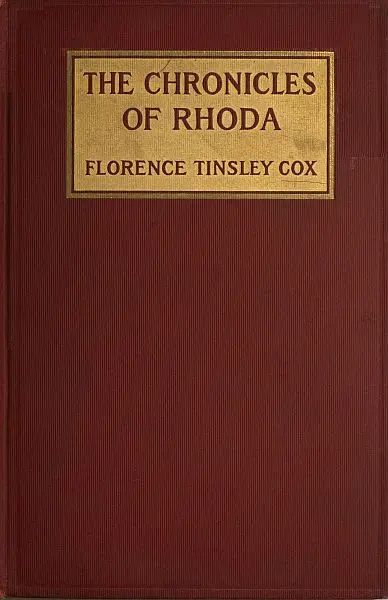
"The Chronicles of Rhoda" by Florence Tinsley Cox is a novel written in the early 20th century. The narrative centers around a young girl named Rhoda Harcourt, exploring her imaginative thoughts, her relationships with her family, and her experiences as she navigates childhood. The book delves into themes of innocence, love, and the complexities of growing up, inviting readers into the whimsical and sometimes tumultuous world of Rhoda. The opening of the novel introduces Rhoda's family life and the special bond she shares with her grandmother. As Rhoda interacts with her family, she showcases her vivid imagination, weaving stories and adventures that reflect her childlike perspective. We see Rhoda grapple with feelings of jealousy upon the arrival of new siblings, the challenge of defining her identity, and her unique friendship with her father, which sets the stage for her emotional journey throughout the book. As her family dynamics shift with the introduction of twins, Rhoda's imaginative lens offers both humor and poignancy as she learns about sibling rivalry, love, and the complexities of family life.
Introduction adapted from the source catalogue; source summaries may be automatically generated.
Free to read · English · 38,282 words · No account needed
MAKE TIME FOR A GOOD BOOK
On by default. Untick to stop anonymous reading totals. Each page counts after 10 seconds in view. How this works.
Anonymous counting is on unless you have switched it off.
Then Miss Lucy would close the green spelling book, with a gratified smile, and gather us about her in a little hushed circle, and tell us the tales of a bygone age. I liked Miss Lucy. I liked to sit up close to her and to Grace, and hear about the party dress, and the pink coral beads, and when it all ended happily, as stories should, I would give a great sigh of satisfaction.
"Dear me," Miss Lucy would say, all aglow with enthusiasm, "it's time for recess! Why, where has the morning gone! Well, girls, you'll have to take the same lesson over again for to-morrow."
She was very simple minded, Miss Lucy was, and she understood the situation just as little as I did myself.
Janet McLarin was Scotch, and she was canny. She could do every sum in the arithmetic; but when the day came for compositions she would put her bright head down in her lap and groan.
"I wish I was dead," she would say, despairingly. "I do! I do!"
Cebelia was more stoical; but she would fold great pleats in her apron, and frown at the blackboard. Miss Lucy always wrote the subjects for the compositions on the blackboard, one under the other, beautifully written out for our decision.
The Story of a Nine-pin.
Thoughts on Spring.
The Triumph of Columbus.
My Mother's Flower Garden.
A Meadow Daisy.
The Beauty of Truth.
They were lovely, lovely subjects! I would sit and look at them in a
blissful dream.
One day, the very first composition day, I remember Grace gave me a
little shake.
"Which one are you going to take?" she demanded, dolefully.
"I don't know," I answered, with a happy smile.
"Girls," Grace cried, "I believe Rhoda could write them all! She likes
to write!"
Miss Lucy was out of the room, and I remember that they all came around me, and looked at me, as if I had been a strange animal.
"Rhoda," Janet McLarin cried, taking her head out of her lap, "if you'll write my composition for me I'll give you my best blue hair ribbon. My Sunday one. Honest."
I didn't want the hair ribbon; but I nodded at her.
"I'll write it," I said.
"Will you write me one, Rhoda, dear?" Grace asked, jealously, with her face against mine. "You are my friend, not hers."
"I'll write yours, too," I agreed.
"And one for me?"
"And for me?"
I nodded at them, generously.
"I'll write one for everybody," I declared, with a glow of pleasure.
"But don't tell anyone," Janet cautioned.
Your reading position is saved on this browser. Take it to another device with a library code. Reading pages adapt to text, rather than matching a printed edition.
BEHIND THE BOOK
This eBook is for the use of anyone anywhere in the United States and most other parts of the world at no cost and with almost no restrictions whatsoever. You may copy it, give it away or re-use it under the terms of the Project Gutenberg License included with this eBook or online at www.gutenberg.org. If you are not located in the United States, you will have to check the laws of the country where you are located before using this eBook. Read the source licence.
The original source file, including credits and licence, is retained by this library. Request an original-format copy at no charge. Please include the book title and Project Gutenberg identifier #40526.
KEEP YOUR CURIOSITY GOING
Coulson Kernahan

Maurice Baring
Frances Wright
Cécile Tormay

Frederic Jesup Stimson

W. H. P. (William Henry Pope) Jarvis