THE CLASSIC COLLECTION✦A dead man’s diaryCLASSIC FREE BOOKS
A dead man’s diary
Coulson Kernahan
THE CLASSIC COLLECTION · 1909
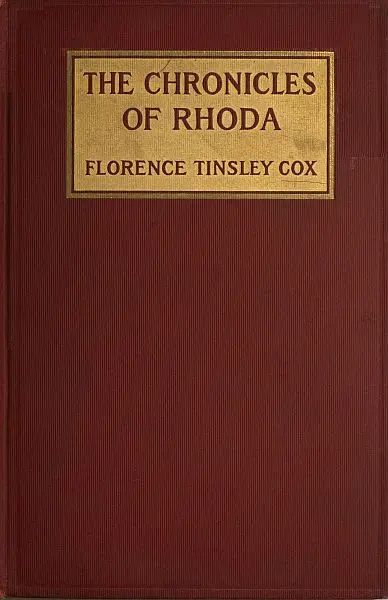
"The Chronicles of Rhoda" by Florence Tinsley Cox is a novel written in the early 20th century. The narrative centers around a young girl named Rhoda Harcourt, exploring her imaginative thoughts, her relationships with her family, and her experiences as she navigates childhood. The book delves into themes of innocence, love, and the complexities of growing up, inviting readers into the whimsical and sometimes tumultuous world of Rhoda. The opening of the novel introduces Rhoda's family life and the special bond she shares with her grandmother. As Rhoda interacts with her family, she showcases her vivid imagination, weaving stories and adventures that reflect her childlike perspective. We see Rhoda grapple with feelings of jealousy upon the arrival of new siblings, the challenge of defining her identity, and her unique friendship with her father, which sets the stage for her emotional journey throughout the book. As her family dynamics shift with the introduction of twins, Rhoda's imaginative lens offers both humor and poignancy as she learns about sibling rivalry, love, and the complexities of family life.
Introduction adapted from the source catalogue; source summaries may be automatically generated.
Free to read · English · 38,282 words · No account needed
MAKE TIME FOR A GOOD BOOK
On by default. Untick to stop anonymous reading totals. Each page counts after 10 seconds in view. How this works.
Anonymous counting is on unless you have switched it off.
"OF all the childer I've iver seen he's the worst," Norah cried. "He's as sharp as tacks, and as bad as a young magpie."
She had come into the sitting room, and stood regarding my mother at her
sewing.
"What is the matter, Norah?" my mother demanded, anxiously.
"It's Dick, ma'am. What else should it be? Ain't I been after making a grand gingerbread for your lunch? And ain't he under your own bed this blessèd moment?"
She paused for breath, almost crying, and wringing her hands.
"He's eating the whole of it!" she exclaimed.
"What, a whole gingerbread?" my mother repeated, evidently startled.
"Yes, ma'am. I've been poking at him with a broom; but it's no use."
There was a quick procession up to my mother's room, my mother leading it, with her head thrown up in wrath, then little Trixie and I hand-in-hand, and Norah following behind us to see justice done. The room was dark and orderly; but there was a curious shuffling sound under the bed.
"Dick!" my mother cried. "Come out of there! Dick! Do you hear what I
say? Richard!"
When my mother said "Richard" things were apt to be pretty serious.
Little Dick crawled out from under the bed very reluctantly. He was red and sticky; but he had a happy expression as if he had been having rather a good time. He brought a tin plate with him, and it was quite empty. There was not even so much as a crumb in it. My mother looked at him in horror, and grandmother, who had been attracted by the noise, looked at him, too, over my mother's shoulder, with strong disapprobation.
"If he were my son," she said, distinctly, "I'd give him a good thrashing. He richly deserves it."
It was a dreadful moment. Little Trixie and I stared at the scene fascinated, while my mother wavered between justice and mercy. When she finally spoke her voice was very cold and severe.
"I don't know what I ever did to have such a son," she said. "After this I am not going to be his mother any longer. I shall call him Master Richard, as if he were a stranger, and he shall call me Mrs. Harcourt. Nothing else."
Trixie and I held each other closer. It was a terrible sentence. To be a stranger in one's own home! And not to have any mother! Little Dick's red, childish cheeks paled, and he looked frightened. He made a hurried movement forward, and caught hold of my mother's dress.
"Oh, mother!" he cried, beseechingly.
"Go away, Master Richard," she commanded. "I am not your mother."
Your reading position is saved on this browser. Take it to another device with a library code. Reading pages adapt to text, rather than matching a printed edition.
BEHIND THE BOOK
This eBook is for the use of anyone anywhere in the United States and most other parts of the world at no cost and with almost no restrictions whatsoever. You may copy it, give it away or re-use it under the terms of the Project Gutenberg License included with this eBook or online at www.gutenberg.org. If you are not located in the United States, you will have to check the laws of the country where you are located before using this eBook. Read the source licence.
The original source file, including credits and licence, is retained by this library. Request an original-format copy at no charge. Please include the book title and Project Gutenberg identifier #40526.
KEEP YOUR CURIOSITY GOING
Coulson Kernahan

Maurice Baring
Frances Wright
Cécile Tormay

Frederic Jesup Stimson

W. H. P. (William Henry Pope) Jarvis