THE CLASSIC COLLECTION✦Heart of New EnglandCLASSIC FREE BOOKS
Heart of New England
Abbie Farwell Brown
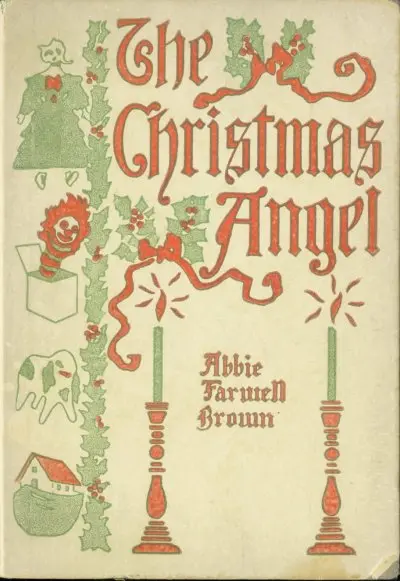
THE CLASSIC COLLECTION · 1910
"The Christmas Angel" by Abbie Farwell Brown is a heartwarming children's story that was published in the early 20th century, likely reflecting the values and sentiments of that period. This charming tale focuses on themes of generosity, the spirit of Christmas, and the rediscovery of familial bonds, presenting a narrative that encapsulates the holiday spirit through the lens of redemption and connection. The story follows Miss Angelina Terry, a lonely and curmudgeonly woman who believes Christmas is merely an occasion for wastefulness and self-indulgence. On Christmas Eve, she stumbles upon an old play box filled with discarded toys, including a pink papier-mâché Angel that evokes painful memories of her childhood. Instead of throwing the toys away, she tests the holiday spirit by discarding them on the street, observing the reactions of passersby. Through a series of vignettes involving the toys and their new owners, the Christmas Angel appears as a symbol of hope and goodwill. Ultimately, the story reunites Miss Terry with her estranged brother Tom and a little girl named Mary, suggesting that the true essence of Christmas lies in love, connection, and the joy of giving. The narrative showcases a transformation in Miss Terry's character, illustrating that it is never too late to embrace the spirit of generosity and togetherness.
Introduction adapted from the source catalogue; source summaries may be automatically generated.
Free to read · English · 15,801 words · No account needed
MAKE TIME FOR A GOOD BOOK
On by default. Untick to stop anonymous reading totals. Each page counts after 10 seconds in view. How this works.
Anonymous counting is on unless you have switched it off.
And Mary came. The brother and sister were at breakfast,--the happiest which either of them had known for years,--when there came a timid pull at the front-door bell. Miss Angelina laid down her knife and fork and looked across the table at Tom.
"She has come. Mary has come," she said. "Norah, if it is a little girl with a package under her arm, bring her in here."
"Yes'm!" gasped Norah, who believed she was living in a dream where everything was topsy-turvy. When had a child entered Miss Terry's dining-room!
Norah disappeared and presently returned ushering in a little girl of ten, with blue eyes and yellow hair. Under her arm she carried a white-paper package, very badly wrapped.
Miss Terry exchanged with her brother a glance which said, "I told you so!"
The child seemed bashful and afraid to speak; no wonder!
Tom's kind heart yearned to her. "Good morning! Wish you a merry Christmas, Mary!" he said smiling.
The child gave a start. "Why, how did you know my name?" she cried.
Tom looked confused. How indeed did he know? But Miss Angelina, with a readiness that surprised herself, came to his rescue.
"We were talking of a little girl named Mary," she said. "And you look just like her. What did you come for, dear?"
The little girl hung her head and turned crimson.
"I--I came to see Angelina Terry," she whispered. "I--I've got a doll that
belongs to her."
There was a pause, then Miss Terry said, "Well, go on."
"I--I found her on the steps of this house last night, and I ought to have brought her right here then. But I didn't. I took her home. I hope Angelina was not very unhappy last night."
Miss Terry smiled upon Tom, who gave a kind, low laugh.
"No," said Miss Terry. "Angelina did not worry about her lost doll. She was thinking about something else,--the nicest Christmas present that ever anybody had. But you were a good girl to bring back the doll."
"No, I'm not a good girl," said Mary, and her voice trembled. "I was a wicked girl. I meant to keep Miranda for myself, because I thought she would be a lovely big doll. And when I found she was old and homely, somehow I still wanted to keep her. But it was stealing, and I couldn't. Please, will you give her to Angelina, and tell her I am so sorry?" She took Miranda out of the wrapping and held her toward Miss Terry without looking at the doll. It was as if she were afraid of being tempted once more.
Miss Terry did not take the doll.
Your reading position is saved on this browser. Take it to another device with a library code. Reading pages adapt to text, rather than matching a printed edition.
Abbie Farwell Brown
Abbie Farwell Brown
Abbie Farwell Brown
Abbie Farwell Brown
BEHIND THE BOOK
This eBook is for the use of anyone anywhere in the United States and most other parts of the world at no cost and with almost no restrictions whatsoever. You may copy it, give it away or re-use it under the terms of the Project Gutenberg License included with this eBook or online at www.gutenberg.org. If you are not located in the United States, you will have to check the laws of the country where you are located before using this eBook. Read the source licence.
The original source file, including credits and licence, is retained by this library. Request an original-format copy at no charge. Please include the book title and Project Gutenberg identifier #15709.
KEEP YOUR CURIOSITY GOING
Coulson Kernahan

Maurice Baring
Frances Wright
Cécile Tormay

Frederic Jesup Stimson

W. H. P. (William Henry Pope) Jarvis