
A Son of Ishmael: A Novel
L. T. Meade
THE CLASSIC COLLECTION · 1891
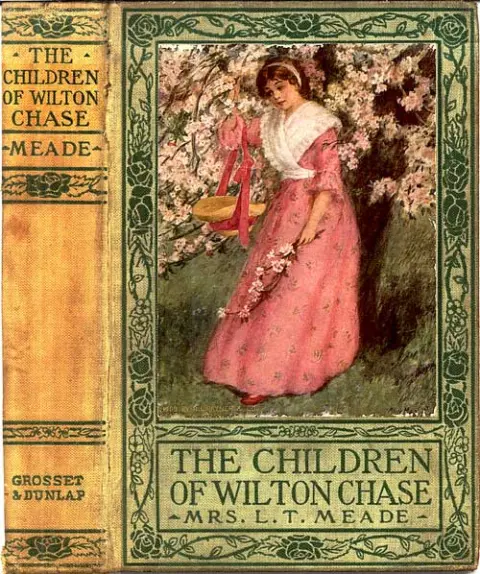
"The Children of Wilton Chase" by L. T. Meade is a novel written in the late 19th century. The story revolves around childhood and family dynamics set in the picturesque backdrop of Wilton Chase, where several children navigate their relationships and personal challenges. Key characters include the rebellious Ermengarde, her more thoughtful sister Marjorie, and the caring yet stern governess Miss Nelson, who grapples with her authority and attachments to the children. The opening of the narrative introduces us to Ermengarde's immediate defiance against the authority of Miss Nelson, illustrating her tumultuous feelings as she prepares to meet her brothers returning from school. Notably, Ermengarde is determined to assert her independence by disobeying the governess, while Marjorie exhibits a willingness to support her sister despite the consequences. The children of Wilton Chase are characterized by their lively interactions and conflicts, especially surrounding themes of obedience and rebellion, setting the tone for the unfolding drama and exploration of childhood ethics, loyalty, and personal growth. The beginning hints at deeper storylines involving friendship, disobedience, and the consequences of one's actions.
Introduction adapted from the source catalogue; source summaries may be automatically generated.
Free to read · English · 55,265 words · No account needed
MAKE TIME FOR A GOOD BOOK
On by default. Untick to stop anonymous reading totals. Each page counts after 10 seconds in view. How this works.
Anonymous counting is on unless you have switched it off.
"Gently, little ones! What is all this noise about?" she said. "Molly and Dick, you must have breakfast with nurse, if you can't behave better in the schoolroom. Good-morning, Ermengarde, my dear. I am sorry I shall be obliged to give you a bad mark for being late at breakfast. Why, my dear child," changing her note to one of concern, "what has happened to you? You have got quite an ugly scar your forehead. How did you get it?"
"I fell," said Ermengarde, in a low voice.
"You fell--where?"
Ermengarde felt that Basil had ceased to use his knife and fork, while he listened for her reply. She seized a cup of scalding tea, and choked over its contents.
"Where did you fall my dear?" asked the governess kindly.
"Please, ma'am, Ermengarde and Maggie had a stand-up fight in the middle of the night," interrupted Eric. "Oh, my stars!" he added, sotto voce, "if fight and night ain't a rhyme made unbeknown. Now I can wish."
"Shut up!" growled Basil.
"Eric, be quiet," said the governess.
She turned again to Ermengarde. Her manner was very gentle.
"Where did you fall, dear?" she said, "You have given yourself a very nasty cut, and should have come to me for some dressing for it. But where did it happen, my love?"
"In the park," said Ermengarde, in a low voice. "I fell over a bramble
and cut myself."
"I never saw you fall, Ermie," said Marjorie. "Was it when we all had that race, just when the fireworks were over? How brave of you not to make a fuss! it must have been then."
"You don't look well, dear," continued the governess. "Your eyes have red rings round them, and you are paler than such a healthy little girl ought to be. Have you a headache?"
"Yes," confessed Ermengarde. She could at least be truthful here, for her head ached considerably.
"You shall have some of my eau de Cologne to use if you like,
darling," whispered Marjorie.
"Now, children," said Miss Nelson, rising from the breakfast-table, and making one of those prim little speeches which Ermengarde detested, "having had our day of pleasure, we will return with greater zest to our usual employments. Little ones, go quietly up to nurse. No noise, please. Leave the breakfast-room hand in hand. Boys, I must request of you not to disturb your sisters with any hammering or noisy carpentering this morning."
"Please, are the ferrets far enough away for me to have a quiet little game with them?" asked Eric meekly. He pulled his forelock as he spoke, and put on the air of a charity-schoolboy.
Your reading position is saved on this browser. Take it to another device with a library code. Reading pages adapt to text, rather than matching a printed edition.
BEHIND THE BOOK
This eBook is for the use of anyone anywhere in the United States and most other parts of the world at no cost and with almost no restrictions whatsoever. You may copy it, give it away or re-use it under the terms of the Project Gutenberg License included with this eBook or online at www.gutenberg.org. If you are not located in the United States, you will have to check the laws of the country where you are located before using this eBook. Read the source licence.
The original source file, including credits and licence, is retained by this library. Request an original-format copy at no charge. Please include the book title and Project Gutenberg identifier #26409.
KEEP YOUR CURIOSITY GOING
Coulson Kernahan

Maurice Baring
Frances Wright
Cécile Tormay

Frederic Jesup Stimson

W. H. P. (William Henry Pope) Jarvis


