
A Son of Ishmael: A Novel
L. T. Meade
THE CLASSIC COLLECTION · 1891
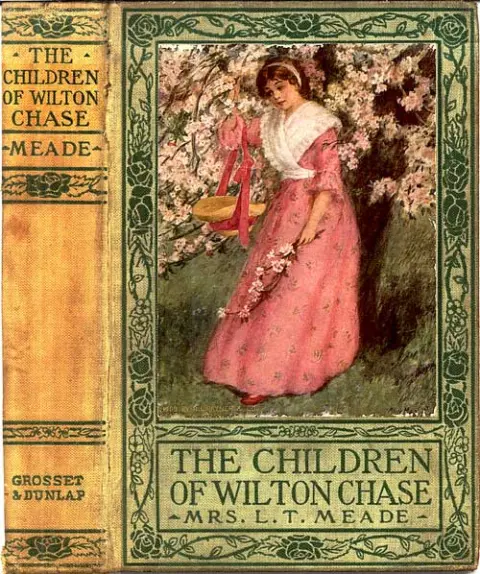
"The Children of Wilton Chase" by L. T. Meade is a novel written in the late 19th century. The story revolves around childhood and family dynamics set in the picturesque backdrop of Wilton Chase, where several children navigate their relationships and personal challenges. Key characters include the rebellious Ermengarde, her more thoughtful sister Marjorie, and the caring yet stern governess Miss Nelson, who grapples with her authority and attachments to the children. The opening of the narrative introduces us to Ermengarde's immediate defiance against the authority of Miss Nelson, illustrating her tumultuous feelings as she prepares to meet her brothers returning from school. Notably, Ermengarde is determined to assert her independence by disobeying the governess, while Marjorie exhibits a willingness to support her sister despite the consequences. The children of Wilton Chase are characterized by their lively interactions and conflicts, especially surrounding themes of obedience and rebellion, setting the tone for the unfolding drama and exploration of childhood ethics, loyalty, and personal growth. The beginning hints at deeper storylines involving friendship, disobedience, and the consequences of one's actions.
Introduction adapted from the source catalogue; source summaries may be automatically generated.
Free to read · English · 55,265 words · No account needed
MAKE TIME FOR A GOOD BOOK
On by default. Untick to stop anonymous reading totals. Each page counts after 10 seconds in view. How this works.
Anonymous counting is on unless you have switched it off.
Ermengarde was never proof against flattery. A satisfied smile stole
now over her face.
"I was not at all afraid," she said. "I had given my word that I would come, and of course a lady's word must always be kept. How is Susy, Mrs. Collins?"
"Oh, my dear, but poorly. Very fractious and feverish, and her pain is considerable. But she'll be better after she has seen you, my sweet young lady, for no one knows better than Susy how to appreciate condescension."
"Well, I can't wait more than a minute, Mrs. Collins. I'll just run up and say good-night to Susy, and then I must be off."
"Shall I light you up, miss?"
"No, thank you, I can see my way perfectly."
Ermengarde ran up the little wooden ladder-like stairs, and bounded somewhat noisily into Susy's bedroom.
"Here I am, Susy; now give me the miniature at once. I'll hide it
under my waterproof cloak."
"I can't reach to it, miss," said Susy. "It's where you put it this morning, atween the mattress and the paillasse, and I had the greatest work keeping mother's hands off it, for she was bent on making the bed all over again."
"Well, I'll take it now. Yes, here it is."
Ermengarde pulled the little case from under the bed.
"O Susy!" she said, uttering an exclamation of dismay, "what shall we do? The ivory on which the picture is painted is cracked right across! Oh, what a queer expression it gives to the little girl's face, and what will Miss Nelson say?"
"Now, miss, you're not going to betray me about it, and me so bad and
ill?"
"No, you little coward, you shan't get into any scrape. How did this happen? The picture was right enough this morning."
"I expect it was the way you pushed it under the bed, miss. It got knocked most likely, and father was sitting just over it for an hour and more this afternoon, and he's a goodish weight."
"Well, I shall take the miniature away now, so good-night, Susy. I'm very sorry I ever made such a little thief as you are my friend. A nice scrape you've got me into!"
Ermengarde thrust the miniature under her waterproof, and rushed
downstairs.
"Good-night, Mrs. Collins," she said.
"Stay a minute, miss. Collins is just coming in, and he'll see you
home."
"No, I can't possibly wait. I think Susy is better--good-night."
"But ain't you afeared to go right across the park by yourself at this
hour, miss?"
"No--no--no; good-night, good-night!"
Your reading position is saved on this browser. Take it to another device with a library code. Reading pages adapt to text, rather than matching a printed edition.
BEHIND THE BOOK
This eBook is for the use of anyone anywhere in the United States and most other parts of the world at no cost and with almost no restrictions whatsoever. You may copy it, give it away or re-use it under the terms of the Project Gutenberg License included with this eBook or online at www.gutenberg.org. If you are not located in the United States, you will have to check the laws of the country where you are located before using this eBook. Read the source licence.
The original source file, including credits and licence, is retained by this library. Request an original-format copy at no charge. Please include the book title and Project Gutenberg identifier #26409.
KEEP YOUR CURIOSITY GOING
Coulson Kernahan

Maurice Baring
Frances Wright
Cécile Tormay

Frederic Jesup Stimson

W. H. P. (William Henry Pope) Jarvis


