
A Son of Ishmael: A Novel
L. T. Meade
THE CLASSIC COLLECTION · 1891
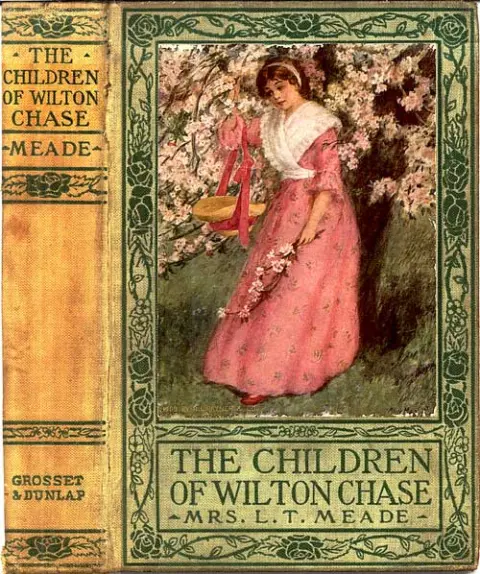
"The Children of Wilton Chase" by L. T. Meade is a novel written in the late 19th century. The story revolves around childhood and family dynamics set in the picturesque backdrop of Wilton Chase, where several children navigate their relationships and personal challenges. Key characters include the rebellious Ermengarde, her more thoughtful sister Marjorie, and the caring yet stern governess Miss Nelson, who grapples with her authority and attachments to the children. The opening of the narrative introduces us to Ermengarde's immediate defiance against the authority of Miss Nelson, illustrating her tumultuous feelings as she prepares to meet her brothers returning from school. Notably, Ermengarde is determined to assert her independence by disobeying the governess, while Marjorie exhibits a willingness to support her sister despite the consequences. The children of Wilton Chase are characterized by their lively interactions and conflicts, especially surrounding themes of obedience and rebellion, setting the tone for the unfolding drama and exploration of childhood ethics, loyalty, and personal growth. The beginning hints at deeper storylines involving friendship, disobedience, and the consequences of one's actions.
Introduction adapted from the source catalogue; source summaries may be automatically generated.
Free to read · English · 55,265 words · No account needed
MAKE TIME FOR A GOOD BOOK
On by default. Untick to stop anonymous reading totals. Each page counts after 10 seconds in view. How this works.
Anonymous counting is on unless you have switched it off.
Eric's voice became piteous, but the eyes remained closed, the face
peaceful and immovable.
"We might both of us jump on the bed at the same moment," said Eric. "That ought to shake him a good bit, and perhaps he'd begin to yawn. Oh, jolly, it's a spring mattress; we can give him a great bounce if we jump on together. Now then, Mag, be sure you jump when I do."
Marjorie, still looking rather terrified, but led on by Eric's indomitable spirit, did spring on the bed, and so heavily that she rolled on to Mr. Wilton's leg. He started, groaned, said "Down, Gyp!" in a very angry voice, and once more pursued his way in dreamland, without any idea that two little imps were perched each on one side of his pillow.
"It's too bad," said Eric. "The whole morning will go at this rate; it will soon be five o'clock. Oh, I say--pater--father--gov! do wake!"
"You shouldn't say pater or gov," said Marjorie. "Father doesn't like
it."
"Much he cares! He doesn't hear anything. He's stone deaf--he's no
good at all!"
"Well, we shouldn't say words he doesn't like, even if he is asleep," said Marjorie in her properest tones.
"I like that," said Eric. "And why mayn't I say pater, I wonder? Pater is the Latin of father. It's a much nicer word than father, and all our fellows say it. You think it isn't respectful because you're an ignorant girl, Maggie, but Julius Caesar used to say pater when he was young, so I suppose I may."
"Father looks very handsome in his sleep," said Marjorie, turning her head on one side, and looking sentimentally at her parent.
"He doesn't," said Eric. "He looks much better with his eyes open. Oh, I say, I can't stand this! The morning will go, and we'll never get our water-lilies. Father, wake up! Father, it's your birthday! Don't you hear us? Here, Mag, let's begin to jump up and down again on the bed. Couldn't you manage to hop on his leg by accident? You're heavier than me."
Marjorie and Eric joined hands, the fun entered into their souls, and they certainly jumped with energy.
Mr. Wilton began to have a very bad dream. Gyp, his favorite spaniel, seemed suddenly to have changed into a fiend, and to have seized him by the leg. Finally the dream dissolved itself into a medley of laughter and childish cries. He opened his eyes: two little figures with very red faces and very disordered hair were tumbling about on his bed.
"Eh--what? Is the house on fire?" he gasped.
Your reading position is saved on this browser. Take it to another device with a library code. Reading pages adapt to text, rather than matching a printed edition.
BEHIND THE BOOK
This eBook is for the use of anyone anywhere in the United States and most other parts of the world at no cost and with almost no restrictions whatsoever. You may copy it, give it away or re-use it under the terms of the Project Gutenberg License included with this eBook or online at www.gutenberg.org. If you are not located in the United States, you will have to check the laws of the country where you are located before using this eBook. Read the source licence.
The original source file, including credits and licence, is retained by this library. Request an original-format copy at no charge. Please include the book title and Project Gutenberg identifier #26409.
KEEP YOUR CURIOSITY GOING
Coulson Kernahan

Maurice Baring
Frances Wright
Cécile Tormay

Frederic Jesup Stimson

W. H. P. (William Henry Pope) Jarvis


