
A Son of Ishmael: A Novel
L. T. Meade
THE CLASSIC COLLECTION · 1891
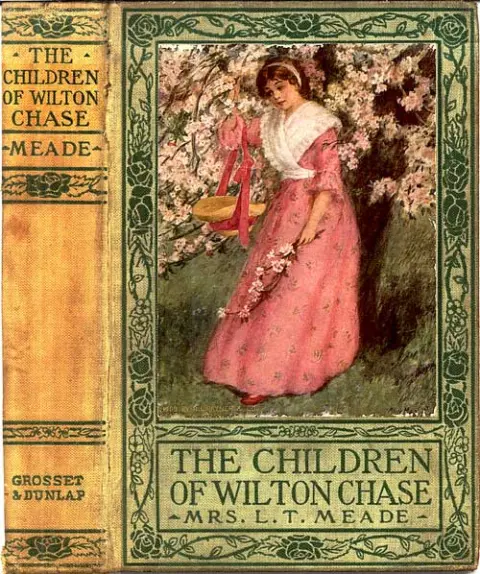
"The Children of Wilton Chase" by L. T. Meade is a novel written in the late 19th century. The story revolves around childhood and family dynamics set in the picturesque backdrop of Wilton Chase, where several children navigate their relationships and personal challenges. Key characters include the rebellious Ermengarde, her more thoughtful sister Marjorie, and the caring yet stern governess Miss Nelson, who grapples with her authority and attachments to the children. The opening of the narrative introduces us to Ermengarde's immediate defiance against the authority of Miss Nelson, illustrating her tumultuous feelings as she prepares to meet her brothers returning from school. Notably, Ermengarde is determined to assert her independence by disobeying the governess, while Marjorie exhibits a willingness to support her sister despite the consequences. The children of Wilton Chase are characterized by their lively interactions and conflicts, especially surrounding themes of obedience and rebellion, setting the tone for the unfolding drama and exploration of childhood ethics, loyalty, and personal growth. The beginning hints at deeper storylines involving friendship, disobedience, and the consequences of one's actions.
Introduction adapted from the source catalogue; source summaries may be automatically generated.
Free to read · English · 55,265 words · No account needed
MAKE TIME FOR A GOOD BOOK
On by default. Untick to stop anonymous reading totals. Each page counts after 10 seconds in view. How this works.
Anonymous counting is on unless you have switched it off.
Susy, however, had no wish not to keep on the sunny side of Miss Ermengarde's affections, and after her momentary irritation had cooled down, she adroitly changed the subject. Once more she administered broad flatteries; and impressed upon Ermengarde the fact that she was a long-suffering and ill-used martyr.
"I wouldn't stand it," said Susy. "No, that I wouldn't. I ain't a lady like you, Miss Ermie, but I wouldn't stand what you do."
"What would you do, Susy? How would you help yourself?"
"What would I do? Well, I'd go to my pa', and I'd have a talk with him. I'd let him know that--obey that old horror of a governess?"
"You mustn't speak about her like that, really, Susy."
"Miss, I'm open; that's what I am. I says what I means, and when I see a poor dear put upon, and treated worse than a baby, and punished as if we were back in feudal ages, I say that the one who does it is a horror. You think the same, Miss Ermie, though you're too proud to say it."
"We don't express ourselves in that way in our class," said Ermengarde, with a slow distinguished sort of smile which always abashed Susy. "Yes, Miss Nelson is very suitable with the children, but I do think I am beyond her. I am old for my years, and no one can call fourteen young."
"It's a noble age, miss," said Susy, in a tone of rapture. "I'm only twelve, but I aspires to fourteen continual."
"Oh, you," said Ermengarde. "You're different; girls in your class don't come out. You are not presented, you have no future. It is quite a different matter with me. I shall be in society in a few years at latest. What I should like my father to do is----"
"To send you to a select seminary, miss--I know!"
"You don't know, Susan, A select seminary! the very word is vulgar. No; I should like my father to allow me to pursue my own education under the control of masters who are specialists in each branch."
"Miss, you talk very learned."
Susan suppressed a yawn, and going to the window looked out.
"I know what I'd do," she said. "I'd pay that fine lady governess of yours out. It would be tit for tat with me. Couldn't you do something as would put her in a fret, Miss Ermie?"
"I don't know what to do," said Ermengarde. "Miss Nelson is not easily
fretted."
"Well, I'd find a way. Certainly I'd do something; see if I wouldn't."
Your reading position is saved on this browser. Take it to another device with a library code. Reading pages adapt to text, rather than matching a printed edition.
BEHIND THE BOOK
This eBook is for the use of anyone anywhere in the United States and most other parts of the world at no cost and with almost no restrictions whatsoever. You may copy it, give it away or re-use it under the terms of the Project Gutenberg License included with this eBook or online at www.gutenberg.org. If you are not located in the United States, you will have to check the laws of the country where you are located before using this eBook. Read the source licence.
The original source file, including credits and licence, is retained by this library. Request an original-format copy at no charge. Please include the book title and Project Gutenberg identifier #26409.
KEEP YOUR CURIOSITY GOING
Coulson Kernahan

Maurice Baring
Frances Wright
Cécile Tormay

Frederic Jesup Stimson

W. H. P. (William Henry Pope) Jarvis


