
A Son of Ishmael: A Novel
L. T. Meade
THE CLASSIC COLLECTION · 1891
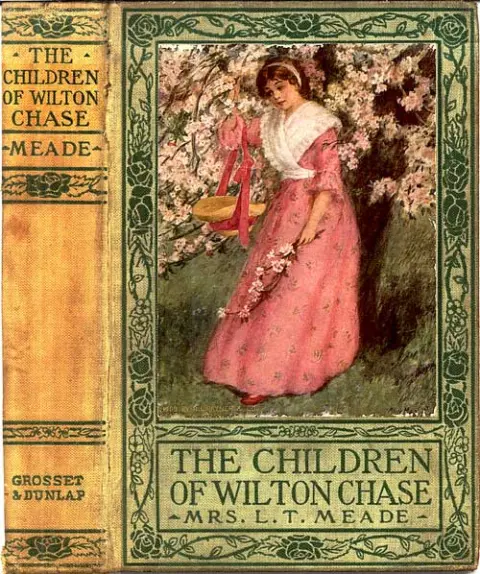
"The Children of Wilton Chase" by L. T. Meade is a novel written in the late 19th century. The story revolves around childhood and family dynamics set in the picturesque backdrop of Wilton Chase, where several children navigate their relationships and personal challenges. Key characters include the rebellious Ermengarde, her more thoughtful sister Marjorie, and the caring yet stern governess Miss Nelson, who grapples with her authority and attachments to the children. The opening of the narrative introduces us to Ermengarde's immediate defiance against the authority of Miss Nelson, illustrating her tumultuous feelings as she prepares to meet her brothers returning from school. Notably, Ermengarde is determined to assert her independence by disobeying the governess, while Marjorie exhibits a willingness to support her sister despite the consequences. The children of Wilton Chase are characterized by their lively interactions and conflicts, especially surrounding themes of obedience and rebellion, setting the tone for the unfolding drama and exploration of childhood ethics, loyalty, and personal growth. The beginning hints at deeper storylines involving friendship, disobedience, and the consequences of one's actions.
Introduction adapted from the source catalogue; source summaries may be automatically generated.
Free to read · English · 55,265 words · No account needed
MAKE TIME FOR A GOOD BOOK
On by default. Untick to stop anonymous reading totals. Each page counts after 10 seconds in view. How this works.
Anonymous counting is on unless you have switched it off.
Ermengarde looked round her apprehensively. She had been many times forbidden to have any intercourse with Susan Collins, whose father, although he retained his post as gamekeeper, was regarded by Mr. Wilton as a somewhat shady character. Ermengarde fancied she liked Susy because of the little girl's remarkable beauty, but the real reason why her fancy was captivated was because Susy was an adroit flatterer.
When she spoke about trees having ears, Ermengarde glanced to right
and left.
"Perhaps you had better go," she said. "I have got into one scrape. I don't want to get into a second."
"There's no one round yet, miss. The men are all at their dinners."
"Well, but some of the house-servants."
"There are none of them in sight, Miss Ermengarde. Do you think I'd get you into trouble on my account? Oh, dear, I wish I could come up and sit with you for a little."
"I wish you could, Susy."
"Well, miss, it's easy done, if you'll only say the word."
"What do you mean? This door is locked. Hudson has to bring me my meals, and no one in all the world can bribe Hudson to open the door."
"I don't want her to, miss. Oh, Miss Ermengarde, you are treated
'ard."
"Yes, Susy, I am treated very hard. Well, as you can't come and keep me company, you had better go away."
"But I can come to you, miss. A locked door won't keep me out. I'll hide my basket of eggs behind that laurel bush, and then I'll be with you in a jiffy."
"Can you really come? What fun! You are a clever girl, Susy."
"You wait and see, miss."
Susan Collins rushed off, adroitly hid her basket, and returning, climbed up an elm tree which happened to grow a few feet from the window, with the lightness and agility of a cat. When she reached a certain bough she lay along it, and propelled herself very gently forward in the direction of the window.
"Now stretch out your two hands, miss."
Ermengarde did so, and in a moment Susy was standing by her side in Miss Nelson's pretty little room.
"My word!" she exclaimed. "I never see'd such a lot of grand things before. Tell me, Miss Ermengarde, do all these fine books and pictures belong to the governess?"
"Oh, yes; those are pictures of Miss Nelson's friends."
"Dear me, what a queer-looking young lady that is, that one in the white dress, and long legs, and the hair done old-fashioned like."
Your reading position is saved on this browser. Take it to another device with a library code. Reading pages adapt to text, rather than matching a printed edition.
BEHIND THE BOOK
This eBook is for the use of anyone anywhere in the United States and most other parts of the world at no cost and with almost no restrictions whatsoever. You may copy it, give it away or re-use it under the terms of the Project Gutenberg License included with this eBook or online at www.gutenberg.org. If you are not located in the United States, you will have to check the laws of the country where you are located before using this eBook. Read the source licence.
The original source file, including credits and licence, is retained by this library. Request an original-format copy at no charge. Please include the book title and Project Gutenberg identifier #26409.
KEEP YOUR CURIOSITY GOING
Coulson Kernahan

Maurice Baring
Frances Wright
Cécile Tormay

Frederic Jesup Stimson

W. H. P. (William Henry Pope) Jarvis


