
A Son of Ishmael: A Novel
L. T. Meade
THE CLASSIC COLLECTION · 1891
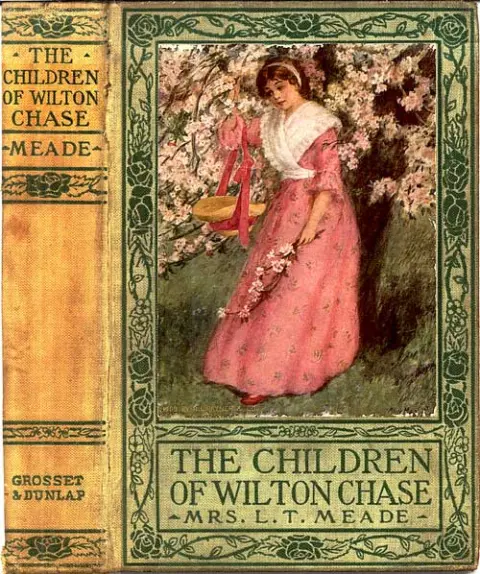
"The Children of Wilton Chase" by L. T. Meade is a novel written in the late 19th century. The story revolves around childhood and family dynamics set in the picturesque backdrop of Wilton Chase, where several children navigate their relationships and personal challenges. Key characters include the rebellious Ermengarde, her more thoughtful sister Marjorie, and the caring yet stern governess Miss Nelson, who grapples with her authority and attachments to the children. The opening of the narrative introduces us to Ermengarde's immediate defiance against the authority of Miss Nelson, illustrating her tumultuous feelings as she prepares to meet her brothers returning from school. Notably, Ermengarde is determined to assert her independence by disobeying the governess, while Marjorie exhibits a willingness to support her sister despite the consequences. The children of Wilton Chase are characterized by their lively interactions and conflicts, especially surrounding themes of obedience and rebellion, setting the tone for the unfolding drama and exploration of childhood ethics, loyalty, and personal growth. The beginning hints at deeper storylines involving friendship, disobedience, and the consequences of one's actions.
Introduction adapted from the source catalogue; source summaries may be automatically generated.
Free to read · English · 55,265 words · No account needed
MAKE TIME FOR A GOOD BOOK
On by default. Untick to stop anonymous reading totals. Each page counts after 10 seconds in view. How this works.
Anonymous counting is on unless you have switched it off.
Ermengarde and Marjorie slept in two pretty white beds, side by side, in this nice, large, cheerful bedroom. Ermengarde was completely mistress, but she did not object to Marjorie's company, for Marjorie was very plodding and useful and self-forgetful, and Ermie liked to be waited on, and her complaints listened to, and her worries sympathized with.
In many ways she was a commonplace child. She had a handsome little face, and a proud, overbearing manner. She thought a great deal more highly of herself than she ought, and she was a constant trial to Miss Nelson, who was a most patient, long-suffering woman.
Ermengarde had been directly disobedient that morning, and as a punishment Miss Nelson had decided that she was not to go in the carriage to meet her brothers at the railway station. The little girl had stared, bridled, drawn herself up in her haughtiest style, and determined openly to defy Miss Nelson.
She had never gone to this length of rebellion before, and when the governess went down to the seashore, accompanied by two or three of the children, she imagined that Ermengarde would attend to her neglected lessons, and presently join them on the beach.
"Marjorie," said the governess, as she suddenly met the little girl in the grounds, "I am deeply sorry, but I am forced to punish Ermengarde. She is not to go to meet your brothers; but would you--only, my dear child, you do look so dirty and untidy--would you like to go in the carriage? You are a good little girl; it would be a treat for you."
"I could get cleaned in a minute," said Marjorie. "There's my brown Holland overall, and Hudson could brush my hair, and make it tidy."
Then she flushed, and the wistful, eager expression went out of her
eyes.
"Perhaps I had better not," she said.
"Why so, my dear child?"
Marjorie was thinking of Ermengarde. She could not complain of her sister, but to sit by and witness her disobedience would destroy her own pleasure.
"Ermie wouldn't like it, either," she whispered under her breath. "I wish I hadn't got honest eyes; Ermie says they look so horrid when I don't like a thing."
"Well, Marjorie, are you going, or are you not?" said Miss Nelson.
"I think not, Miss Nelson," said Marjorie, in a cheerful voice. "Nurse says Bob is sure to have another teething fit, so of course he'll be fractious, and she'll want me to pick up shells for him."
"Well, dear, you must please yourself," answered Miss Nelson gently.
Your reading position is saved on this browser. Take it to another device with a library code. Reading pages adapt to text, rather than matching a printed edition.
BEHIND THE BOOK
This eBook is for the use of anyone anywhere in the United States and most other parts of the world at no cost and with almost no restrictions whatsoever. You may copy it, give it away or re-use it under the terms of the Project Gutenberg License included with this eBook or online at www.gutenberg.org. If you are not located in the United States, you will have to check the laws of the country where you are located before using this eBook. Read the source licence.
The original source file, including credits and licence, is retained by this library. Request an original-format copy at no charge. Please include the book title and Project Gutenberg identifier #26409.
KEEP YOUR CURIOSITY GOING
Coulson Kernahan

Maurice Baring
Frances Wright
Cécile Tormay

Frederic Jesup Stimson

W. H. P. (William Henry Pope) Jarvis


