THE CLASSIC COLLECTION✦An outlaw’s diary: the CommuneCLASSIC FREE BOOKS
An outlaw’s diary: the Commune
Cécile Tormay
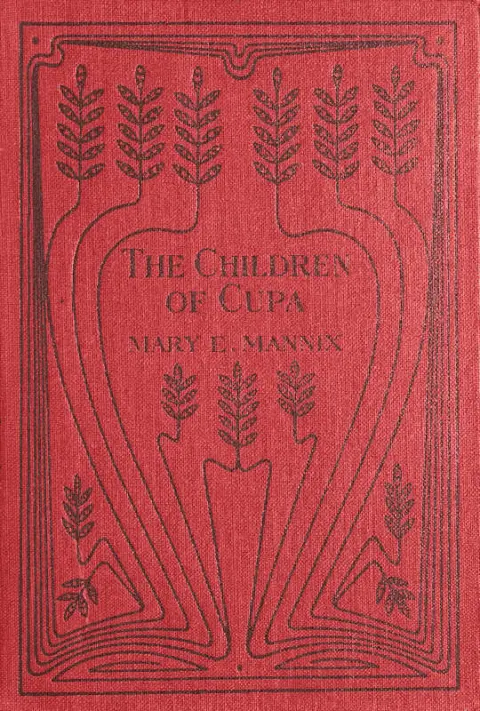
THE CLASSIC COLLECTION · 1905
"The Children of Cupa" by Mary E. Mannix is a novel written in the early 20th century. The story centers around the Page family, specifically Mrs. Page, who is recovering from illness, and her two children, Nellie and Walter, as they embark on a summer camping trip to Warner's Hot Springs in California. Alongside the family's adventures, the narrative highlights the experiences of the local Cupeño Indians, who face the injustice of being evicted from their ancestral lands. At the start of the book, the Page family discusses plans to take Mrs. Page to a healing location while navigating the complexities around the rights of the Cupeño Indians. Through dialogue among family members and their aunt, we learn about the cool springs, the camping arrangements, and the children's excitement about the idea of living in an Indian village. The conversations touch on sensitive topics like the dislocation of Native people and health, blending the themes of family bonding with cultural conflict and the historical context of land ownership in California. As the family begins their journey, the children look forward to exploring their new environment and interacting with the indigenous community, setting the stage for a rich exploration of both personal and cultural narratives.
Introduction adapted from the source catalogue; source summaries may be automatically generated.
Free to read · English · 32,835 words · No account needed
MAKE TIME FOR A GOOD BOOK
On by default. Untick to stop anonymous reading totals. Each page counts after 10 seconds in view. How this works.
Anonymous counting is on unless you have switched it off.
Walter looked mystified. Ramona hastened to explain. "When he was little," she said, "Alejandro did not live with us. I have been with my grandmother since my father died. Alejandro was a little baby then. Our mother sent him, when he was old enough, to the Mission."
"And then my sister found me," added the boy. "But for her I should never have come here or known my grandmother."
"Well, that is too long a story," said Ramona. "Maybe some other time you will hear it, but not now. What were you going to say before, 'Jandro?"
"About 'bold,'" replied her brother. "When I first went up there some English words were strange to me. Or, rather, I did not understand their different meanings. One day a big boy, a new one, too, said he did not like bold girls. 'I like every one to be bold,' I said. 'Girls are horrid when they are bold,' said he. 'Sometimes they have to be,' I said. 'Suppose a mountain lion should come, and a girl would have to save herself from him, and would shoot, though afraid--then she would be bold.' Oh, how he laughed; and he said, 'You mean brave, don't you?' And then he told me the difference."
"If you like Indians maybe you would be pleased to hear some Indian
songs," said Ramona.
"We would," replied Nellie. "There was a little baby up at the Springs, and its father used to put it to sleep in the afternoons by swinging it in a hammock. He sang in the queerest way. His song was pretty, too; but whenever he saw that we were listening he would stop."
"Come, then, to Concelio in the kitchen--she will sing for you," said
Alejandro.
They followed their young host, Nellie holding fast to Ramona's hand. Concelio was shelling peas.
"You must sing for these friends of ours, Concelio," said Alejandro. "Shall I get your guitar, Ramona? It sounds so much prettier with the guitar."
"Maybe they will not like," said the old woman, "my voice is so
cracked."
"Oh, but we will," rejoined Walter. "We love the Indians, and we like their songs." The old woman murmured something in Spanish, still smiling, however.
"What did she say?" whispered Nellie to Ramona.
"She said you were strange white people if you loved the Indians, but that she believed you were speaking the truth and would sing for you."
Alejandro returned with the guitar. Concelio seated herself on the doorstep with the group around her.
Your reading position is saved on this browser. Take it to another device with a library code. Reading pages adapt to text, rather than matching a printed edition.
BEHIND THE BOOK
This eBook is for the use of anyone anywhere in the United States and most other parts of the world at no cost and with almost no restrictions whatsoever. You may copy it, give it away or re-use it under the terms of the Project Gutenberg License included with this eBook or online at www.gutenberg.org. If you are not located in the United States, you will have to check the laws of the country where you are located before using this eBook. Read the source licence.
The original source file, including credits and licence, is retained by this library. Request an original-format copy at no charge. Please include the book title and Project Gutenberg identifier #55852.
KEEP YOUR CURIOSITY GOING
Cécile Tormay

Moritz Busch
Coulson Kernahan
John L. Ransom

Maurice Baring
Frances Wright