THE CLASSIC COLLECTION✦An outlaw’s diary: the CommuneCLASSIC FREE BOOKS
An outlaw’s diary: the Commune
Cécile Tormay
THE CLASSIC COLLECTION · 1905
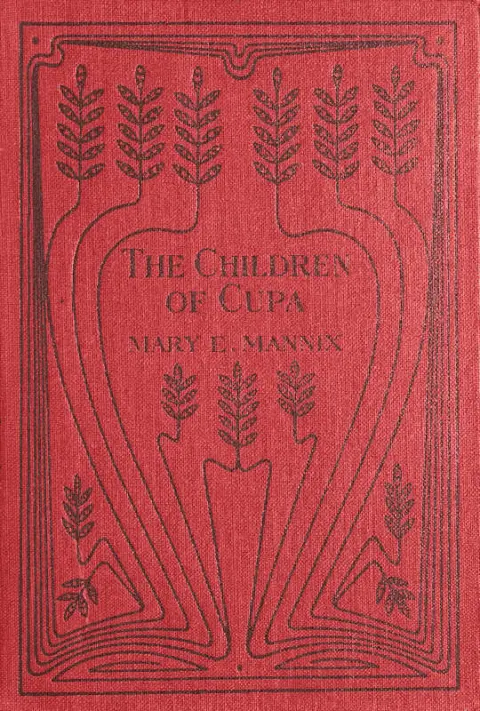
"The Children of Cupa" by Mary E. Mannix is a novel written in the early 20th century. The story centers around the Page family, specifically Mrs. Page, who is recovering from illness, and her two children, Nellie and Walter, as they embark on a summer camping trip to Warner's Hot Springs in California. Alongside the family's adventures, the narrative highlights the experiences of the local Cupeño Indians, who face the injustice of being evicted from their ancestral lands. At the start of the book, the Page family discusses plans to take Mrs. Page to a healing location while navigating the complexities around the rights of the Cupeño Indians. Through dialogue among family members and their aunt, we learn about the cool springs, the camping arrangements, and the children's excitement about the idea of living in an Indian village. The conversations touch on sensitive topics like the dislocation of Native people and health, blending the themes of family bonding with cultural conflict and the historical context of land ownership in California. As the family begins their journey, the children look forward to exploring their new environment and interacting with the indigenous community, setting the stage for a rich exploration of both personal and cultural narratives.
Introduction adapted from the source catalogue; source summaries may be automatically generated.
Free to read · English · 32,835 words · No account needed
MAKE TIME FOR A GOOD BOOK
On by default. Untick to stop anonymous reading totals. Each page counts after 10 seconds in view. How this works.
Anonymous counting is on unless you have switched it off.
"No, not that," replied Walter. "But it was this--you look so much like Francisco, an Indian boy we liked so much at the Hot Springs, only you are not so dark."
"Francisco Perez?" asked Alejandro. "So I ought--he is my cousin."
"Your cousin!" exclaimed Walter and Nellie.
"Yes, he is our cousin," repeated Alejandro, stoutly. "He and
Mauricio--and Cecilio--and many others at Warner's. Our mother is an
Indian."
"Oh, I am sorry," said Walter, fearing he had made a mistake. "I would not have said anything----"
"And why not?" interrupted the other boy. "We are not ashamed of it, Ramona nor I. Our mother is a good woman. Our father was the son of my grandmother."
"Naturally," said Ramona, and they all laughed, at the expense of
Alejandro.
"I am not sure that I would have told you," said Alejandro, "only I knew that you did not despise the poor Indians as some do----"
"Despise them!" exclaimed Nellie. "We like them, and we love Francisco."
Ramona gave the child's hand an affectionate little squeeze. Nellie
looked up at her and said:
"You are so sweet. I wish we had known you all summer. And your hair is so lovely." Ramona was wearing it in one long, heavy braid. Nothing could have been more simple or becoming.
"We will be friends, then," she rejoined, playfully. "We have so few. My grandmother does not know the Americans well, but the Gordons she likes a great deal. And now that they are coming home and are your friends, we shall be all friends together."
"That will be nice," said Nellie. "I hope mamma will let me come and stay with you sometimes----"
"I don't call that nice," remarked Walter, "inviting yourself to a visit when you are hardly acquainted."
"Don't tease her," said Ramona. "She means well, and she shall come and
stay with me."
"You can't help asking her now," said Walter, looking very glum. "I never knew her to be so impolite and bold before."
"But Walter," said Nellie, "I meant for Ramona--may I call you Ramona?--to come and visit us, too. We are going to be great friends."
"Bold?" chuckled Alejandro, with a smile. "That makes me think of something. When I first went to Santa Clara I did not know English as well as I do now, although I had been at the Mission."
"With the Indians?" inquired Walter, thoughtlessly.
"With the Indians--yes," said Alejandro. "And why not? My mother put me there; it was a good place, and I liked the Sisters very much."
Your reading position is saved on this browser. Take it to another device with a library code. Reading pages adapt to text, rather than matching a printed edition.
BEHIND THE BOOK
This eBook is for the use of anyone anywhere in the United States and most other parts of the world at no cost and with almost no restrictions whatsoever. You may copy it, give it away or re-use it under the terms of the Project Gutenberg License included with this eBook or online at www.gutenberg.org. If you are not located in the United States, you will have to check the laws of the country where you are located before using this eBook. Read the source licence.
The original source file, including credits and licence, is retained by this library. Request an original-format copy at no charge. Please include the book title and Project Gutenberg identifier #55852.
KEEP YOUR CURIOSITY GOING
Cécile Tormay

Moritz Busch
Coulson Kernahan
John L. Ransom

Maurice Baring
Frances Wright