THE CLASSIC COLLECTION✦A dead man’s diaryCLASSIC FREE BOOKS
A dead man’s diary
Coulson Kernahan
THE CLASSIC COLLECTION · 1907
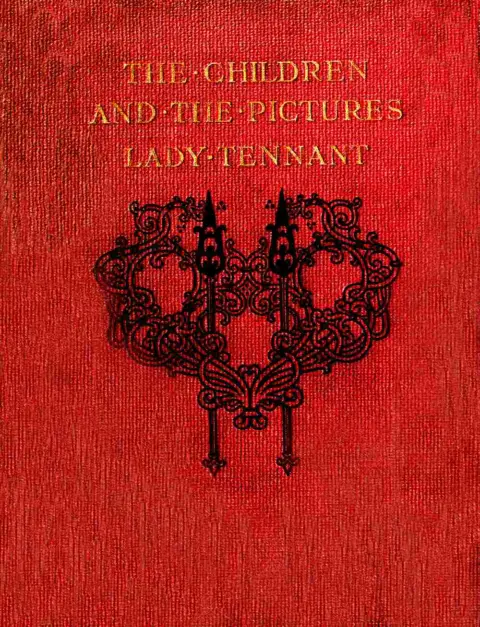
"The Children and the Pictures" by Pamela Grey is a children's novel written in the early 20th century. The narrative revolves around Clare, a young girl who embarks on an imaginative adventure involving children portrayed in paintings, including notable figures like Mrs. Inchbald and Robert Mayne. The story draws readers into a whimsical world where Clare interacts with these artistic creations, exploring themes of curiosity, imagination, and the contrast between reality and the depicted lives of the characters in art. At the start of the book, Clare wakes up in the midst of a quiet night and decides to go downstairs to find her doll, Natalie. As she moves through her house, she encounters Mrs. Inchbald—whose likeness resides in a painting—and their conversation reveals Clare's fascination with the differences between her modern life and the past. Mrs. Inchbald, initially intimidating, slowly reveals an endearing quality, leading Clare to discover other children in the pictures. The sense of whimsy and enchantment is heightened as Clare navigates between her dreams and the vivid personalities aligned with historic art, sparking a desire for exploration and connection with the painted children. This opening portion sets the stage for Clare’s adventure, intertwining her life with the fantastical realm of art and imagination.
Introduction adapted from the source catalogue; source summaries may be automatically generated.
Free to read · English · 45,078 words · No account needed
MAKE TIME FOR A GOOD BOOK
On by default. Untick to stop anonymous reading totals. Each page counts after 10 seconds in view. How this works.
Anonymous counting is on unless you have switched it off.
“Is it people’s fault when they are indifferent, or can’t they help
it?” asked Clare.
“Oh, there are folk who will close their eyes and sit in the very market-place of the universe, with their fingers in their ears.”
“Then a bullock runs into them, I suppose,” said Bim; “and they pick themselves up from the dust, saying, ‘What have I done to deserve it?’”
“Yes,” added Clare, “or they will say, ‘See, we were promised music to dance to, and where are the sweet strains?’”
All the older children would have shrunk from an allusion to the great grief of which the beautiful face before them bore so deep an impress, but one of the younger ones said:
“I’m so surprised that you, who are so sad to look at, should have such nice laughing eyes all the same when you speak, and seem so ready to be amused.”
Miss Ross did not answer immediately, her lips framed some words.
Only Clare who was nearest to her heard them, for she was speaking to
herself:
“And even yet I dare not let it languish, Dare not indulge in memory’s rapturous pain, Once drinking deep of that divinest anguish, How could I seek the empty world again?”
But aloud, she said to the little child who had spoken: “Sorrow and gladness are close together, the more you have it in your nature to suffer, the more thoroughly you can enjoy. And these two things, suffering and gladness, mean a full comprehension of life. The psalmist says, ‘Grant me understanding, and I shall live’ and understanding means the spirit that makes us accept our joys, our duties, and our sorrows; deliberately adjusting ourselves to them, giving them their place.
“It is a good prayer, ‘Help me better to bear my sorrows, and to more fully understand my joys.’ For only when we understand our joys do we find contentment.”
“There’s a poem Mummie read to us once,” said Bimbo, “in which a man tells how he had everything in life to make him happy. He had riches, he had houses, he had talents, he had friends, and lots of fun of every description, but he hadn’t contentment, and wanting that, he wanted all. And so he set out to seek her, and he travelled far and wide, till at last he went home, because he was tired. And there, when he got home, he found her by his own doorstep, sitting spinning!”
“Yes,” said Miss Ross; “I like that story. We have got to find her. And those who have grudges against Fate, and grievances, are the people who expect her to find them.
Your reading position is saved on this browser. Take it to another device with a library code. Reading pages adapt to text, rather than matching a printed edition.
BEHIND THE BOOK
This eBook is for the use of anyone anywhere in the United States and most other parts of the world at no cost and with almost no restrictions whatsoever. You may copy it, give it away or re-use it under the terms of the Project Gutenberg License included with this eBook or online at www.gutenberg.org. If you are not located in the United States, you will have to check the laws of the country where you are located before using this eBook. Read the source licence.
The original source file, including credits and licence, is retained by this library. Request an original-format copy at no charge. Please include the book title and Project Gutenberg identifier #64573.
KEEP YOUR CURIOSITY GOING
Coulson Kernahan

Maurice Baring
Frances Wright
Cécile Tormay

Frederic Jesup Stimson

W. H. P. (William Henry Pope) Jarvis