THE CLASSIC COLLECTION✦A dead man’s diaryCLASSIC FREE BOOKS
A dead man’s diary
Coulson Kernahan
THE CLASSIC COLLECTION · 1907
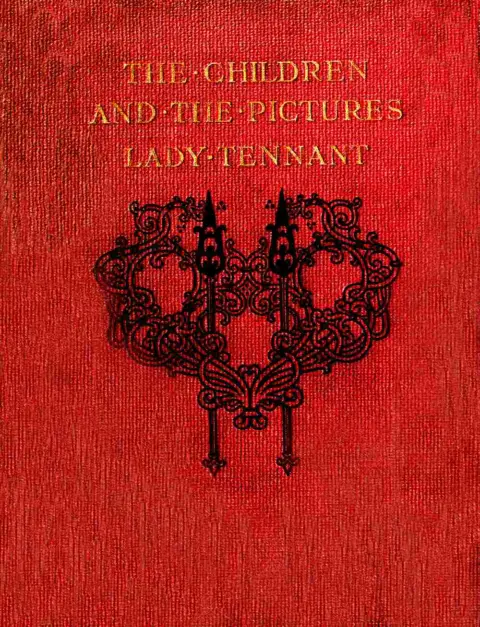
"The Children and the Pictures" by Pamela Grey is a children's novel written in the early 20th century. The narrative revolves around Clare, a young girl who embarks on an imaginative adventure involving children portrayed in paintings, including notable figures like Mrs. Inchbald and Robert Mayne. The story draws readers into a whimsical world where Clare interacts with these artistic creations, exploring themes of curiosity, imagination, and the contrast between reality and the depicted lives of the characters in art. At the start of the book, Clare wakes up in the midst of a quiet night and decides to go downstairs to find her doll, Natalie. As she moves through her house, she encounters Mrs. Inchbald—whose likeness resides in a painting—and their conversation reveals Clare's fascination with the differences between her modern life and the past. Mrs. Inchbald, initially intimidating, slowly reveals an endearing quality, leading Clare to discover other children in the pictures. The sense of whimsy and enchantment is heightened as Clare navigates between her dreams and the vivid personalities aligned with historic art, sparking a desire for exploration and connection with the painted children. This opening portion sets the stage for Clare’s adventure, intertwining her life with the fantastical realm of art and imagination.
Introduction adapted from the source catalogue; source summaries may be automatically generated.
Free to read · English · 45,078 words · No account needed
MAKE TIME FOR A GOOD BOOK
On by default. Untick to stop anonymous reading totals. Each page counts after 10 seconds in view. How this works.
Anonymous counting is on unless you have switched it off.
“‘Many do fear the goodly musherooms as poysonous damp weeds. But this doth in no ways abate the exceeding excellence of God’s Providence, that out of the grass and dew where nothing was, and where only the little worm turned in his sporte, come, as at the shaking of bells, these delicate meates.’
“The older you grow, children,” Miss Ross said, looking up from the book, “the more pleasure you will find in comfortable words. In well-adjusted phrase, and in lines that have beauty in their sound as in their imagery. I have found nourishment for the soul in the positive satisfaction to be derived from words.
‘With how slow steps, O Moon, thou climb’st the skies, How silently, and with how wan a face,’
and--
‘A world of leafage, murmurous and a-twinkle The green, delicious, plentitude of June.’
And these lines seem to me full of music.
‘O, Philomela fair, O, take some gladness, That here is juster cause for plaintful sadness. Thine earth now springs, mine fadeth. Thy thorn without, my thorn my heart invadeth.”
“These are only a few of the many fragments I have in my memory.”
“But poetry is nearly always so sad,” said Bimbo. “I like things with
jokes in them.”
“I know you do,” said Miss Ross, and her face was lovely when she smiled. “I know exactly what you feel like. When you get up in the morning you feel the whole day is not long enough for all you mean to do in it, the whole world is your playground. And when you glow after the cold bath there is nothing you don’t feel ready for, from wittling a stick, to building an empire. And you’re downstairs and out early, and ‘away to the meadows, the meadows again,’ with your rod and your line, and your bait at your belt, and your family see no more of you till dinner-time.”
The children gave a deep breath, for this made them think of water-meadows and minnow-fishing, marsh-marigolds in golden clumps, and deep, clear runlets.
“This is the fun of being young,” said Miss Ross, “prize it.”
“And what is the fun of being old?” asked Bimbo.
“Many people have asked that before you, but all those who see the right aspects of youth may be trusted, I think, to grow old properly. Good taste is the highest degree of sensibility. And nowhere so clearly as in growing old, is good taste more subtly evidenced.
“The great thing is to feel. Let every bit of you be alive, even though you may suffer. The only sin is indifference.”
Your reading position is saved on this browser. Take it to another device with a library code. Reading pages adapt to text, rather than matching a printed edition.
BEHIND THE BOOK
This eBook is for the use of anyone anywhere in the United States and most other parts of the world at no cost and with almost no restrictions whatsoever. You may copy it, give it away or re-use it under the terms of the Project Gutenberg License included with this eBook or online at www.gutenberg.org. If you are not located in the United States, you will have to check the laws of the country where you are located before using this eBook. Read the source licence.
The original source file, including credits and licence, is retained by this library. Request an original-format copy at no charge. Please include the book title and Project Gutenberg identifier #64573.
KEEP YOUR CURIOSITY GOING
Coulson Kernahan

Maurice Baring
Frances Wright
Cécile Tormay

Frederic Jesup Stimson

W. H. P. (William Henry Pope) Jarvis