THE CLASSIC COLLECTION✦A dead man’s diaryCLASSIC FREE BOOKS
A dead man’s diary
Coulson Kernahan
THE CLASSIC COLLECTION · 1893
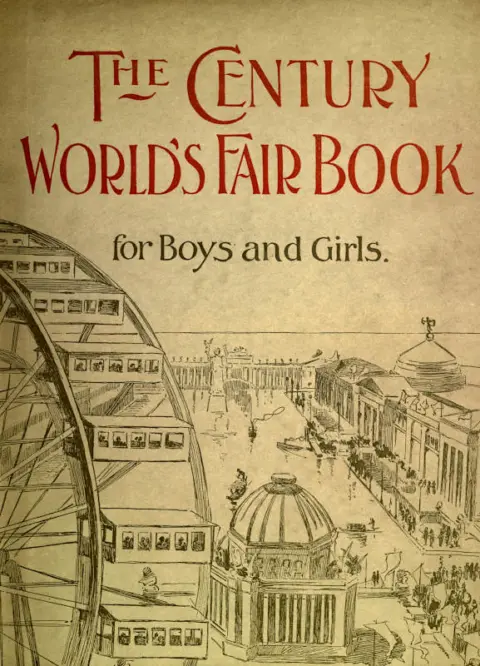
"The Century World's Fair Book for Boys and Girls" by Tudor Jenks is a children's adventure novel written in the late 19th century. The story follows two boys, Harry and Philip, along with their tutor, Mr. Douglass, as they embark on a journey to the World’s Columbian Exposition in Chicago. The book captures their experiences and discoveries at the fair, emphasizing themes of curiosity, learning, and exploration. At the start of the narrative, Harry receives exciting news through a cable from his father, instructing him and Philip to attend the fair in Chicago at his expense. They enthusiastically prepare for their journey, assisted by Mr. Douglass, who supports their adventure as an enriching educational experience. The opening chapter sets the stage for their impending travels, showcasing their contrasting personalities and eagerness to explore the wonders of the exposition. Through witty dialogue and vivid descriptions, the boys' excitement and anticipation paint a lively picture of the time, as they prepare to embark on a memorable adventure.
Introduction adapted from the source catalogue; source summaries may be automatically generated.
Free to read · English · 61,174 words · No account needed
MAKE TIME FOR A GOOD BOOK
On by default. Untick to stop anonymous reading totals. Each page counts after 10 seconds in view. How this works.
Anonymous counting is on unless you have switched it off.
“Très bien!” said Harry, jokingly.
“Aha, vous parlez Français, eh? Et moi, aussi! Où apprenez-vous le
Français?”
“À Paris,” said Harry, a little taken aback. “Je le parle un peu, mais je le comprend.”
“Ah, ça va bien! Regardez; voici l’Arabique.”
Turning the card over, the accomplished scribe traced the graceful curves, and handed Philip the card, saying, “I can write heem as well in four language.”
Philip put down two nickels, and waved his hand when the man looked up
in surprise.
“Ah, merci, m’sieu! Je vous remercie, et—au revoir!”
“Au revoir!” said Harry; and the three moved away with very kindly feelings toward the clever card-writer.
As they turned toward the further end of the street, an elderly Arab passed them with a stony glare, repeating aloud over and over, “Hello! How-de-do! Good-morning! Hello! How-de-do! Good-morning!” but paying no attention whatever to any one in particular.
“Now Philip says he’d like to go into the Soudanese Exhibit,” said Mr. Douglass, looking at a little plan of the Plaisance. He was a systematic traveler, and always secured a map or plan of each place he visited. They turned into a small inclosure, after buying tickets and seeing them dropped into a battered black tin box (the regular preliminary to all the shows), and found themselves the only visitors in a canvas tent that sheltered a board platform raised a little above the ground. On the platform sat two men and a woman; and about the tent was playing a lively little Soudanese baby—advertised outside as the “Dancing-baby only eighteen months old!”
It was to photograph the baby that Philip had come in. But no sooner did the awful black box appear than there was a hubbub.
“No, no!” shrieked the mother, fiercely.
“Nah, nah!” cried the men; and Philip, supposing that he had threatened to interfere with some of their religious scruples, dejectedly lowered his box. But, as they turned away, our innocent travelers quickly had their eyes opened to the true situation.
“One dollar, one dollar!” cried one of the men, following them up. He was tastefully attired in a fez, a long white burnoose (a garment exactly like a nightgown), and red slippers.
Then Harry, who had traveled abroad, felt equal to the situation. He wheeled around with a look of grieved surprise.
“One dollar?” he exclaimed. “Oh, no, no. Twenty-five cents. One
quarter.”
“No, no. One dollar!” spoke the Soudanese.
“One quarter,” insisted the American boy, “or fifty cents for the whole family”; and he waved his arms as if amazed at his own lavish generosity.
“No. Fifty cent for the baby,” suggested the dark dickerer.
Your reading position is saved on this browser. Take it to another device with a library code. Reading pages adapt to text, rather than matching a printed edition.
BEHIND THE BOOK
This eBook is for the use of anyone anywhere in the United States and most other parts of the world at no cost and with almost no restrictions whatsoever. You may copy it, give it away or re-use it under the terms of the Project Gutenberg License included with this eBook or online at www.gutenberg.org. If you are not located in the United States, you will have to check the laws of the country where you are located before using this eBook. Read the source licence.
The original source file, including credits and licence, is retained by this library. Request an original-format copy at no charge. Please include the book title and Project Gutenberg identifier #59681.
KEEP YOUR CURIOSITY GOING
Coulson Kernahan

Maurice Baring
Frances Wright
Cécile Tormay

Frederic Jesup Stimson

W. H. P. (William Henry Pope) Jarvis