THE CLASSIC COLLECTION✦A dead man’s diaryCLASSIC FREE BOOKS
A dead man’s diary
Coulson Kernahan
THE CLASSIC COLLECTION · 1893
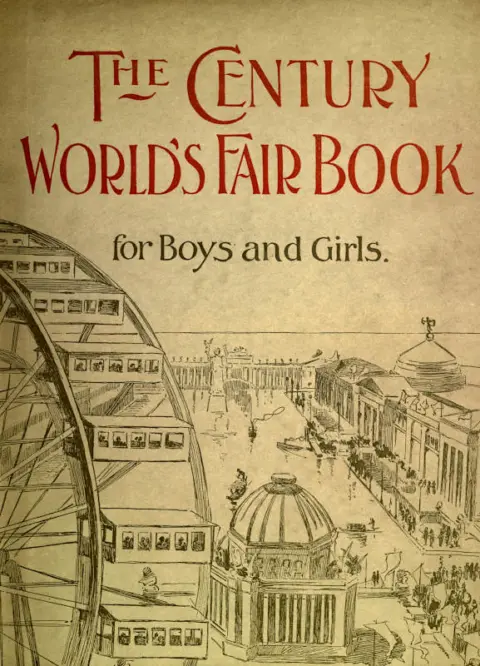
"The Century World's Fair Book for Boys and Girls" by Tudor Jenks is a children's adventure novel written in the late 19th century. The story follows two boys, Harry and Philip, along with their tutor, Mr. Douglass, as they embark on a journey to the World’s Columbian Exposition in Chicago. The book captures their experiences and discoveries at the fair, emphasizing themes of curiosity, learning, and exploration. At the start of the narrative, Harry receives exciting news through a cable from his father, instructing him and Philip to attend the fair in Chicago at his expense. They enthusiastically prepare for their journey, assisted by Mr. Douglass, who supports their adventure as an enriching educational experience. The opening chapter sets the stage for their impending travels, showcasing their contrasting personalities and eagerness to explore the wonders of the exposition. Through witty dialogue and vivid descriptions, the boys' excitement and anticipation paint a lively picture of the time, as they prepare to embark on a memorable adventure.
Introduction adapted from the source catalogue; source summaries may be automatically generated.
Free to read · English · 61,174 words · No account needed
MAKE TIME FOR A GOOD BOOK
On by default. Untick to stop anonymous reading totals. Each page counts after 10 seconds in view. How this works.
Anonymous counting is on unless you have switched it off.
Philip’s camera was agog with eagerness. He captured a view or two of the picturesque “donkey-boys”—who were stalwart grown men; but when he saw the great nodding camels docilely following their tiny boy-leaders, he made up his mind that the camel was his favorite subject.
He particularly desired to secure a view of the dismounting. Seeing a flight of steps that would enable him to overlook this scene, he put his camera under his arm and wormed his way through the crowd until he had secured an excellent place on an upper step.
From here, by raising the camera high in air, he took a picture over the heads of the spectators, and then rejoined Mr. Douglass and Harry, who were waiting for him across the street near some of the bazaars for the sale of curiosities.
Harry, while waiting, had produced his sketch-book, and made a hasty outline of a street-sweeper who, in turban and baggy trousers, was plying a most prosaic broom and dust-pan.
Just above their heads they read a sign advertising an Arab card-writer, and when Philip returned they began a search for this gentleman, who promised a card in English and Arabic for five cents. It proved to be a difficult matter to find him. Inquiring upon one side of the street, they were directed to the other; and, repeating the question there, were politely sent back again; but soon they caught sight of a ring of people near the middle of the street, gazing down toward the pavement, and there, within, sat the writer.
Philip pressed forward with a slip torn from his note-book, on which he had written plainly, “Philip Rodman,” putting below, “Please write this name in English and Arabic.”
When his turn came, the sharp-featured little writer raised his fezzed head from gazing down upon the inlaid box which served him as a desk, and said:
“You want-a me to write for you—yes?”
“Yes, please,” Philip answered.
So the scribe began, like a school-boy reciting his lesson:
“Pheelipe. P, h, i, l, i, and p. Pheelipe. Rodermahn—I write him pretty, in Engleesh, yes; and I vill shade him, yes. R, a capeetal R, o, d, m, a, n. Pheelipe Rodermahn. There. Now, what ceety?”
“Now write it in Arabic, please,” said Philip, a little embarrassed by
the crowd.
“Pretty soon; in a meenute. You vait. First, what ceety,—vere you
leeve?”
“New York,” Philip answered.
“All right, all right; I make him ver’ preety. N, big N, e, w; Y, a big Y, o, and r, and k. There. Now I write you my own beautiful name. See!” and he added his own name with rapid strokes.
Your reading position is saved on this browser. Take it to another device with a library code. Reading pages adapt to text, rather than matching a printed edition.
BEHIND THE BOOK
This eBook is for the use of anyone anywhere in the United States and most other parts of the world at no cost and with almost no restrictions whatsoever. You may copy it, give it away or re-use it under the terms of the Project Gutenberg License included with this eBook or online at www.gutenberg.org. If you are not located in the United States, you will have to check the laws of the country where you are located before using this eBook. Read the source licence.
The original source file, including credits and licence, is retained by this library. Request an original-format copy at no charge. Please include the book title and Project Gutenberg identifier #59681.
KEEP YOUR CURIOSITY GOING
Coulson Kernahan

Maurice Baring
Frances Wright
Cécile Tormay

Frederic Jesup Stimson

W. H. P. (William Henry Pope) Jarvis