THE CLASSIC COLLECTION✦The ocean wireless boys of the iceberg patrolCLASSIC FREE BOOKS
The ocean wireless boys of the iceberg patrol
John Henry Goldfrap
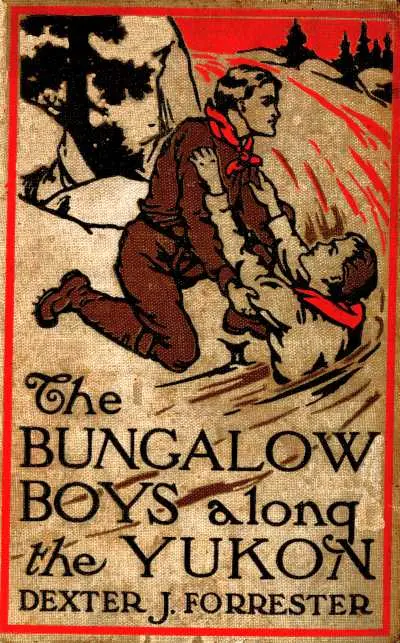
THE CLASSIC COLLECTION · 1913
"The Bungalow Boys Along the Yukon" by Dexter J. Forrester is an adventurous fiction novel likely written in the early 20th century. The story follows a trio of boys—Tom Dacre, his brother Jack, and their friend Sandy MacTavish—as they embark on a mysterious voyage aboard a steamer named the "Northerner" to Alaska, initially unaware of the true purpose behind their journey. As they set sail under the guidance of their uncle, there is an air of excitement and anticipation for the adventures that lie ahead. At the start of the narrative, the boys are introduced while boarding the "Northerner", intrigued by its peculiar preparations and the secrecy surrounding their trip. The uncle, Mr. Dacre, plans to hunt silver and black foxes for their valuable pelts, but before revealing this, the boys encounter various mysteries and adventures during their journey. The narrative quickly develops as they face the dangers of the sea and strange encounters, including a humorous commentary on a totem they find, providing both moments of levity and foreshadowing of the challenges to come. Ultimately, this opening sets the stage for thrilling escapades that will test the boys’ bravery and resourcefulness as they venture further into the wilds of Alaska.
Introduction adapted from the source catalogue; source summaries may be automatically generated.
Free to read · English · 47,343 words · No account needed
MAKE TIME FOR A GOOD BOOK
On by default. Untick to stop anonymous reading totals. Each page counts after 10 seconds in view. How this works.
Anonymous counting is on unless you have switched it off.
"What's the matter, Sandy?"
Tom spoke as the dory swung dizzily between heaven and earth.
"I--I'm scared!" confessed Sandy, turning a white face to his chum.
"Pshaw! Cheer up, Sandy," said Tom, trying to put a bold face on the matter, as was always his way.
"Yes, we'll come out of it all right," struck in Jack bravely, concealing his real fear of the outcome of the adventure.
"We've been in worse fixes than this before and got through all right," supplemented Tom, and Sandy appeared to pluck up some heart from the confident tones of his companions.
"Tell you what," suggested Jack suddenly, "I've got an idea."
"What is it?"
"Why, to find out where we are. It's no use asking those wooden
Indians; they wouldn't say if they did know, and couldn't if they
didn't."
"Well, but what's your plan?" asked Tom impatiently.
"Just this. You remember how the captain on the Northerner found out when he was dangerously near to the coast by blowing the whistle and waiting for the echo?"
Tom nodded.
"Well, why can't we do the same by hollering at the top of our
voices?"
"Good boy! I see your idea. If we're near land, we ought to catch the
echo of our voices."
"That's the scheme exactly."
The boat was tossing too violently to stand up in it, but the boys placed their hands to their mouths, funnel-wise, and set up as loud an uproar as they could.
Sure enough, back out of the fog faint and obscure, but still audible, came an unmistakable reply.
"Hul-l-o-o-o-o!"
Their faces brightened. Even Sandy broke into a grin.
"We're aboon the land!" he cried out.
"Must be," declared Tom positively.
He looked at the two natives, who had been regarding the proceedings with no more interest than they appeared to display in anything else.
"Row that way," he ordered in a loud, clear voice, pointing off into the fog in the direction from whence the answer to their shouting had come. The natives obeyed without a word. Whether they understood him or not Tom never knew, but they appeared to apprehend his vigorous gesture well enough.
As they rowed along, the boys repeated their practice, and every time the echo came louder and more clearly.
"Wish we'd thought of that before," sighed Jack, "we might be in the
harbor by this time."
"Better late than never," Tom assured him cheerily.
Before long they could hear the roar of waves breaking on the coast. The natives apparently heard them, too, and kept the boat out a little. The angry sound of the breaking waters was sufficient warning that no landing could be attempted there.
Your reading position is saved on this browser. Take it to another device with a library code. Reading pages adapt to text, rather than matching a printed edition.
John Henry Goldfrap
John Henry Goldfrap
John Henry Goldfrap

John Henry Goldfrap
BEHIND THE BOOK
This eBook is for the use of anyone anywhere in the United States and most other parts of the world at no cost and with almost no restrictions whatsoever. You may copy it, give it away or re-use it under the terms of the Project Gutenberg License included with this eBook or online at www.gutenberg.org. If you are not located in the United States, you will have to check the laws of the country where you are located before using this eBook. Read the source licence.
The original source file, including credits and licence, is retained by this library. Request an original-format copy at no charge. Please include the book title and Project Gutenberg identifier #39643.
KEEP YOUR CURIOSITY GOING
Coulson Kernahan

Maurice Baring
Frances Wright
Cécile Tormay

Frederic Jesup Stimson

W. H. P. (William Henry Pope) Jarvis