THE CLASSIC COLLECTION✦An outlaw’s diary: the CommuneCLASSIC FREE BOOKS
An outlaw’s diary: the Commune
Cécile Tormay
THE CLASSIC COLLECTION · 1922
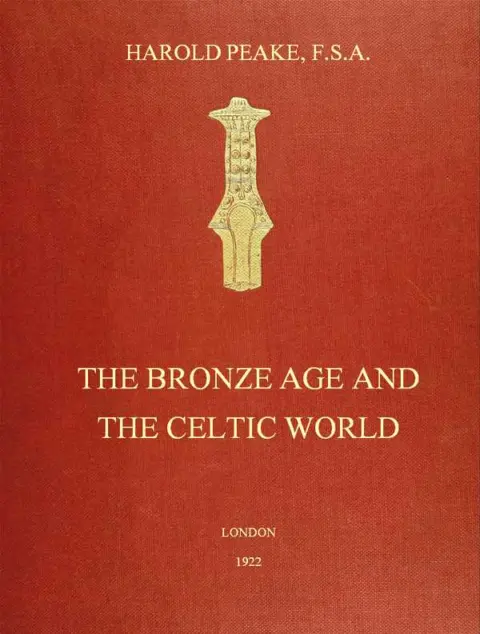
"The Bronze Age and the Celtic World" by Harold Peake is a historical account written in the early 20th century. The book explores the early inhabitants of Celtic lands and their interactions during the Bronze Age, with a specific focus on the evolution and spread of Celtic languages, cultures, and metallic trade. Likely appealing to readers interested in archaeology, anthropology, and the history of European prehistory, the text emphasizes how ancient cultures have influenced the modern understanding of Celtic origins. The opening of the book establishes the framework for Peake's examination of Celtic languages and their historical context. He outlines that for the last fifteen hundred years, the Celtic tongues have been confined mainly to regions in the north-west of Europe but were once more widespread. Peake discusses the significant role of Roman influence in the language's decline and presents complex questions regarding the languages' origin and spread, hinting at the diverse groups that occupied these regions before the Celts. The chapter sets the stage for a more in-depth exploration of prehistoric archaeology, physical anthropology, and comparative philology, all aimed at understanding the Celtic roots and their interactions with other cultures throughout history.
Introduction adapted from the source catalogue; source summaries may be automatically generated.
Free to read · English · 68,568 words · No account needed
MAKE TIME FOR A GOOD BOOK
On by default. Untick to stop anonymous reading totals. Each page counts after 10 seconds in view. How this works.
Anonymous counting is on unless you have switched it off.
[Footnote 398: Déchelette (1908-14) ii. 591, 592, where all authorities
are cited.]
[Footnote 399: Gowland (1899) 49, 50.]
[Footnote 400: Déchelette (1908-14) ii. 592, where all authorities are
cited.]
[Footnote 401: B.P. 4th ser. v. (1910) 154; N.S. (1909) 75, 76.]
[Footnote 402: Déchelette (1908-14) ii. 536, 539, 540.]
[Footnote 403: Modestov (1907) 217.]
[Footnote 404: Modestov (1907) 224.]
[Footnote 405: Peet (1909) 421; N.S. (1900) 411; Modestov (1907) 219.]
[Footnote 406: Hooton (1913); see also Modestov (1907) 226.]
[Footnote 407: Herodotus i. 43; iv. 49.]
[Footnote 408: Livy v. 33; quoted by Dennis (1883) i. xxix.]
[Footnote 409: Déchelette (1908-14) ii. 536-539.]
[Footnote 410: Déchelette (1908-14) ii. 114.]
[Footnote 411: Déchelette (1908-14) ii. 114.]
[Footnote 412: Déchelette (1908-14) ii. 935-941.]
[Footnote 413: Crawford (1922) 33, 34.]
[Footnote 414: Déchelette (1908-14) map ii., in ii. pt. 2.]
[Footnote 415: Peake (1919) 200-202.]
[Footnote 416: See ch. vi.]
[Footnote 417: Peet (1909) 431.]
[Footnote 418: Herodotus vii. 73.]
[Footnote 419: Xenophanes, quoted by Clement of Alexandria:
Stromateis vii. 711b.]
[Footnote 420: Déchelette (1908-14) ii. 796.]
[Footnote 421: Modestov (1907) 217; Déchelette (1908-14) ii. 529-540.]
[Footnote 422: Hooton (1913).]
[Footnote 423: Déchelette (1908-14) ii. 529-540; Modestov (1907) ch.
viii.]
[Footnote 424: Jones (1788).]
[Footnote 425: Bopp (1833), (1845-50), (1866-74).]
[Footnote 426: Klaproth (1823).]
[Footnote 427: Giles (1910-11); 1922, 66.]
[Footnote 428: Max-Müller (1855) 29.]
[Footnote 429: Penka (1883, 1886).]
[Footnote 430: Gobineau (1853-55).]
[Footnote 431: Grant (1916), (1921).]
[Footnote 432: Chamberlain (1911).]
[Footnote 433: Ripley (1900) 217, 218; Parsons (1919).]
[Footnote 434: Adelung (1806-17) ii. 6.]
[Footnote 435: Pott (1840) 19.]
[Footnote 436: Tylor (1881) 79-82.]
[Footnote 437: Hehn (1874) quoted by Taylor (1889) 23.]
[Footnote 438: Latham (1851) cxlii., (1854) 197, 198, (1859) ii. 503.]
[Footnote 439: Max-Müller (1888) 127.]
[Footnote 440: Fick (1868).]
[Footnote 441: Geiger (1871) 113-150.]
[Footnote 442: Piètrement (1879).]
[Footnote 443: Cuno (1871).]
[Footnote 444: Schrader (1890) 438.]
[Footnote 445: Giles (1922).]
[Footnote 446: Giles (1922) 67, 68.]
[Footnote 447: Schrader (1890) ch. v.]
[Footnote 448: Obermaier (1912) i. 439-464; Hoops (1904); (1911-19) ii.
354.]
[Footnote 449: Giles (1922) 66.]
[Footnote 450: Giles (1922) 69.]
[Footnote 451: Schrader (1890) 438.]
[Footnote 452: Giles (1922) 67.]
[Footnote 453: Fleure (1922) 13.]
[Footnote 454: Schenk (1912) 176.]
[Footnote 455: App. I.]
[Footnote 456: Giles (1922) 69, 70.]
[Footnote 457: Huntington (1907), (1911).]
[Footnote 458: Herodotus i. 203, 204; iv. 40; Casson (1918-19) 175-183.]
[Footnote 459: Casson (1918-19) 178.]
[Footnote 460: The best summaries up to this date are Taylor (1889) and
Reinach (1892).]
[Footnote 461: Sieg and Siegling (1921).]
[Footnote 462: Hrozný (1917).]
[Footnote 463: Rhys (1894).]
[Footnote 464: Zimmer (1912); Meyer (1895-6) 55-86.]
[Footnote 465: Rhys (1894) 119.]
[Footnote 466: Rhys (1894) 122, 130.]
[Footnote 467: Zimmer (1912); Meyer (1895-6) 55-86.]
[Footnote 468: Schrader (1890) 225-228.]
[Footnote 469: Tomaschek (1894).]
[Footnote 470: Conway (1897).]
[Footnote 471: Conway (1897) i. 287.]
[Footnote 472: Conway (1897) i. 370.]
[Footnote 473: Kiepert (1882) Tab. viii.]
[Footnote 474: Dion. Halic. ix. xiv.]
[Footnote 475: Niebuhr (1827) i. 80.]
[Footnote 476: Dion. Halic. xiv.]
[Footnote 477: Dion. Halic. xvi.]
[Footnote 478: Rhys (1894) 112.]
[Footnote 479: Crawford (1922) 34, 35.]
[Footnote 480:
A. xxx. (1920) 575, 576; where there is an abstract of a paper read 19th May, 1920, before the Institut français d’Anthropologie, entitled L’établissement des Celtes dans les Isles Britanniques et de ses indices archéologiques à propos de la diffusion des épées de bronze à soie-plate rivetée.
M. Hubert informs me that his work on the Celts will be published
shortly.]
[Footnote 481: King (1915) 215 fn.]
[Footnote 482: McDougall (1920) ch. xv.]
[Footnote 483: Sergi (1908) 309-16.]
[Footnote 484: Fleure (1922) 12, 13.]
[Footnote 485: Bogdanov (1892) 1.]
[Footnote 486: Giles (1922) 76, King (1915) 214.]
[Footnote 487: King (1915) 215 fn.]
[Footnote 488: Minns (1913) 36-39, 102, 115.]
[Footnote 489: Chadwick (1899).]
[Footnote 490: Nilsson (1868) 234-43.]
[Footnote 491: Vigfussen & Powell (1883) i. 234-242.]
[Footnote 492: Peake (1919) 186-192.]
[Footnote 493: Müller (1864) 524-539.]
[Footnote 494: Rostovtzeff (1920) 111.]
[Footnote 495: Diodorus Siculus v. 32; Niebuhr (1838) ii. 523.]
[Footnote 496: Ridgeway (1901) 369, 370.]
[Footnote 497: Hom. Od. ii. 14.]
[Footnote 498: Rhys (1884) 279.]
[Footnote 499: Pliny, Hist. Nat. III. ix.]
[Footnote 500: Holmes (1907) 438, says the term was used by Broca
(1871) i. 395.]
[Footnote 501: Herodotus iv. 12.]
Your reading position is saved on this browser. Take it to another device with a library code. Reading pages adapt to text, rather than matching a printed edition.
BEHIND THE BOOK
This eBook is for the use of anyone anywhere in the United States and most other parts of the world at no cost and with almost no restrictions whatsoever. You may copy it, give it away or re-use it under the terms of the Project Gutenberg License included with this eBook or online at www.gutenberg.org. If you are not located in the United States, you will have to check the laws of the country where you are located before using this eBook. Read the source licence.
The original source file, including credits and licence, is retained by this library. Request an original-format copy at no charge. Please include the book title and Project Gutenberg identifier #46924.
KEEP YOUR CURIOSITY GOING
Cécile Tormay

Moritz Busch
John L. Ransom
Frances Wright
Cécile Tormay

Mabel Potter Daggett