THE CLASSIC COLLECTION✦The WebCLASSIC FREE BOOKS
The Web
Emerson Hough
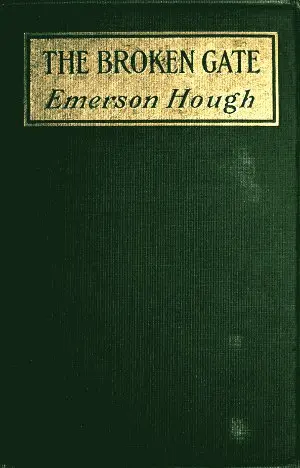
THE CLASSIC COLLECTION · 1917
"The Broken Gate: A Novel" by Emerson Hough is a work of fiction written in the early 20th century. This novel delves into themes of identity, familial connections, and societal perceptions through the complex life of Dieudonné "Don" Lane, who unexpectedly discovers his mother, Aurora Lane, after being raised under the belief he was an orphan. The opening chapters move briskly through the small town of Spring Valley, highlighting the chatter and scrutiny surrounding Aurora, who bears the stigma of having given birth to a child out of wedlock. The opening of the novel introduces us to Don upon his arrival in Spring Valley, where he is met with a mix of recognition and curiosity, particularly concerning his mother, who has a complicated past. As he reunites with Aurora, both share their joy and apprehension about their newfound connection after years of separation. However, a public incident involving his mother and local troublemaker Eph Adamson quickly escalates, leading to a confrontation that forces Don to protect her honor. This encounter ignites a series of events that unravel their hidden truths and challenge the small community’s judgment, setting the stage for deeper conflicts regarding identity, past sins, and reconciliation.
Introduction adapted from the source catalogue; source summaries may be automatically generated.
Free to read · English · 80,277 words · No account needed
MAKE TIME FOR A GOOD BOOK
On by default. Untick to stop anonymous reading totals. Each page counts after 10 seconds in view. How this works.
Anonymous counting is on unless you have switched it off.
The commonplace sound of the telephone's ring broke the silence in the little room. Aurora Lane arose and passed into the adjoining room to answer it. Her son regarded her with lackluster eyes when she returned.
"It was Miss Julia," said she, "at the library. She wanted to know if you were here. She says we must be sure to come out tonight."
"Come out--to what?"
"It's her annual jubilee, when she reports progress to the town. She is very proud of her new books and rugs and pictures. Everybody will be there. You see, Don, we don't have much in a town like this to entertain us. Why, if I could see a real theater once--I don't know how happy I would be. We've had movies, and now and then a lecture--and Miss Julia."
"I don't want to go, mother."
"Neither do I, Don; so I'm going."
"Why should we go? It's nothing to us."
"It's everything to Miss Julia--and it's everything to us, Don. Stop to think and you will realize what I mean. We can't run away under fire."
"There's something in that," he rejoined after a time, slowly. "Besides, what Miss Julia wishes we both ought to do."
Hands in pockets, he began once more gloomily to pace up and down the narrow room. "I can't stand this much longer, mother," said he. "I've got to get out--I've got to get hold of some money somehow."
"Yes," said she. "As for me, I have collected the last money due me--it went for your graduation suit. I don't know how you saved your railway fare home. I didn't want you to know these things, of course, but as things have happened, you had to know. A great many things today--well, they've gotten away from me."
"It's I who have spoiled everything, too. But how could I help it--I
just couldn't submit."
"It's hard to submit, Don," said she slowly. "Perhaps a man ought not to learn it. A woman has to learn it."
He turned to look at her wonderingly, and at length went over and put a
hand on her shoulder.
"Dear Mom!" said he gently. "You're wonderful. You are fine--splendid! I'm just getting acquainted with you, am I not? You're a good woman, mother; I'm so glad."
She looked at him now with eyes suddenly wet, her face working
strangely, and turned away.
"Come, Don," said she after a time. "We must get ready for our little supper. Spring Valley, you see," she added, gaily, "dines at six and goes to the movies at seven."
Your reading position is saved on this browser. Take it to another device with a library code. Reading pages adapt to text, rather than matching a printed edition.
Emerson Hough

Emerson Hough
Emerson Hough
Emerson Hough
BEHIND THE BOOK
This eBook is for the use of anyone anywhere in the United States and most other parts of the world at no cost and with almost no restrictions whatsoever. You may copy it, give it away or re-use it under the terms of the Project Gutenberg License included with this eBook or online at www.gutenberg.org. If you are not located in the United States, you will have to check the laws of the country where you are located before using this eBook. Read the source licence.
The original source file, including credits and licence, is retained by this library. Request an original-format copy at no charge. Please include the book title and Project Gutenberg identifier #33475.
KEEP YOUR CURIOSITY GOING
Coulson Kernahan

Maurice Baring
Frances Wright
Cécile Tormay

Frederic Jesup Stimson

W. H. P. (William Henry Pope) Jarvis