THE CLASSIC COLLECTION✦The WebCLASSIC FREE BOOKS
The Web
Emerson Hough
THE CLASSIC COLLECTION · 1917
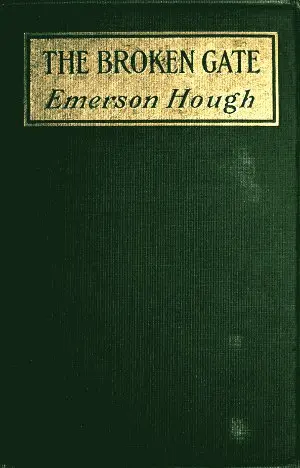
"The Broken Gate: A Novel" by Emerson Hough is a work of fiction written in the early 20th century. This novel delves into themes of identity, familial connections, and societal perceptions through the complex life of Dieudonné "Don" Lane, who unexpectedly discovers his mother, Aurora Lane, after being raised under the belief he was an orphan. The opening chapters move briskly through the small town of Spring Valley, highlighting the chatter and scrutiny surrounding Aurora, who bears the stigma of having given birth to a child out of wedlock. The opening of the novel introduces us to Don upon his arrival in Spring Valley, where he is met with a mix of recognition and curiosity, particularly concerning his mother, who has a complicated past. As he reunites with Aurora, both share their joy and apprehension about their newfound connection after years of separation. However, a public incident involving his mother and local troublemaker Eph Adamson quickly escalates, leading to a confrontation that forces Don to protect her honor. This encounter ignites a series of events that unravel their hidden truths and challenge the small community’s judgment, setting the stage for deeper conflicts regarding identity, past sins, and reconciliation.
Introduction adapted from the source catalogue; source summaries may be automatically generated.
Free to read · English · 80,277 words · No account needed
MAKE TIME FOR A GOOD BOOK
On by default. Untick to stop anonymous reading totals. Each page counts after 10 seconds in view. How this works.
Anonymous counting is on unless you have switched it off.
They sat on, uncomfortable, for a time, neither of the three knowing how much the others knew, nor how much each ought to know. Of the three, Aurora Lane was most prepared. For twenty years she had been learning to be prepared. For twenty years she had been praying that her boy never would know what now he did know.
Don Lane looked at his mother's face, but could not fathom it. Life to him thus far had been more or less made up of small things--sports, books, joys, small things, no great ponderings, no problems, no introspections, no self-communings--and until but very recently no love, no great emotion, no passion to unsettle him. This shadow which now fell over him--he could not have suspected that. But his mother all these years had known that perhaps at any unforeseen time this very hour might come--had prayed against it, but known always in her heart that it might come, nay, indeed one day must come.
"Damn the place, anyhow!" he broke out at length. "You've lived here long enough, both of you. It's nothing but a little gossiping hell, that's all. I'll take you away from here, both of you, that's what I'll do!" He stretched out a hand suddenly to his mother, who took it, stroking it softly.
"Don, boy," said she, "I didn't run away. Why should we run away now? If we did, we'd take ourselves with us wherever we went, wouldn't we? This is as good a place to live out life as any I could have found. You can't really evade things, you know."
"As though I asked to! I'd rather fight things than evade them."
"I think so," said his mother mournfully. "I suppose that's true."
"But you've got to be happy, mother," said he, again taking her hand in his. "I'll make you happy. I'm ready to work for you now--I'll pay you back."
"And Miss Julia?" smiled his mother. "It was she who told you the news, you know, and you didn't obey her--you came against orders."
"Why, yes, of course. She's been so awfully good to you. I know what she's been, be sure of that." (As though he did know!)
"Don't be too bitter, Don," said Miss Julia Delafield, slowly now, hoping only to salve a wound she felt he might have, yet not sure herself what the wound might be. "Don't be unrelenting. Why, it seems to me, as we grow older and begin to read and think, we find out the best of life is just being--well, being charitable--just forgetting. Nothing matters so very much, Don. That's doctrine, isn't it?"
Your reading position is saved on this browser. Take it to another device with a library code. Reading pages adapt to text, rather than matching a printed edition.
Emerson Hough

Emerson Hough
Emerson Hough
Emerson Hough
BEHIND THE BOOK
This eBook is for the use of anyone anywhere in the United States and most other parts of the world at no cost and with almost no restrictions whatsoever. You may copy it, give it away or re-use it under the terms of the Project Gutenberg License included with this eBook or online at www.gutenberg.org. If you are not located in the United States, you will have to check the laws of the country where you are located before using this eBook. Read the source licence.
The original source file, including credits and licence, is retained by this library. Request an original-format copy at no charge. Please include the book title and Project Gutenberg identifier #33475.
KEEP YOUR CURIOSITY GOING
Coulson Kernahan

Maurice Baring
Frances Wright
Cécile Tormay

Frederic Jesup Stimson

W. H. P. (William Henry Pope) Jarvis