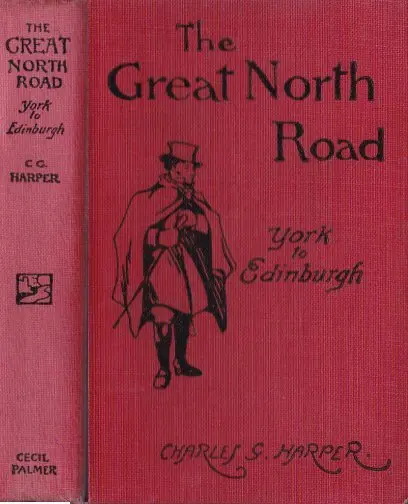
The Great North Road, the Old Mail Road to Scotland: York to Edinburgh
Charles G. (Charles George) Harper
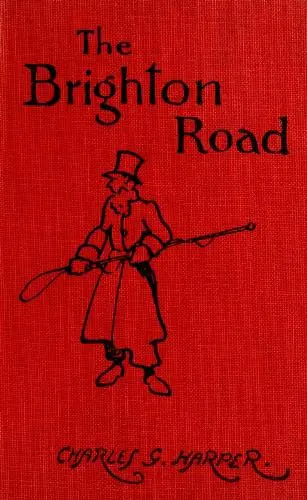
THE CLASSIC COLLECTION · 1892
"The Brighton Road: The Classic Highway to the South" by Charles G. Harper is a historical account written in the early 20th century. The book explores the rich history and development of the main route from London to Brighton, detailing its significance as a key highway and documenting the various modes of travel and notable events along the way. The work offers a glimpse into the changing landscape of transportation and societal norms associated with the road. The opening of this narrative outlines details of the Brighton Road's measurements and main routes, describing its historical evolution from an infrequently traveled path to a bustling highway. Harper discusses how the road was shaped by its early travelers, including coaches and waggoners, and highlights key locations and stopping points along the route. Additionally, the author introduces the colorful social dynamics of the Regency era, referencing notable figures like George IV and the vibrant culture surrounding the travel industry of the time. This section establishes a foundation for tracing the road's historical significance, intertwined with anecdotes of the characters who once traveled it.
Introduction adapted from the source catalogue; source summaries may be automatically generated.
Free to read · English · 66,943 words · No account needed
MAKE TIME FOR A GOOD BOOK
On by default. Untick to stop anonymous reading totals. Each page counts after 10 seconds in view. How this works.
Anonymous counting is on unless you have switched it off.
At length the Metropole hove in sight, but the motor-cars had yet to be found. To accomplish this feat it was necessary to hurl oneself into a surging tide of humanity, and surge with it. The tide carried the explorer away and eventually washed him ashore on the neck of a policeman. Rumour got around that an organised massacre of cab-horses was contemplated, and myriads of mounted police appeared and had their photographs taken from the tops of cabs and other envied positions occupied by amateur photographers, who paid dearly to take pictures of the fog, which they could have done elsewhere for nothing.
Time went on, the crowd grew bigger, the mud was churned into slush, and everybody was treading upon everybody else.
"Ain't this bloomin' fun, sir?" asked the driver of a growler, his sides shaking with laughter, "Even my ole 'oss 'as bin larfin'."
"Very intelligent horse," we said, thinking of Mr. Pickwick, and determining to ask some searching questions as to his antecedents.
"Interleck's a great p'int, sir. Which 'ud you sooner be in: a runaway
mortar-caw or a keb?"
"Neither."
"No, I ain't jokin', strite. I've just bin argying wif a bloke as said he'd sooner be in a caw. I said I pitied 'is choice, and wouldn't give 'im much for his charnce. 'Cos why? 'Cos mortar-caws ain't got no interleck. They cawn't tell the dif'rence 'tween nothink an' a brick wall. Now a 'os can. If 'e don't turn orf 'e tries ter jump th' wall, but yer mortar simply goes fer it, and then where are yer? In 'eaven, if yer lucky, or in----"
But the rest of his sentence was lost in the roar that ascended from the crowd as the cars commenced their journey to Brighton.
They went beautifully for a few yards, chased the mounted police right into the crowd, and then stopped.
"It's th' standin' still as does it--not the standin' still, I mean the not going forrard, 'cos they don't stand still," said the cabby, excitedly.
"Don't they hum?" he cried.
"They certainly do make a little noise."
"But I mean, don't they whiff?"
"Whiff?"
He held his nose.
"I say, guv'nor." shouted cabby to a fur-coated foreigner, "wot is it
smells so?"
Meanwhile there was a certain "something lingering with oil in it," permeating the fog, while a sound as of many humming-tops filled the air.
Then the cars moved on a bit, amid the cheers and chaff of a good-humoured crowd. Presently another stoppage and more shivering.
"'As thet cove there got th' Vituss dance?" inquired the elated cabby, indicating a gentleman who was wobbling like a piece of jelly.
"That's the vibration," explained another.
Your reading position is saved on this browser. Take it to another device with a library code. Reading pages adapt to text, rather than matching a printed edition.
Charles G. (Charles George) Harper
Charles G. (Charles George) Harper
Charles G. (Charles George) Harper
BEHIND THE BOOK
This eBook is for the use of anyone anywhere in the United States and most other parts of the world at no cost and with almost no restrictions whatsoever. You may copy it, give it away or re-use it under the terms of the Project Gutenberg License included with this eBook or online at www.gutenberg.org. If you are not located in the United States, you will have to check the laws of the country where you are located before using this eBook. Read the source licence.
The original source file, including credits and licence, is retained by this library. Request an original-format copy at no charge. Please include the book title and Project Gutenberg identifier #38611.
KEEP YOUR CURIOSITY GOING
Wilfrid Scawen Blunt
Wilfrid Scawen Blunt

E. W. (Edgar Watson) Howe
Cécile Tormay

Moritz Busch
John L. Ransom