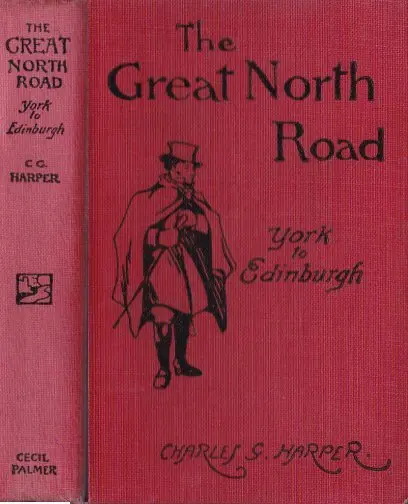
The Great North Road, the Old Mail Road to Scotland: York to Edinburgh
Charles G. (Charles George) Harper
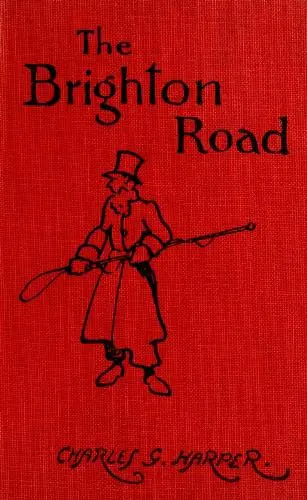
THE CLASSIC COLLECTION · 1892
"The Brighton Road: The Classic Highway to the South" by Charles G. Harper is a historical account written in the early 20th century. The book explores the rich history and development of the main route from London to Brighton, detailing its significance as a key highway and documenting the various modes of travel and notable events along the way. The work offers a glimpse into the changing landscape of transportation and societal norms associated with the road. The opening of this narrative outlines details of the Brighton Road's measurements and main routes, describing its historical evolution from an infrequently traveled path to a bustling highway. Harper discusses how the road was shaped by its early travelers, including coaches and waggoners, and highlights key locations and stopping points along the route. Additionally, the author introduces the colorful social dynamics of the Regency era, referencing notable figures like George IV and the vibrant culture surrounding the travel industry of the time. This section establishes a foundation for tracing the road's historical significance, intertwined with anecdotes of the characters who once traveled it.
Introduction adapted from the source catalogue; source summaries may be automatically generated.
Free to read · English · 66,943 words · No account needed
MAKE TIME FOR A GOOD BOOK
On by default. Untick to stop anonymous reading totals. Each page counts after 10 seconds in view. How this works.
Anonymous counting is on unless you have switched it off.
A new era for Brighton and the Brighton Road opened in November, 1896, with the coming of the motor-car. Already the old period of the coaching inns had waned, and that of gigantic and palatial hotels, much more luxurious than anything ever imagined by the builders of the Pavilion, had dawned; and then, as though to fitly emphasize the transition, the old Chain Pier made a dramatic end.
The Chain Pier just missed belonging to the Georgian era, for it was not begun until October, 1822, but, opened the following year, it had so long been a feature of Brighton--and so peculiar a feature--that it had come, with many, to typify the town, quite as much as the Pavilion itself. It was, moreover, additionally remarkable as being the first pleasure-pier built in England. It had long been failing and, condemned as dangerous, would soon have been demolished; but the storm of December 4th, 1896, spared that trouble. It was standing when day closed in, but when the next morning dawned, its place was vacant.
Since then, those who have long known Brighton have never visited it without a sense of loss; and the Palace Pier, opposite the Aquarium, does not fill the void. It is a vulgarity for one thing, and for another typifies the Hebraic week-end, when the sons and daughters of Judah descend upon the town. Moreover, it is absolutely uncharacteristic, and has its counterparts in many other places.
But Brighton itself is eternal. It suffers change, it grows continually; but while the sea remains and the air is clean and the sun shines, it, and the road to it, will be the most popular resorts in England.
Ainsworth, W. Harrison, 209-222
Albourne, 248
Ansty Cross, 93, 222
Aram, Eugene, 172
"Autopsy," Steam Carriage, 37, 63, 88
Banks, Sir Edward, 136
Banstead Downs, 159-161
Barrymore, The, 6, 192, 267
Belmont, 159
Benhilton, 156
Bicycles, 64-71, 74-79, 85-91
Bird, Lieutenant Edward, murderer, 169-172
Bolney, 200, 243, 246
"Boneshakers", 65
Brighton, 2, 12, 37, 255-272
Railway opened, 42
Road Records tabulated, 88-91
Routes to, 1-4
Brixton, 92, 97-100
Hill, 68, 93, 98, 105
Broad Green, 108, 129
Burgess Hill, 223
Burgh Heath, 159-161
Carriers, The, 11-14
Charles II., 270
Charlwood, 175
Chipstead, 135-138
Clayton, 93, 102, 231, 250
Hill, 25, 229, 231-232
Tunnel, 229-231
Coaches:--
Accommodation, 26
Age, 29, 30, 35
1852-1862, 42, 45, 47
1875-1880, 1882-3, 46
Alert, 33, 34
Coburg, 30
Comet, 33
1887-1899, 1900, 46, 49, 55
Coronet, 33
Criterion, 41, 64, 74, 88
Dart, 33
Defiance, 28, 46
1880, --
Duke of Beaufort, 31
"Flying Machine," coach, 18-22
Life-Preserver, 30
Magnet, 33
Mails, The, 23, 26, 28, 33, 34, 42
Old Times, 1866, 45
1888, 49-51
Quicksilver, 38
Red Rover, 41, 63, 88
Regent, 33
Sovereign, 33
Times, 33
Union, 33
Venture (A. G. Vanderbilt), 61
Victoria, 42
Vigilant, 1900-05, --
Wonder, 38
Coaching, 5, 11-14, 18-34, 37-49, 228
Your reading position is saved on this browser. Take it to another device with a library code. Reading pages adapt to text, rather than matching a printed edition.
Charles G. (Charles George) Harper
Charles G. (Charles George) Harper
Charles G. (Charles George) Harper
BEHIND THE BOOK
This eBook is for the use of anyone anywhere in the United States and most other parts of the world at no cost and with almost no restrictions whatsoever. You may copy it, give it away or re-use it under the terms of the Project Gutenberg License included with this eBook or online at www.gutenberg.org. If you are not located in the United States, you will have to check the laws of the country where you are located before using this eBook. Read the source licence.
The original source file, including credits and licence, is retained by this library. Request an original-format copy at no charge. Please include the book title and Project Gutenberg identifier #38611.
KEEP YOUR CURIOSITY GOING
Wilfrid Scawen Blunt
Wilfrid Scawen Blunt

E. W. (Edgar Watson) Howe
Cécile Tormay

Moritz Busch
John L. Ransom