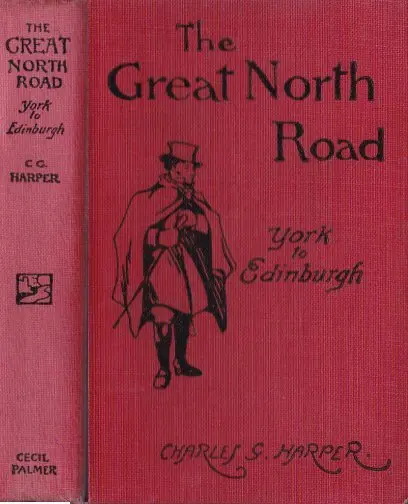
The Great North Road, the Old Mail Road to Scotland: York to Edinburgh
Charles G. (Charles George) Harper
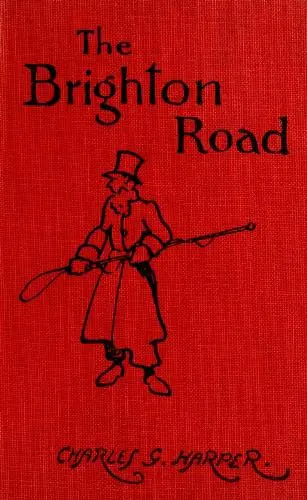
THE CLASSIC COLLECTION · 1892
"The Brighton Road: The Classic Highway to the South" by Charles G. Harper is a historical account written in the early 20th century. The book explores the rich history and development of the main route from London to Brighton, detailing its significance as a key highway and documenting the various modes of travel and notable events along the way. The work offers a glimpse into the changing landscape of transportation and societal norms associated with the road. The opening of this narrative outlines details of the Brighton Road's measurements and main routes, describing its historical evolution from an infrequently traveled path to a bustling highway. Harper discusses how the road was shaped by its early travelers, including coaches and waggoners, and highlights key locations and stopping points along the route. Additionally, the author introduces the colorful social dynamics of the Regency era, referencing notable figures like George IV and the vibrant culture surrounding the travel industry of the time. This section establishes a foundation for tracing the road's historical significance, intertwined with anecdotes of the characters who once traveled it.
Introduction adapted from the source catalogue; source summaries may be automatically generated.
Free to read · English · 66,943 words · No account needed
MAKE TIME FOR A GOOD BOOK
On by default. Untick to stop anonymous reading totals. Each page counts after 10 seconds in view. How this works.
Anonymous counting is on unless you have switched it off.
Sussex Roads, 15, 178, 237, 242, 237, 242
Sutton, 93, 156-159, 161
Tadworth Court, 161
Tettersell, Captain, 268, 270
Thackeray, W. M., 9, 10, 266
Thornton Heath, 103, 105-108
Thrale Place, 103-105
Thrales, The, 103-105
Thunderfield Castle, 149-152
Tilgate Forest Row, 173, 196
Tooke, John Horne, 124
Turnpike Gates, 92, 126, 145, 195, 226-228, 253
Velocipedes, 65-69
Walking Records (see Pedestrian Records).
Westminster Bridge, 1, 3, 14, 129
Whiteman's Green, 202
Whitgift, Archbishop, 109-114
Wilderness Bottom, 161
Withdean, 253, 255
Wivelsfield, 224
Woodhatch, 93
Wray Park, 93
[1] He was a baker; hence the nickname.
[2] Henry Barry, Earl of Barrymore, in the peerage of Ireland.
[3] Hiatus in the Journals, arranged by the editor for benefit of the
Young Person!
[4] Kirkpatrick Macmillan, in 1839-40, invented a dwarf, rear-driving machine of the "safety" type, and was fined at Glasgow for "furiously riding." He made and sold several, but they attained nothing more than local and temporary success.
"There's nothing brings you round Like the trumpet's martial sound."--W. S. GILBERT. "The Pirates of Penzance."
[6] In 1829 there were three additional gates: one at Crawley, another at Hand Cross, before you came to the "Red Lion," and one more at Slough Green. Meanwhile the Horley gate on this route had disappeared. At a later period another gate was added, at Merstham, just past the "Feathers." On the other routes there were, of course, yet more gates--e.g., those of Sutton, Reigate, Wray Park, Woodhatch, Dale, and many more.
Salfords gate was the last on the main Brighton Road. It remained until midnight, October 31st. 1881, when the Reigate Turnpike Trust expired, after an existence of 126 years. Not until then did this most famous highway become free and open throughout its whole distance.
[7] Preface to "Praeterita," dated May 10th, 1885.
[8] The name derives from a farm so called, marked on a map of 1716
"Stotes Ness."
[9] "Sir Edward Banks, Knight, of Sheerness, Isle of Sheppey, and Adelphi Terrace, Strand, Middlesex, whose remains are deposited in the family vault in this churchyard. Blessed by Divine Providence with an honest heart, a clear head, and an extraordinary degree of perseverance, he rose superior to all difficulties, and was the founder of his own fortune; and although of self-cultivated talent, he in early life became contractor for public works, and was actively and successfully engaged during forty years in the execution of some of the most useful, extensive, and splendid works of his time; amongst which may be mentioned the Waterloo, Southwark, London, and Staines Bridges over the Thames, the Naval Works at Sheerness Dockyard, and the new channels for the rivers Ouse, Nene, and Witham in Norfolk and Lincolnshire. He was eminently distinguished for the simplicity of his manners and the benevolence of his heart; respected for his inflexible integrity and his pure and unaffected piety; in all the relations of his life he was candid, diligent, and humane; just in purpose, firm in execution; his liberality and indulgence to his numerous coadjutors were alone equalled by his generosity and charity displayed in the disposal of his honourably-acquired wealth. He departed this life at Tilgate, Sussex ... on the 5th day of July, 1835, in the sixty-sixth year of his age."
Your reading position is saved on this browser. Take it to another device with a library code. Reading pages adapt to text, rather than matching a printed edition.
Charles G. (Charles George) Harper
Charles G. (Charles George) Harper
Charles G. (Charles George) Harper
BEHIND THE BOOK
This eBook is for the use of anyone anywhere in the United States and most other parts of the world at no cost and with almost no restrictions whatsoever. You may copy it, give it away or re-use it under the terms of the Project Gutenberg License included with this eBook or online at www.gutenberg.org. If you are not located in the United States, you will have to check the laws of the country where you are located before using this eBook. Read the source licence.
The original source file, including credits and licence, is retained by this library. Request an original-format copy at no charge. Please include the book title and Project Gutenberg identifier #38611.
KEEP YOUR CURIOSITY GOING
Wilfrid Scawen Blunt
Wilfrid Scawen Blunt

E. W. (Edgar Watson) Howe
Cécile Tormay

Moritz Busch
John L. Ransom