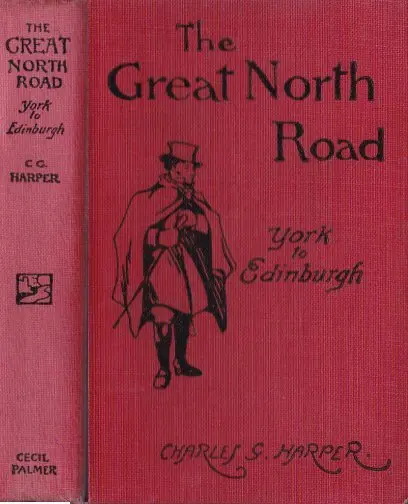
The Great North Road, the Old Mail Road to Scotland: York to Edinburgh
Charles G. (Charles George) Harper
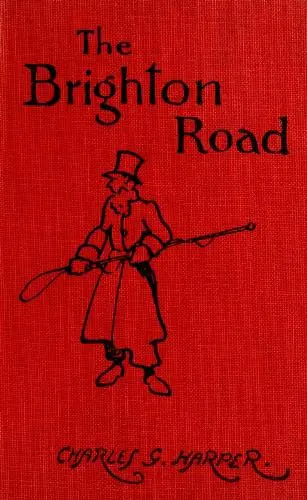
THE CLASSIC COLLECTION · 1892
"The Brighton Road: The Classic Highway to the South" by Charles G. Harper is a historical account written in the early 20th century. The book explores the rich history and development of the main route from London to Brighton, detailing its significance as a key highway and documenting the various modes of travel and notable events along the way. The work offers a glimpse into the changing landscape of transportation and societal norms associated with the road. The opening of this narrative outlines details of the Brighton Road's measurements and main routes, describing its historical evolution from an infrequently traveled path to a bustling highway. Harper discusses how the road was shaped by its early travelers, including coaches and waggoners, and highlights key locations and stopping points along the route. Additionally, the author introduces the colorful social dynamics of the Regency era, referencing notable figures like George IV and the vibrant culture surrounding the travel industry of the time. This section establishes a foundation for tracing the road's historical significance, intertwined with anecdotes of the characters who once traveled it.
Introduction adapted from the source catalogue; source summaries may be automatically generated.
Free to read · English · 66,943 words · No account needed
MAKE TIME FOR A GOOD BOOK
On by default. Untick to stop anonymous reading totals. Each page counts after 10 seconds in view. How this works.
Anonymous counting is on unless you have switched it off.
"'What doth Lady Rookwood in the abode of the dead?' asked he at length.
"She started at the sound of his voice, but still kept her eye fixed upon
the vacancy.
"'Hast thou not beckoned me hither, and am I not come?' returned she, in a hollow tone. 'And now thou askest wherefore I am here. I am here because, as in thy life I feared thee not, neither in death do I fear thee. I am here because----'
"'What seest thou?' interrupted Alan, with ill-suppressed terror.
"'What see I--ha--ha!' shouted Lady Rookwood, amidst discordant laughter; 'that which might appal a heart less stout than mine--a figure anguish-writhen, with veins that glow as with a subtle and consuming flame. A substance, yet a shadow, in thy living likeness. Ha--frown if thou wilt; I can return thy glances.'
[Sidenote: MELODRAMA POUR RIRE]
"'Where dost thou see this vision?' demanded Alan.
"'Where?' echoed Lady Rookwood, becoming for the first time sensible of the presence of a stranger. 'Ha--who are you that question me?--what are you?--speak!'
"'No matter who or what I am,' returned Alan; 'I ask you what you behold?'
"'Can you see nothing?'
"'Nothing,' replied Alan.
"'You knew Sir Piers Rookwood?'
"'Is it he?' asked Alan, drawing near her.
"'It is,' replied Lady Rookwood; 'I have followed him hither, and I will follow him whithersoever he leads me, were it to----'
"'What doth he now?' asked Alan; 'do you see him still?'
"'The figure points to that sarcophagus,' returned Lady Rookwood--'can you
raise up the lid?'
"'No,' replied Alan; 'my strength will not avail to lift it.'
"'Yet let the trial be made,' said Lady Rookwood; 'the figure points there still--my own arm shall aid you.'
"Alan watched her in dumb wonder. She advanced towards the marble monument, and beckoned him to follow. He reluctantly complied. Without any expectation of being able to move the ponderous lid of the sarcophagus, at Lady Rookwood's renewed request he applied himself to the task. What was his surprise when, beneath their united efforts, he found the ponderous slab slowly revolve upon its vast hinges, and, with little further difficulty, it was completely elevated, though it still required the exertion of all Alan's strength to prop it open and prevent its falling back.
"'What does it contain?' asked Lady Rookwood.
"'A warrior's ashes,' returned Alan.
"'There is a rusty dagger upon a fold of faded linen,' cried Lady Rookwood, holding down the light.
Your reading position is saved on this browser. Take it to another device with a library code. Reading pages adapt to text, rather than matching a printed edition.
Charles G. (Charles George) Harper
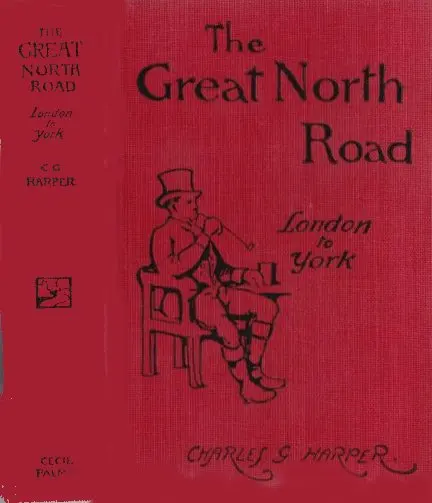
Charles G. (Charles George) Harper
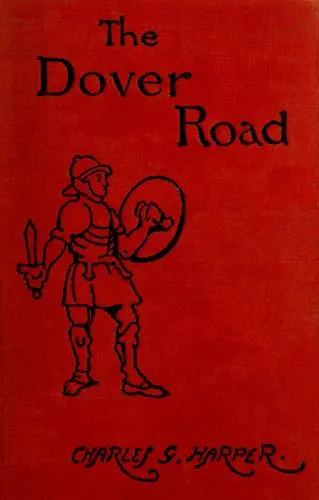
Charles G. (Charles George) Harper
BEHIND THE BOOK
This eBook is for the use of anyone anywhere in the United States and most other parts of the world at no cost and with almost no restrictions whatsoever. You may copy it, give it away or re-use it under the terms of the Project Gutenberg License included with this eBook or online at www.gutenberg.org. If you are not located in the United States, you will have to check the laws of the country where you are located before using this eBook. Read the source licence.
The original source file, including credits and licence, is retained by this library. Request an original-format copy at no charge. Please include the book title and Project Gutenberg identifier #38611.
KEEP YOUR CURIOSITY GOING
Wilfrid Scawen Blunt
Wilfrid Scawen Blunt

E. W. (Edgar Watson) Howe
Cécile Tormay

Moritz Busch
John L. Ransom