THE CLASSIC COLLECTION✦Pan’s gardenCLASSIC FREE BOOKS
Pan’s garden
Algernon Blackwood
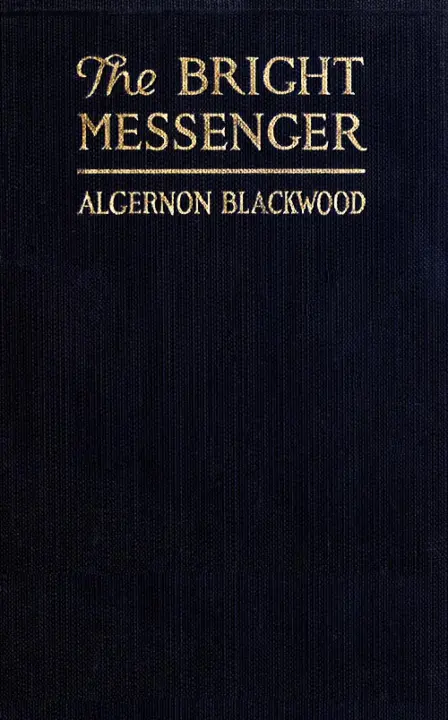
THE CLASSIC COLLECTION · 1922
"The Bright Messenger" by Algernon Blackwood is a novel written in the early 20th century. The story centers on Edward Fillery, a detached yet deeply sympathetic psychologist and doctor, who grapples with his identity shaped by his unconventional birth and upbringing. The book explores themes of human nature, consciousness, and the search for deeper understanding, particularly as it relates to a mysterious young man named LeVallon, who embodies both extraordinary abilities and a primordial connection to nature. At the start of the narrative, we are introduced to Edward Fillery, who reflects on his unique perspective on life stemming from the complex circumstances of his birth. The opening chapters delve into his upbringing, his father's passion for a foreign woman, and the psychological burdens that shaped him into a compassionate observer of humanity. As Fillery embarks on a journey to discover the potential of human consciousness, he receives a letter about LeVallon, a young man with unusual traits and a deep spiritual connection to nature. This letter hints at LeVallon being a unique case filled with potential for insight into the reality beyond ordinary human existence. The initial dynamics between Fillery, LeVallon, and the influences of their respective pasts set the stage for a deeper exploration of what it means to be human.
Introduction adapted from the source catalogue; source summaries may be automatically generated.
Free to read · English · 119,592 words · No account needed
MAKE TIME FOR A GOOD BOOK
On by default. Untick to stop anonymous reading totals. Each page counts after 10 seconds in view. How this works.
Anonymous counting is on unless you have switched it off.
"Certain of these Intelligences are so immense that only a series of events, long centuries, a period of history, as we call it, can provide the means, the body indeed, through which they can express themselves. An entire civilization may be the 'body' used by an archetypal power. Others, again--like 'N. H.' probably--since I notice that it is usually the artist, the artistic temperament he affects most--require beauty for their expression--beauty of form and outline, of sound, of colour."
He paused for effect, but no comment came.
"Our response to beauty, our thrill, our lift of delight and wonder before any manifestation of beauty--these are due only to our perception, though usually unrecognized except by artists, of the particular Intelligence thus trying to express itself----"
Dr. Fillery suddenly leaned forward, listening with a new expression on his face. He betrayed, however, no sign of what he thought of his voluble visitor. An idea, none the less, had struck him like a flash between the eyes of the mind.
"You mean," he interposed patiently, "that just as your fairies use form and colour to express themselves in nature, we might use beauty of a mental order to--to----"
"To build a body of expression, yes, an instrument in a collective sense, through which 'N. H.' might express whatever of knowledge, wisdom and power he has----"
"Will you explain yourself a little more definitely?"
Father Collins beamed. He continued with an air of intense conviction:
"The Artist is ever an instrument merely, and for the most part an unconscious one; only the greatest artist is a conscious instrument. No man is an artist at all until he transcends both nature and himself; that is, until he interprets both nature and himself in the unknown terms of that greater Power whence himself and nature emanate. He is aware of the majestic source, aware that the universe, in bulk and in detail, is an expression of it, itself a limited instrument; but aware, further--and here he proves himself great artist--of the stupendous, lovely, central Power whose message stammers, broken and partial, through the inadequate instruments of ephemeral appearances.
"He creates, using beauty in form, sound, colour, a better and more perfect instrument, provides this central Power with a means of fuller expression.
"The message no longer stammers, halts, suggests; it flows, it pours, it sings. He has fashioned a vehicle for its passage. His art has created a body it can use. He has transcended both nature and himself. The picture, poem, harmony that has become the body for this revelation is alone great art."
"Exactly," came the patient comment that was asked for.
Your reading position is saved on this browser. Take it to another device with a library code. Reading pages adapt to text, rather than matching a printed edition.
Algernon Blackwood
Algernon Blackwood
Algernon Blackwood
Algernon Blackwood
BEHIND THE BOOK
This eBook is for the use of anyone anywhere in the United States and most other parts of the world at no cost and with almost no restrictions whatsoever. You may copy it, give it away or re-use it under the terms of the Project Gutenberg License included with this eBook or online at www.gutenberg.org. If you are not located in the United States, you will have to check the laws of the country where you are located before using this eBook. Read the source licence.
The original source file, including credits and licence, is retained by this library. Request an original-format copy at no charge. Please include the book title and Project Gutenberg identifier #43594.
KEEP YOUR CURIOSITY GOING
Coulson Kernahan

Maurice Baring
Frances Wright
Cécile Tormay
Francis Greenleaf Allinson & Anne C. E. (Anne Crosby Emery) Allinson

Frederic Jesup Stimson