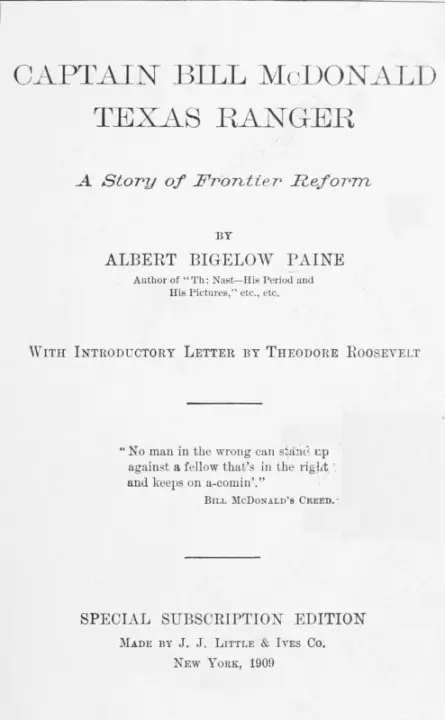
Captain Bill McDonald, Texas Ranger: A Story of Frontier Reform
Albert Bigelow Paine
THE CLASSIC COLLECTION · 1899
"The Bread Line: A Story of a Paper" by Albert Bigelow Paine is a novel written in the late 19th century. The story centers around a group of four friends—two artists and two writers—who embark on an ambitious endeavor to start a publication called the "Whole Family." It explores themes of aspiration, collaboration, and the contrasts between artistic dreams and harsh realities, offering insights into the struggles of bohemian life during a time of economic prosperity. At the start of the book, the narrative unfolds on New Year’s Eve, capturing the optimism and camaraderie among the four protagonists as they indulge in a lavish dinner at a café. As they discuss their dreams and frustrations with the publishing industry, one of the friends, Barrifield, proposes the idea of launching their own paper at a low subscription price, drawing inspiration from an existing successful model. The camaraderie comes to life through their banter and shared ambitions, and as events progress, they find themselves humbled by the social realities around them, exemplified by their encounter with those waiting in the bread line for assistance. This opening chapter establishes the characters' motivations while hinting at the challenges they will face in their entrepreneurial journey.
Introduction adapted from the source catalogue; source summaries may be automatically generated.
Free to read · English · 37,232 words · No account needed
MAKE TIME FOR A GOOD BOOK
On by default. Untick to stop anonymous reading totals. Each page counts after 10 seconds in view. How this works.
Anonymous counting is on unless you have switched it off.
"Look at that old chap ahead yonder--around the corner. How he crouches and shivers! Isn't that great?"
Van Dorn looked as directed--then more keenly.
"Good God!" he said, "it's Colonel Hazard!" He leaned forward to Perner. "Isn't that the Colonel," he asked,--"that old fellow just around the corner, with his collar full of sleet?"
"By gad, it is!" decided Livingstone.
"We'll take him back with us," said Perner. "Poor old Colonel!"
The waif from behind was talking again. He had turned around so they
could hear.
"Last New Year there was some blokes come along an' give us a nickel apiece all round. I was on the end an' got two. When they went away one of 'em said they was comin' back to-night to give us a dollar apiece."
"They won't come," said Perner.
"How d' y' know?"
"We're the men."
"Aw, what yeh givin' us?"
"Facts. We've started a paper since then."
A party of roisterers came shouting across the street.
"Come and have a drink," they called. "Come on, you fellows, and have a
drink with us!"
A number of men left their places in the line and went. Perner watched
one of them intently.
"If that fellow isn't Bates you can drink my coffee," he said, pointing.
Van Dorn and Livingstone looked, but could not be certain. They did not
see him return.
It was somewhat after midnight, and the chimes of Grace Church, mingled with a pandemonium of horns and whistles, were still roaring in the glad New Year, when they finally obtained the brown loaf and the cup of hot coffee, which by this time they needed desperately. The bread they thrust under their coats, and some minutes later were in the studios.
Colonel Hazard was with them. He had maintained a wonderful self-possession when overhauled at Fleischmann's.
"Excellent place to study character," he remarked, after the first moment of surprise. "I come here now and then for the feeling."
And Van Dorn had answered:
"I've got enough to last me forever!"
The coals were still red in their grate, and over them they toasted the bread. For a while they attended to this busily, and talked but little. Then came the tobacco. It was like heaven.
Presently Perner told the Colonel of some Egyptian articles wanted by
the "Columbian."
"They offered them to me," he said, "and I took them, because I haven't had the courage to refuse anything lately. But I had you in mind at the time to help me on with them, and now I've something else on hand, I'll turn them over to you altogether, if you'll take them."
Your reading position is saved on this browser. Take it to another device with a library code. Reading pages adapt to text, rather than matching a printed edition.
Albert Bigelow Paine
Albert Bigelow Paine
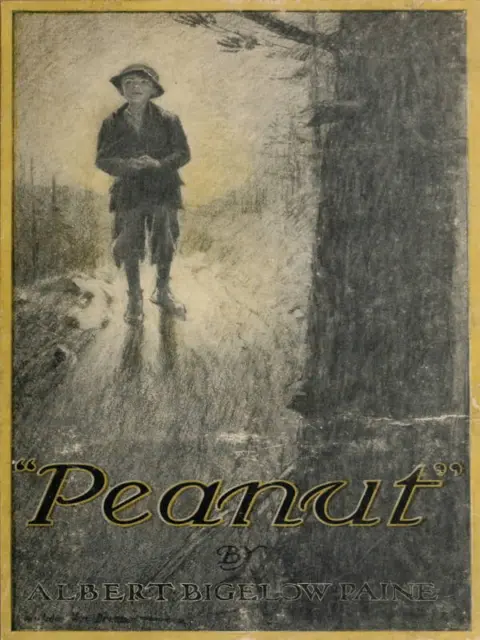
Albert Bigelow Paine
Albert Bigelow Paine
BEHIND THE BOOK
This eBook is for the use of anyone anywhere in the United States and most other parts of the world at no cost and with almost no restrictions whatsoever. You may copy it, give it away or re-use it under the terms of the Project Gutenberg License included with this eBook or online at www.gutenberg.org. If you are not located in the United States, you will have to check the laws of the country where you are located before using this eBook. Read the source licence.
The original source file, including credits and licence, is retained by this library. Request an original-format copy at no charge. Please include the book title and Project Gutenberg identifier #34023.
KEEP YOUR CURIOSITY GOING
Coulson Kernahan

Maurice Baring
Frances Wright
Cécile Tormay

Frederic Jesup Stimson

W. H. P. (William Henry Pope) Jarvis