THE CLASSIC COLLECTION✦The Broken CupCLASSIC FREE BOOKS
The Broken Cup
Heinrich Zschokke
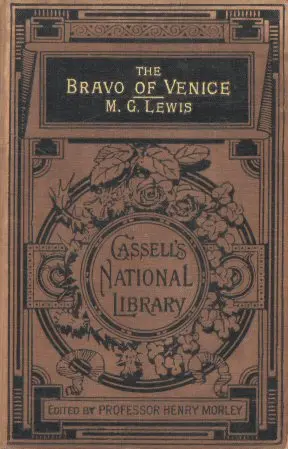
THE CLASSIC COLLECTION · 1805
"The Bravo of Venice: A Romance" by Heinrich Zschokke is a novel written during the early 19th century. The story unfolds against the backdrop of Venice and follows the tragic character Abellino, a beggar who possesses a noble past but now teeters on the edge of desperation, navigating the treacherous world of bandits and moral dilemmas. As he grapples with his fate, he must confront themes of honor, loss, and the possibility of redemption amidst the chaos of his surroundings. At the start of the novel, readers are introduced to Abellino, who reflects on his miserable situation while sitting alone near the canal in Venice on a moonlit night. Struggling with hunger and despair, he vows to take action and ends up intervening to save a stranger from an assassin, unveiling his potential for bravery. The narrative quickly shifts to depict Abellino aligning with bandits after finding himself in dire straits. As he grapples with the implications of his actions, the decision to embrace the life of a "bravo" intertwines with his past and hopes for future greatness, setting the stage for a complex exploration of identity and morality in a world rife with danger and temptation.
Introduction adapted from the source catalogue; source summaries may be automatically generated.
Free to read · English · 34,801 words · No account needed
MAKE TIME FOR A GOOD BOOK
On by default. Untick to stop anonymous reading totals. Each page counts after 10 seconds in view. How this works.
Anonymous counting is on unless you have switched it off.
Flodoardo.—Should I deliver Abellino into your power, do you solemnly swear that Rosabella shall be my bride?
Andreas.—She shall! and not till then.
Rosabella.—Ah! Flodoardo, I fear this undertaking will end fatally. Abellino is so crafty, so dreadful. Oh! look well to yourself, for should you meet with the detested monster, whose dagger—
Flodoardo (interrupting her hastily).—Oh! silence, Rosabella—at least allow me to hope. Noble Andreas, give me your hand, and pledge your princely word that, Abellino once in your power, nothing shall prevent me from being Rosabella’s husband.
Andreas.—I swear it; deliver into my power, either alive or dead, this most dangerous foe of Venice, and nothing shall prevent Rosabella from being your wife. In pledge of which I here give you my princely hand.
Flodoardo grasped the Doge’s hand in silence, and shook it thrice. He turned to Rosabella, and seemed on the point of addressing her, when he suddenly turned away, struck his forehead, and measured the apartment with disordered and unsteady steps. The clock in the tower of St. Mark’s church struck five.
“Time flies!” cried Flodoardo; “no more delay, then. In four-and-twenty hours will I produce in this very palace this dreaded bravo, Abellino.”
Andreas shook his head. “Young man,” said he, “be less confident in your promises; I shall have more faith in your performance.”
Flodoardo (serious and firm).—Let things terminate as they may, either I will keep my word, or never again will cross the threshold of your palace. I have discovered some traces of the miscreant, and I trust that I shall amuse you to-morrow, at this time and in this place, with the representation of a comedy; but should it prove a tragedy instead, God’s will be done.
Andreas.—Remember that too much haste is dangerous; rashness will destroy even the frail hopes of success which you may reasonably indulge at present.
Flodoardo.—Rashness, my lord? He who has lived as I have lived, and suffered what I have suffered, must have been long since cured of rashness.
Rosabella (taking his hand).—Yet be not too confident of your own strength, I beseech you! Dear Flodoardo, my uncle loves you, and his advice is wise! Beware of Abellino’s dagger!
Flodoardo.—The best way to escape his dagger is not to allow him time to use it: within four-and-twenty hours must the deed be done, or never. Now, then, illustrious Prince, I take my leave of you. To-morrow I doubt not to convince you that nothing is too much for love to venture.
Andreas.—Right; to venture: but to achieve?
Your reading position is saved on this browser. Take it to another device with a library code. Reading pages adapt to text, rather than matching a printed edition.
BEHIND THE BOOK
This eBook is for the use of anyone anywhere in the United States and most other parts of the world at no cost and with almost no restrictions whatsoever. You may copy it, give it away or re-use it under the terms of the Project Gutenberg License included with this eBook or online at www.gutenberg.org. If you are not located in the United States, you will have to check the laws of the country where you are located before using this eBook. Read the source licence.
The original source file, including credits and licence, is retained by this library. Request an original-format copy at no charge. Please include the book title and Project Gutenberg identifier #2706.
KEEP YOUR CURIOSITY GOING
Cécile Tormay

Moritz Busch
Coulson Kernahan
John L. Ransom

Maurice Baring
Frances Wright