THE CLASSIC COLLECTION✦The Broken CupCLASSIC FREE BOOKS
The Broken Cup
Heinrich Zschokke
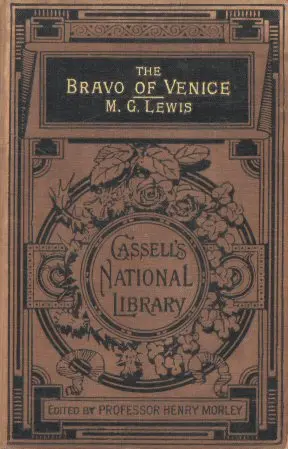
THE CLASSIC COLLECTION · 1805
"The Bravo of Venice: A Romance" by Heinrich Zschokke is a novel written during the early 19th century. The story unfolds against the backdrop of Venice and follows the tragic character Abellino, a beggar who possesses a noble past but now teeters on the edge of desperation, navigating the treacherous world of bandits and moral dilemmas. As he grapples with his fate, he must confront themes of honor, loss, and the possibility of redemption amidst the chaos of his surroundings. At the start of the novel, readers are introduced to Abellino, who reflects on his miserable situation while sitting alone near the canal in Venice on a moonlit night. Struggling with hunger and despair, he vows to take action and ends up intervening to save a stranger from an assassin, unveiling his potential for bravery. The narrative quickly shifts to depict Abellino aligning with bandits after finding himself in dire straits. As he grapples with the implications of his actions, the decision to embrace the life of a "bravo" intertwines with his past and hopes for future greatness, setting the stage for a complex exploration of identity and morality in a world rife with danger and temptation.
Introduction adapted from the source catalogue; source summaries may be automatically generated.
Free to read · English · 34,801 words · No account needed
MAKE TIME FOR A GOOD BOOK
On by default. Untick to stop anonymous reading totals. Each page counts after 10 seconds in view. How this works.
Anonymous counting is on unless you have switched it off.
Struzza.—I cannot recover myself; surprise and terror have almost
stupefied me.
Abellino.—Indeed! By my life, when I heard the news I burst into laughter. “Signor Matteo,” said I, “I wish your worship joy of your safe arrival.”
Thomaso.—What?
Struzza.—You laughed? Hang me if I can see what there is to laugh at.
Abellino.—Why, surely you are not afraid of receiving what you are so ready to bestow on others? What is your object? What can we expect as our reward at the end of our labours except the gibbet or the rock? What memorials of our actions shall we leave behind us, except our skeletons dancing in the air, and the chains which rattle round them? He who chooses to play the bravo’s part on the great theatre of the world must not be afraid of death, whether it comes at the hands of the physician or the executioner. Come, come, pluck up your spirits, comrades.
Thomaso.—That’s easy to say, but quite out of my power.
Pietrino.—Mercy on me, how my teeth chatter.
Baluzzo.—Prithee, Abellino, be composed for a moment or two, your gaiety at a time like this is quite horrible.
Cinthia.—Oh, me! oh, me! Poor murdered Matteo.
Abellino.—Hey-day. Why, what is all this! Cinthia, my life, are you not ashamed of being such a child? Come, let you and I renew that conversation which my sending you to wake these gentlemen interrupted. Sit down by me, sweetheart, and give me a kiss.
Cinthia.—Out upon you, monster.
Abellino.—What, have you altered your mind, my pretty dear? Well, well, with all my heart, when you are in the humour, perhaps I may not have the inclination.
Baluzzo.—Death and the devil, Abellino, is this a time for talking nonsense? Prithee keep such trash for a fitter occasion, and let us consider what we are to do just now.
Pietrino.—Nay, this is no season for trifling.
Struzza.—Tell us, Abellino; you are a clever fellow; what course is it
best for us to take?
Abellino (after a pause).—Nothing must be done, or a great deal. One of two things we must choose. Either we must remain where we are, and what we are, murder honest men to please any rascal who will give us gold and fair words, and make up our minds to be hung, broken on the wheel, condemned to the galleys, burnt alive, crucified, or beheaded, at the long run, just as it may seem best to the supreme authority; or else—
Thomaso.—Or else? Well?
Your reading position is saved on this browser. Take it to another device with a library code. Reading pages adapt to text, rather than matching a printed edition.
BEHIND THE BOOK
This eBook is for the use of anyone anywhere in the United States and most other parts of the world at no cost and with almost no restrictions whatsoever. You may copy it, give it away or re-use it under the terms of the Project Gutenberg License included with this eBook or online at www.gutenberg.org. If you are not located in the United States, you will have to check the laws of the country where you are located before using this eBook. Read the source licence.
The original source file, including credits and licence, is retained by this library. Request an original-format copy at no charge. Please include the book title and Project Gutenberg identifier #2706.
KEEP YOUR CURIOSITY GOING
Cécile Tormay

Moritz Busch
Coulson Kernahan
John L. Ransom

Maurice Baring
Frances Wright