THE CLASSIC COLLECTION✦Under Fire: A Tale of New England Village LifeCLASSIC FREE BOOKS
Under Fire: A Tale of New England Village Life
Frank Andrew Munsey
THE CLASSIC COLLECTION · 1888
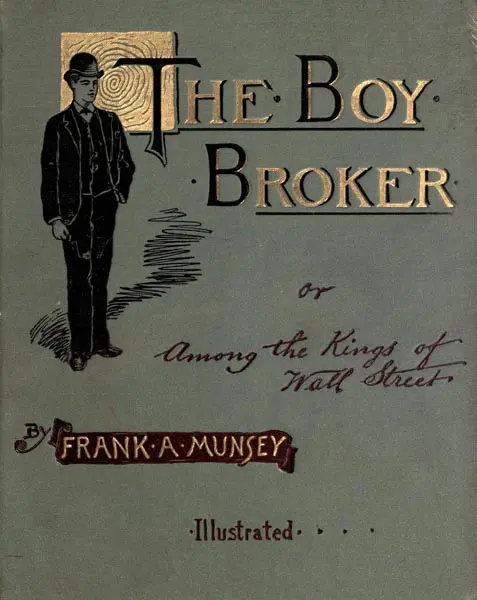
"The Boy Broker; Or, Among the Kings of Wall Street" by Frank Andrew Munsey is a novel written in the late 19th century. The story centers around Herbert Randolph, a young boy from Vermont who arrives in New York City with dreams of success but quickly realizes the challenges he must face in the bustling metropolis. The narrative promises to explore Herbert's journey as he seeks employment, encounters the realities of city life, and navigates the complexities of ambition. The opening of the novel introduces Herbert as he arrives in New York, filled with hope but already feeling overwhelmed. He struggles to find his footing in the city, seeking employment and understanding the unfamiliar slang of local boys. Herbert meets Bob Hunter, a street-savvy newsboy who offers him assistance and insight into life in the city. As he attempts to navigate job applications, Herbert's idealistic views clash with the harsh realities he encounters, revealing both his ambition and the daunting competition he faces. This sets the stage for the tension and conflict that will unfold as he seeks to establish himself in a world that is both glittering and unforgiving.
Introduction adapted from the source catalogue; source summaries may be automatically generated.
Free to read · English · 55,030 words · No account needed
MAKE TIME FOR A GOOD BOOK
On by default. Untick to stop anonymous reading totals. Each page counts after 10 seconds in view. How this works.
Anonymous counting is on unless you have switched it off.
It was past midnight when Herbert Randolph and Bob Hunter reached their room. The old fence had meanwhile been taken to the station house by an officer. Both boys were sleepy and well nigh exhausted, so they immediately sought rest.
Bob, however, was up at his usual hour in the morning, and off to look after his paper trade. Business proved good with him on this occasion--unusually good--so that his profits amounted to quite a nice little sum. He therefore planned to give Herbert a good warm breakfast, something better than it had been their custom to eat.
Presently Tom Flannery appeared.
"You here, Bob?" said the latter, with surprise. "I thought you was done
for, sure."
"What made you think that, Tom?"
"Why, because you didn't show up."
"You didn't wait for me, did you?"
"Didn't I? Well, I should think I did, till near twelve o'clock, too, when I was so near froze I couldn't stay no longer; and Bob, I thought it was all up with you."
"Why, Tom, you hadn't oughter staid. I told you to go home after you lit
the fire."
"I know you did, Bob, but I didn't feel like goin' home and leavin' you alone in that den. You see I thought you might need me."
"Tom, you've got more sand than I thought you had. I wish I coulder fixed it so you coulder been on the inside too."
"I wish you could, Bob. Was it excitin'?"
"Excitin'! Well, wasn't it, though! I never saw anything like it. But I say, Tom, that was a great go. You done it splendid."
"What's that, Bob?"
"Why, the fire act. I don't believe nobody could beat that."
Tom enjoyed this praise hugely.
"I wouldn't like to a' been in your place, Bob," said he, "when you was in that dark room, nor when old Gunwagner and that other feller was huntin' for you."
"No, I thought you wouldn't, Tom, and I didn't want to be there
neither."
"'Twas a big detective job, wasn't it, Bob?"
"Well, 'twas a pretty fair one, I guess."
"And you got it all up yourself," continued Tom, admiringly. "I wish I could do things the way you do, Bob."
"Well, you see, Tom, you hain't had so much experience as what I have, but you'll come out all right, and make a big detective, I know you will."
Bob stopped talking to sell a paper, and after making change and pocketing his profit, he continued:
"Now, Tom, I tell you what 'tis: you and me and Herbert will eat breakfast together, when he comes down."
Your reading position is saved on this browser. Take it to another device with a library code. Reading pages adapt to text, rather than matching a printed edition.
BEHIND THE BOOK
This eBook is for the use of anyone anywhere in the United States and most other parts of the world at no cost and with almost no restrictions whatsoever. You may copy it, give it away or re-use it under the terms of the Project Gutenberg License included with this eBook or online at www.gutenberg.org. If you are not located in the United States, you will have to check the laws of the country where you are located before using this eBook. Read the source licence.
The original source file, including credits and licence, is retained by this library. Request an original-format copy at no charge. Please include the book title and Project Gutenberg identifier #28887.
KEEP YOUR CURIOSITY GOING
Coulson Kernahan

Maurice Baring
Frances Wright
Cécile Tormay

Frederic Jesup Stimson

W. H. P. (William Henry Pope) Jarvis