THE CLASSIC COLLECTION✦Under Fire: A Tale of New England Village LifeCLASSIC FREE BOOKS
Under Fire: A Tale of New England Village Life
Frank Andrew Munsey
THE CLASSIC COLLECTION · 1888
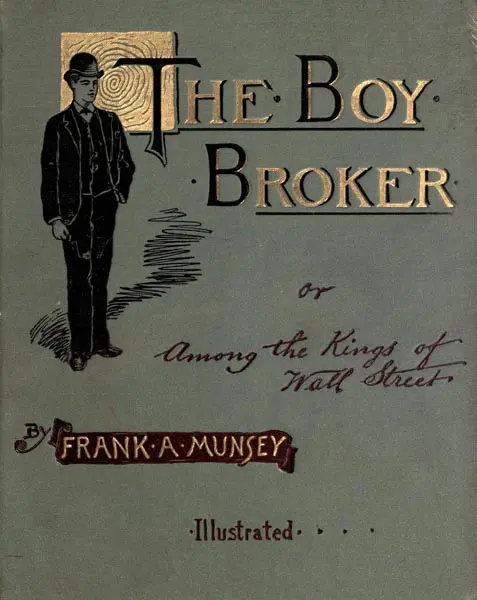
"The Boy Broker; Or, Among the Kings of Wall Street" by Frank Andrew Munsey is a novel written in the late 19th century. The story centers around Herbert Randolph, a young boy from Vermont who arrives in New York City with dreams of success but quickly realizes the challenges he must face in the bustling metropolis. The narrative promises to explore Herbert's journey as he seeks employment, encounters the realities of city life, and navigates the complexities of ambition. The opening of the novel introduces Herbert as he arrives in New York, filled with hope but already feeling overwhelmed. He struggles to find his footing in the city, seeking employment and understanding the unfamiliar slang of local boys. Herbert meets Bob Hunter, a street-savvy newsboy who offers him assistance and insight into life in the city. As he attempts to navigate job applications, Herbert's idealistic views clash with the harsh realities he encounters, revealing both his ambition and the daunting competition he faces. This sets the stage for the tension and conflict that will unfold as he seeks to establish himself in a world that is both glittering and unforgiving.
Introduction adapted from the source catalogue; source summaries may be automatically generated.
Free to read · English · 55,030 words · No account needed
MAKE TIME FOR A GOOD BOOK
On by default. Untick to stop anonymous reading totals. Each page counts after 10 seconds in view. How this works.
Anonymous counting is on unless you have switched it off.
"I didn't s'pose you did know, Tom Flannery, so now I'll tell you," said Bob, who had seized upon his companion's suggestion. "A regular detective, if he was in my place, and had you to help him, would do jest what I'm going to do, and that is to send you into the den first, to see what you can find out."
"Send me in?" exclaimed Tom, incredulously.
"Yes, that's what I said, wasn't it?"
"And that's what a reg'lar detective would do?"
"Yes."
"And that's what you're goin' to do?"
"Yes, of course it is. Why wouldn't I do the same as any other detective? That's what I want to know."
"Of course you would, Bob, but I couldn't do nothin' if I should go in," said Tom, gently protesting against the proposed plan of action.
"You can do what I tell you to, can't you?"
"I don't know nothin' about it, any way, I tell you," replied Tom, showing more plainly his disinclination to obedience.
"Tom Flannery, I wouldn't er believed that you would back out this way," said Bob, with surprise.
"Well, I don't want to be a detective no way. I don't care nothin' about my name bein' in the paper."
"You hain't got no ambition. If you had, you'd show some spunk now.
'Tain't often a feller has a chance to get into a case like this one
is."
"Well, I don't care if it ain't, that's what I say."
"I thought you wanted to be a detective, and couldn't wait, hardly, for
me to work up the case."
"Well, I didn't think I'd have to climb into places like this old Gunwagner's. 'Tain't what I call bein' a detective no way."
"You make me tired, Tom Flannery. You get the foolishest notions into your head of any boy I ever see."
"Well, I don't care if I do. I know plenty detectives don't do nothin' like this. They jest dress up and play the gentleman, that's what they do."
"And that's the kind of a detective you want to be, is it?"
"Yes, it is; there ain't no danger about that kind of bein' a
detective."
"Tom, you'd look great tryin' to be a gentleman, wouldn't you? I'd like to see you, Tom Flannery, a gentleman!" said Bob, derisively. "It makes me sick, such talk."
Tom was silent for a time. Evidently he thought there was some ground
for Bob's remarks.
But an idea occurred to him now.
"Bob," said he, "if you like bein' this kind of a detective, why don't you go in yourself, instead of sendin' me? Now, answer me that, will you?"
Your reading position is saved on this browser. Take it to another device with a library code. Reading pages adapt to text, rather than matching a printed edition.
BEHIND THE BOOK
This eBook is for the use of anyone anywhere in the United States and most other parts of the world at no cost and with almost no restrictions whatsoever. You may copy it, give it away or re-use it under the terms of the Project Gutenberg License included with this eBook or online at www.gutenberg.org. If you are not located in the United States, you will have to check the laws of the country where you are located before using this eBook. Read the source licence.
The original source file, including credits and licence, is retained by this library. Request an original-format copy at no charge. Please include the book title and Project Gutenberg identifier #28887.
KEEP YOUR CURIOSITY GOING
Coulson Kernahan

Maurice Baring
Frances Wright
Cécile Tormay

Frederic Jesup Stimson

W. H. P. (William Henry Pope) Jarvis