THE CLASSIC COLLECTION✦The ocean wireless boys of the iceberg patrolCLASSIC FREE BOOKS
The ocean wireless boys of the iceberg patrol
John Henry Goldfrap
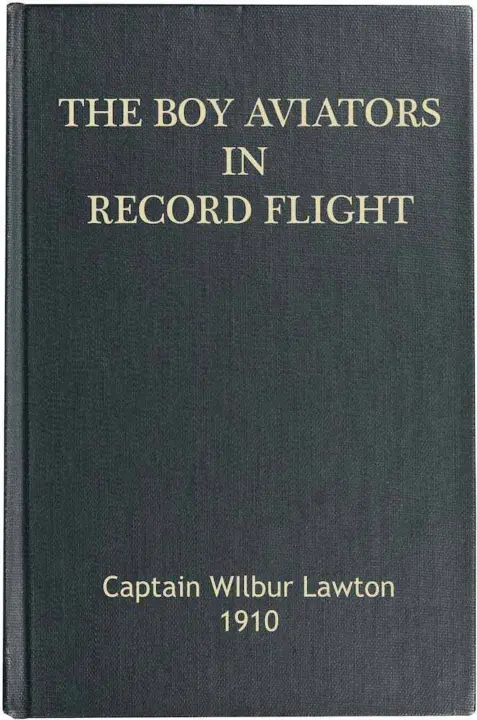
THE CLASSIC COLLECTION · 1910
"The Boy Aviators in Record Flight; Or, The Rival Aeroplane" by Captain Wilbur Lawton is a young adult adventure novel written in the early 20th century. The story centers around two young aviators, Frank and Harry Chester, who, along with their friend Billy Barnes, take on a formidable challenge: a cross-country flight from New York to San Francisco for a $50,000 prize. In addition to the thrill of aviation, the narrative explores themes of rivalry, clever problem-solving, and the adventures of youth. The opening of the tale introduces Billy Barnes, a reporter for the New York "Planet", who is tasked with covering a major aviation event. After discussing the competitive landscape with his editor, he learns that their rival newspaper, the "Despatch", is also entering the fray with an identical prize for the same flight, which adds tension and urgency to the plot. The discussion leads to Billy's desire to involve the Chester brothers in the competition, but they are initially hesitant. As the story progresses, readers witness the development of friendships and rivalries, the planning for a record-setting flight, and the mounting excitement as the characters prepare for their daring undertaking. The stage is set for thrilling aerial adventures and unexpected challenges as they embark on their journey.
Introduction adapted from the source catalogue; source summaries may be automatically generated.
Free to read · English · 48,212 words · No account needed
MAKE TIME FOR A GOOD BOOK
On by default. Untick to stop anonymous reading totals. Each page counts after 10 seconds in view. How this works.
Anonymous counting is on unless you have switched it off.
Billy Barnes was examining his camera, which had been severely shaken up on the trip, Frank and Harry were going over the Golden Eagle admiringly, remarking on the way she had stood her hard ordeal, and old Mr. Joyce was taking a lesson in wireless telegraphy from Lathrop. It was beginning to grow dusk. Somewhere far up on the hillside there came the hoot of an owl. The hush of the evening in the foothills lay over everything, when suddenly the silence was broken by a sound that brought them all to their feet.
The report of a rifle had rung out on the hillside above them.
“Must be Bart shooting at something,” remarked Billy, gazing at the
scared faces about him.
“That was a rifle shot,” said Frank slowly, “and Bart Witherbee carried
no rifle.”
“Then somebody else fired it?”
“That’s about it. Don’t make a sound now. Listen!”
They all held their breaths and waited anxiously in the stillness that followed. For perhaps ten minutes they stood so, and then there came a sharp crackle of snapping twigs, that told them some one was descending the hillside.
Who was it?
Several minutes of agonizing suspense followed before they knew whether it was friend or enemy advancing toward them. Then Bart Witherbee glided, like a snake, out of the woods.
“What’s the mat——” began Frank. But he checked himself instantly.
Bart Witherbee’s hand was held up.
Every one of the group read that mute signal aright.
Silence!
The old plainsman waited till he got right up to the group before he spoke, and then it was in a hushed tense whisper.
“Injuns,” he said, “they’re up on the hillside.”
“How many?” whispered back Frank.
“I dunno exactly, after that there bullet I didn’t wait ter see, and say, boys, I had ter leave as nice a string of trout as you ever see up there fer them pesky redskins ter git at.”
“Never mind the fish, Bart,” urged Frank, “tell us, is there danger?”
“There’s allus danger when Injuns is aroun’, and think they kin git somethin’ that’s vallerble without gitting in trouble over it,” was the westerner’s reply.
“We’d better get away from here right away,” exclaimed Harry.
“Not on your life, son,” was Bart’s reply; “not if I know anything about Injuns an’ their ways. No, sons, my advice is ter git riddy fer ’em. They was startled when they see me, therefore they didn’t know we wus here till they stumbled on me. That bein’ the case, I reckin they don’t know about that thar flying thing of you boys.”
Your reading position is saved on this browser. Take it to another device with a library code. Reading pages adapt to text, rather than matching a printed edition.
John Henry Goldfrap
John Henry Goldfrap
John Henry Goldfrap

John Henry Goldfrap
BEHIND THE BOOK
This eBook is for the use of anyone anywhere in the United States and most other parts of the world at no cost and with almost no restrictions whatsoever. You may copy it, give it away or re-use it under the terms of the Project Gutenberg License included with this eBook or online at www.gutenberg.org. If you are not located in the United States, you will have to check the laws of the country where you are located before using this eBook. Read the source licence.
The original source file, including credits and licence, is retained by this library. Request an original-format copy at no charge. Please include the book title and Project Gutenberg identifier #45182.
KEEP YOUR CURIOSITY GOING
Coulson Kernahan

Maurice Baring
Frances Wright
Cécile Tormay

Frederic Jesup Stimson

W. H. P. (William Henry Pope) Jarvis