THE CLASSIC COLLECTION✦Birds in Legend, Fable and FolkloreCLASSIC FREE BOOKS
Birds in Legend, Fable and Folklore
Ernest Ingersoll
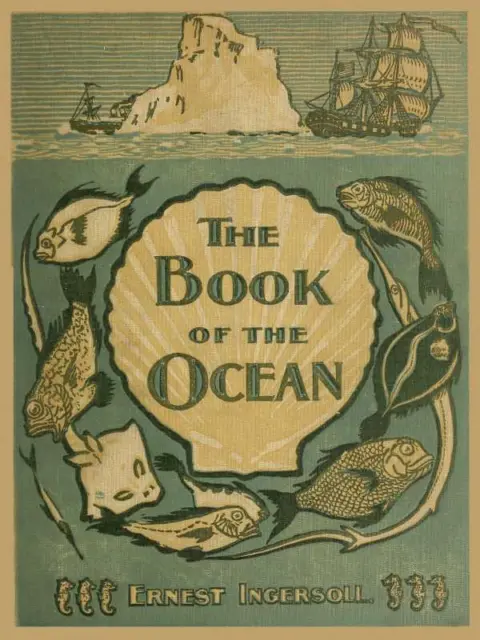
THE CLASSIC COLLECTION · 1898
"The Book of the Ocean" by Ernest Ingersoll is a scientific publication written in the late 19th century. This work serves as a comprehensive exploration of the ocean, covering its origins, physical characteristics, and its significant role in human history and geography. The book discusses various topics such as maritime navigation, oceanic currents, and early explorations, reflecting an era of growing interest in oceanic science. At the start of "The Book of the Ocean," Ingersoll introduces readers to the concept of the ocean and its formation, emphasizing the vastness of seawater compared to terrestrial land. The opening chapter delves into ancient geographical perceptions, the scientific definitions of oceans and seas, and the importance of water's role in shaping the Earth. Ingersoll describes the processes through which oceans evolved, including the impact of surface pressure and temperature variations, as well as the effects of waves, tides, and currents. This foundational knowledge sets the stage for understanding the ocean's fluid dynamics, historical significance, and influences on climate, commerce, and navigation in subsequent chapters.
Introduction adapted from the source catalogue; source summaries may be automatically generated.
Free to read · English · 100,769 words · No account needed
MAKE TIME FOR A GOOD BOOK
On by default. Untick to stop anonymous reading totals. Each page counts after 10 seconds in view. How this works.
Anonymous counting is on unless you have switched it off.
[7] It does not follow that these creatures are conscious of this pressure, any more than we are of the pressure upon us of the fourteen pounds to the square inch of our atmosphere. The point is that they do feel it when they rise upward to a point where the pressure is distinctly less, just as we are conscious of a difference when we ascend in a balloon or climb a very high mountain, and after a time we find that we cannot go any farther. Land animals therefore have a vertical limit to their distribution as well as sea animals, and for analogous reasons.—E. I.
Adler at Samoa, 200.
Agalma elegans, 264.
Alabama, the, in action, 136, 158.
Algæ, typical, 252, 254.
Almirante Cochrane, in action with Huascar, 141.
America, the yacht, 158, 195.
Antarctic scenery, 101.
Ardois night-signals at sea, 205.
Argonaut shell, 274.
Armada, style of ships of the, 115.
Balloon-sail, 158, 186.
Battle-ships, modern steel, 134, 142, 144, 147, 150, 153.
See also LINE-OF-BATTLE SHIPS.
Beam-trawl for deep-sea dredging, 261.
Biremes, Roman, 42. See GALLEYS.
Boat-davits, 223, 232.
Bon Homme Richard, the, 182.
Bottle-fish, the, 263.
Bowsprit, the, and its rigs, 38, 63, 113, 120, 158, 175.
See CUTTERS and SLOOPS.
Breeches-buoy, method of using, 229.
Buckeye, or “bugeye,” a, 198.
Buoys, 225, 226, 227.
Cambria, model of, 195.
Cameos, shell used for, 270.
Can-buoys, 225.
Canoes, 28, 37, 45, 198.
Caravels, 35, 61, 63, 65, 76.
Carronade, an old, 185.
Cassis, a typical, 270.
“Castles,” fore and aft, on ancient ships, 35, 57, 63, 65,
112, 113, 115, 119.
Catboat, a Newport, 195.
Center-board boats, models of, 195.
Chain-plates, 172.
Channels, 172.
Chart, an early, 54.
Chinese boats, 32. Compare MALAY BOATS.
Clewed-up, mainsails, 120, 184.
Clipper-ship, a, 158, 164.
Coast, destruction of, by the sea, 3, 5, 7, 10, 15, 58.
Collision, scene in a, 202.
Columbia, the, 146.
Columbus, Christopher, flag-ship of, 63.
Columbus, Christopher, statue of, 60.
Constellation, 184.
Constitution frigate, 106, 132.
Costumes of mariners, 117, 123, 142, 147, 157, 172, 179.
Cruisers, modern steel, 146, 150, 154, 205.
Crustaceans of the deep sea, 273.
Cutters, 188, 191, 193.
Day-marks (for pilots), 225.
Deck scenes, modern, 142, 147, 154, 164, 261.
Deck scenes on old-time vessels, 117, 130.
Deep-sea dredging apparatus, 261.
Diatoms, 257.
Diving-dress, 258.
Driver (sail). See SPANKER.
Dynamite-cruiser, in action, 154.
Earthquake waves, 18, 21.
El Chico, model of, 195.
Eskimos in summer, 83.
Felucca, a, 175.
Fin-keel yachts, models of, 195.
Fiord, a, in New Zealand, 15.
Fish-curing at St. Pierre, 243.
Fishes, deep-sea, 263.
Fishing-boats, American, 245, 247.
Fishing-boats, Canadian, 5, 17, 243.
Fishing-boats, French, 7.
Fishing-boats of the Mediterranean, 38.
Fishing-pound, at low tide, 17.
Flare, burning a, at sea, 221.
Flying Dutchman, the, 57.
Fog-bell, a, 219.
Fore-and-aft rig, 221.
Frigates, 125, 132, 136, 182, 184.
Full-rigged ship. See SHIP.
Gaff-topsail, 186, 193, 221. See CUTTERS and SLOOPS.
Galleons, Spanish, 119.
Galleys, ancient, 42, 43, 109, 111, 112.
Genesta, the yacht, 191, 195.
Gloriana, model of, 195.
Great Harry, bow of, 113.
Guerrière, frigate, in action, 125.
Gulfweed and its inhabitants, 252.
Halcyon, the, yacht, 186.
Hamilcar’s stairway of the galleys, 109.
Hand-line fishing, 245.
Helmet-shell, a, 270.
Homeward-bound pennant, 133.
“Hove to,” attitude of sails, 37, 247.
Huascar, in action, 141.
Hydroid, a compound, 264.
Icebergs and ice-floes, 79, 80, 85, 89, 92, 97, 103, 105.
Indiana, the, 144.
Irex, the yacht, 191.
Ironclads, early, 134, 138, 139, 141.
Jellyfish, a typical, 262.
Jib-sails, 120, 158, 175, 186.
Jib-staysails, 89, 158, 175, 221.
Kearsarge, the, in action with the Alabama, 136.
Krakatoa, in eruption, 12.
Lanterns, stern, of old ships, 57, 115.
Lateen rigs, 28, 35, 37, 38, 61, 181.
Launch, a steam, 153.
Leeboard, a, 198.
Leg-of-mutton sails, 198.
Life-boat, a self-righting, 230.
Life-saving service, the, 228, 229, 230.
Light-houses, 18, 213, 214, 215.
Light-ship, Nantucket, 217, 218.
Light-ship, Sandy Hook, 186.
Your reading position is saved on this browser. Take it to another device with a library code. Reading pages adapt to text, rather than matching a printed edition.
Ernest Ingersoll
Ernest Ingersoll
Ernest Ingersoll
Ernest Ingersoll
BEHIND THE BOOK
This eBook is for the use of anyone anywhere in the United States and most other parts of the world at no cost and with almost no restrictions whatsoever. You may copy it, give it away or re-use it under the terms of the Project Gutenberg License included with this eBook or online at www.gutenberg.org. If you are not located in the United States, you will have to check the laws of the country where you are located before using this eBook. Read the source licence.
The original source file, including credits and licence, is retained by this library. Request an original-format copy at no charge. Please include the book title and Project Gutenberg identifier #56311.
KEEP YOUR CURIOSITY GOING
Cécile Tormay

Moritz Busch
John L. Ransom
Frances Wright
Cécile Tormay

Mabel Potter Daggett