
The Writing of News A Handbook with Chapters on Newspaper Correspondence and Copy Reading
Charles G. (Charles Griffith) Ross
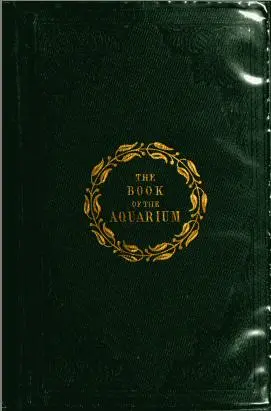
THE CLASSIC COLLECTION · 1856
"The Book of the Aquarium and Water Cabinet" by Shirley Hibberd is a practical guide on constructing, stocking, and maintaining freshwater and marine aquariums, likely written in the mid-19th century. This comprehensive manual serves to educate beginners on the art and science of aquarium management, addressing both aesthetic and biological considerations within these miniature ecosystems. The book’s topical focus makes it essential for both hobbyists interested in ornamental water gardens and those seeking a deeper understanding of aquatic life. At the start of the volume, the author outlines the definition and purpose of an aquarium, explaining the historical context behind its development. Hibberd emphasizes that an aquarium simulates a self-sustaining ecological environment, where aquatic plants and animals maintain a delicate balance. He introduces essential concepts such as the importance of proper vessel selection, the role of water quality, and the significance of aquatic plants for creating a thriving tank. The opening chapters set a foundation for understanding aquarium philosophy before delving into specifics on vessel construction, stocking with the right species, and general management techniques, making it accessible and intriguing for readers embarking on their aquarium journey.
Introduction adapted from the source catalogue; source summaries may be automatically generated.
Free to read · English · 41,537 words · No account needed
MAKE TIME FOR A GOOD BOOK
On by default. Untick to stop anonymous reading totals. Each page counts after 10 seconds in view. How this works.
Anonymous counting is on unless you have switched it off.
The first thing to guard against is over-stocking, the common error of all beginners; taking large fish with small, I think about two or three to every gallon of water is the utmost that should be attempted. For a vessel of twelve gallons, I should recommend the following, as giving great variety, with considerable safety:--Six Prussian carp, of various sizes, one at least of five inches in length; two small Crucian carp; two small perch; two small loach; two tench, of five or six inches; six or eight minnows; one small eel; a dozen Planorbis corneus; half-a-dozen Paludina vivipara; three or four fresh-water mussels and a dozen of different sorts of newts.
A tank so stocked, will be well filled with life; and if the plants be sufficiently strong, and in a good light, all will go well.
Another, and to some perhaps, prettier selection, might be made thus:--Three gold carp, of various sizes; three Prussian carp; two perch; four large loach; a dozen minnows; half-a-dozen bleak; and two dozen planorbis.
If stocked with great care, with a bottom of pebbles only, this would do very well; and the sides would never want cleansing. For a smaller vessel, the same selection might be made, but with a proportionate reduction of the numbers.
Those who make their own selection, may choose from the following:--
Plants.--Vallisneria spiralis, Anacharis alsinastrum, Callitriche vernalis and autumnalis, Nuphar lutea, Potamogeton crispus, densus, and fluitans, Stratoides aloides, Ranunculus aquatalis (apt to foul the water in a north aspect), Myriophyllum spicatum, Myosotis palustris, (the real forget-me-not--it flowers above the surface) Butomus umbellatus (for the centre--it flowers above the surface), Lemna, Nitella, and Chara. For a list of suitable ferns and instructions on their culture I must refer the reader to my work entitled, "Rustic Adornments for Homes of Taste," where this department is amply treated.
Fishes.--Gold carp, British, Prussian, and Crucian carp, pike, perch, tench, minnows, chub, loach, gudgeon, bream, and in winter, roach, dace, and bleak.
Reptiles.--The smooth and warty newt, tadpoles, frogs.
Mollusks.--Univalves, Planorbis corneus, and carrinatus, Paludina vivipara, Lymnea stagnalis, putris, auriculata, and glutinosa, Physa fontinalis, Bythinia tentacula.
Bivalves.--Anodon cygneus, Unio pictorum, tumidus and margaritiferous, Dressinia polymorpha, Cyclas corneus.
Your reading position is saved on this browser. Take it to another device with a library code. Reading pages adapt to text, rather than matching a printed edition.
BEHIND THE BOOK
This eBook is for the use of anyone anywhere in the United States and most other parts of the world at no cost and with almost no restrictions whatsoever. You may copy it, give it away or re-use it under the terms of the Project Gutenberg License included with this eBook or online at www.gutenberg.org. If you are not located in the United States, you will have to check the laws of the country where you are located before using this eBook. Read the source licence.
The original source file, including credits and licence, is retained by this library. Request an original-format copy at no charge. Please include the book title and Project Gutenberg identifier #40701.
KEEP YOUR CURIOSITY GOING
Charles G. (Charles Griffith) Ross
Hannah Webster Foster

Emily Lawless
Edwin Hamlin Carr

Charles De Lano Hine
Andrew Ure