
The Vision of Elijah Berl
Frank Lewis Nason
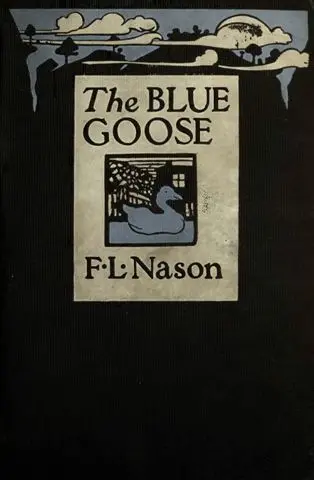
THE CLASSIC COLLECTION · 1903
"The Blue Goose" by Frank Lewis Nason is a novel written in the early 20th century. The story revolves around the complex lives of characters in a mining town, highlighting themes of deception, ambition, and the struggles between labor and management. The narrative dramatizes the interactions among various individuals, especially focusing on a foreman named Luna, and Pierre La Martine, the owner of a gambling establishment known as The Blue Goose. At the start of the book, we are introduced to Luna, who feels uneasy in the underground laboratory where Pierre conducts dubious operations involving stolen gold. Through a tense conversation filled with suspicion and threats, we see the power dynamics between Luna and Pierre unfold, as Luna demands fair compensation for the work he and the other miners are doing. The chilling atmosphere is enhanced by Pierre's sinister demeanor and the ominous setting of The Blue Goose, which serves not only as a gambling joint but also a hub for illicit activities. The relationships between the characters, especially the prospect of Élise's marriage to a less-than-desirable suitor, hint at larger societal issues and individual struggles that will unfold throughout the novel.
Introduction adapted from the source catalogue; source summaries may be automatically generated.
Free to read · English · 62,327 words · No account needed
MAKE TIME FOR A GOOD BOOK
On by default. Untick to stop anonymous reading totals. Each page counts after 10 seconds in view. How this works.
Anonymous counting is on unless you have switched it off.
On the morning of Elise's strike for freedom, Pierre came to breakfast with his usual atmosphere of compressed wrath. He glanced at his breakfast which Madame had placed on the table at the first sound which heralded his approach. There was nothing there to break the tension and to set free the pent-up storm within. Much meditation, with fear and trembling, had taught Madame the proper amount of butter to apply to the hot toast, the proportion of sugar and cream to add to the coffee, and the exact shade of crisp and brown to put on his fried eggs. But a man bent on trouble can invariably find a cause for turning it loose.
"Where is Elise?" he demanded.
"Elise," Madame answered, evasively, "she is around somewhere."
"Somewhere is nowhere. I demand to know." Pierre looked threatening.
"Shall I call her?" Madame vouchsafed.
"If you know not where she is, how shall you call her? Heh? If you know,
mek ansaire!"
"I don't know where she is."
"Bien!" Pierre reseated himself and began to munch his toast savagely.
Madame was having a struggle with herself. It showed plainly on the thin, anxious face. The lips compressed with determination, the eyes set, then wavered, and again the indeterminate lines of acquiescent subjection gained their accustomed ascendency. Back and forth assertion and complaisance fled and followed; only assertion was holding its own.
The eggs had disappeared, also the greater part of the toast. Pierre swallowed the last of his coffee, and, without a look at his silent wife, began to push his chair from the table. Madame's voice startled him.
"Elise is sixteen," she ventured.
Pierre fell back in his chair, astonished. The words were simple and uncompromising, but the intonation suggested that they were not final.
"Well?" he asked, explosively.
"When are you going to send Elise away to school?"
"To school?" Pierre was struggling with his astonishment.
"Yes." Madame was holding herself to her determination with an effort.
"To school? Baste! She read, she write, she mek ze figure, is it not
suffice? Heh?"
"That makes no difference. You promised her father that you would send
her away to school."
Pierre looked around apprehensively.
"Shut up! Kip quiet!"
"I won't shut up, and I won't keep quiet." Madame's blood was warming. The sensation was as pleasant as it was unusual. "I will keep quiet for myself. I won't for Elise."
"Elise! Elise! Ain't I do all right by Elise?" Pierre asked, aggressively. "She have plenty to eat, plenty to wear, you tek good care of her. Don't I tek good care, also? Me? Pierre? She mek no complain, heh?"
Your reading position is saved on this browser. Take it to another device with a library code. Reading pages adapt to text, rather than matching a printed edition.
Frank Lewis Nason
BEHIND THE BOOK
This eBook is for the use of anyone anywhere in the United States and most other parts of the world at no cost and with almost no restrictions whatsoever. You may copy it, give it away or re-use it under the terms of the Project Gutenberg License included with this eBook or online at www.gutenberg.org. If you are not located in the United States, you will have to check the laws of the country where you are located before using this eBook. Read the source licence.
The original source file, including credits and licence, is retained by this library. Request an original-format copy at no charge. Please include the book title and Project Gutenberg identifier #31485.
KEEP YOUR CURIOSITY GOING
Coulson Kernahan

Maurice Baring
Frances Wright
Cécile Tormay

Frederic Jesup Stimson

W. H. P. (William Henry Pope) Jarvis