
The unhallowed harvest
Homer Greene
THE CLASSIC COLLECTION · 1887
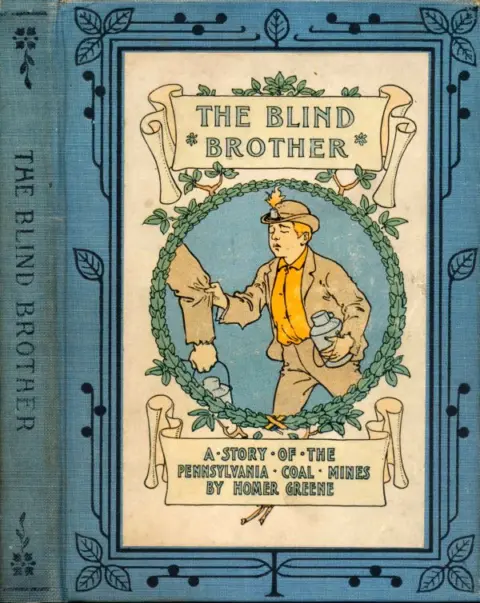
"The Blind Brother: A Story of the Pennsylvania Coal Mines" by Homer Greene is a novel written in the late 19th century. The story revolves around two brothers, Tom and Bennie Taylor, who are navigating the harsh realities of life in the Pennsylvania coal mines during a time of labor strikes. Tom, the older brother, is determined to help his blind sibling regain his sight, highlighting themes of familial loyalty, sacrifice, and the moral dilemmas faced by the working class. At the start of the novel, we are introduced to Bennie, a blind boy who works as a door-boy in the coal mine, relying on his older brother Tom for support and guidance. The narrative sets the stage for their struggles as they navigate the complexities of life in a mining community facing turmoil from strikes. A significant moment occurs when Bennie shares his hopes of saving money to seek medical treatment for his blindness, which underscores the brothers' deep bond. As the story unfolds, Bennie becomes lost in the mine, prompting a desperate search by Tom, which ultimately tests their resilience and love for one another amid a backdrop of social unrest and personal sacrifice. This opening sets up a poignant exploration of the intersection of personal dreams and harsh realities.
Introduction adapted from the source catalogue; source summaries may be automatically generated.
Free to read · English · 27,621 words · No account needed
MAKE TIME FOR A GOOD BOOK
On by default. Untick to stop anonymous reading totals. Each page counts after 10 seconds in view. How this works.
Anonymous counting is on unless you have switched it off.
She did not ask any more that she might see her two boys in life; she only prayed now that their dear bodies might be brought to her unmangled, to be robed for Christian burial.
To this end she began now to make all things ready. She put in order the little best room; she laid out the clean, new clothing, and the spotless sheets; she even took from her worn purse the four small coins to place upon the white, closed lids.
In the locked cupboard, where the boys should not see them till the time came, she found the Christmas presents she had thought to give to them this day.
Not much, indeed. A few cheap toys, some sweetmeats purchased secretly, a book or two, and, last of all, some little gifts that her own weary, loving hands had wrought in the long hours after the children were asleep.
And now the Christmas dawn had come; but the children--
She had not wept before, not since the first jar from the fall had rocked her cottage; but now, with the sight of these poor, simple Christmas gifts, there came some softening influence that moved her heart, and brought the swift tears to her eyes, and she sat down in her accustomed chair and wept--wept long and piteously, indeed, but in the weeping found relief.
She was aroused by a knock at the door. The latch was lifted, the door pushed open, and Sandy McCulloch stumbled in. He was out of breath, his eyes were wide with excitement, and down each side of his grimy face was a furrow where the tears had run.
The widow started to her feet.
“Sandy!”
A wild hope had come into her heart.
“They’re found!” he forced out breath enough to say.
“O Sandy, alive or--or”--
She could not finish the question; the room seemed whirling round her; she grasped at the chair for support.
“Alive!” he shouted. “Alive, an’ a-goin’ to live!”
He started forward, and caught the woman as she fell. The shock of joy had been too sudden and too great, and for a time nature gave way before it.
But it was indeed true. When the men, working at the face of the tunnel, caught the sound of responsive tappings, they labored with redoubled energy, if such a thing could be, and, after another night of most gigantic effort, they broke through into the prison-house, to find both boys unconscious indeed, but alive, alive.
Your reading position is saved on this browser. Take it to another device with a library code. Reading pages adapt to text, rather than matching a printed edition.
Homer Greene

Homer Greene

Homer Greene
Homer Greene
BEHIND THE BOOK
This eBook is for the use of anyone anywhere in the United States and most other parts of the world at no cost and with almost no restrictions whatsoever. You may copy it, give it away or re-use it under the terms of the Project Gutenberg License included with this eBook or online at www.gutenberg.org. If you are not located in the United States, you will have to check the laws of the country where you are located before using this eBook. Read the source licence.
The original source file, including credits and licence, is retained by this library. Request an original-format copy at no charge. Please include the book title and Project Gutenberg identifier #45232.
KEEP YOUR CURIOSITY GOING
Coulson Kernahan

Maurice Baring
Frances Wright
Cécile Tormay

Frederic Jesup Stimson

W. H. P. (William Henry Pope) Jarvis