
The unhallowed harvest
Homer Greene
THE CLASSIC COLLECTION · 1887
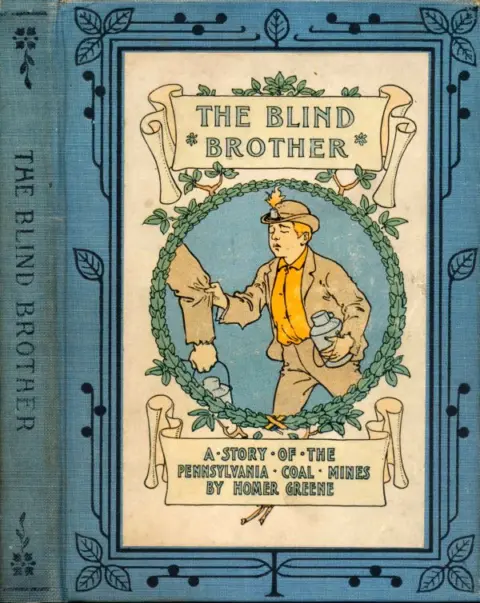
"The Blind Brother: A Story of the Pennsylvania Coal Mines" by Homer Greene is a novel written in the late 19th century. The story revolves around two brothers, Tom and Bennie Taylor, who are navigating the harsh realities of life in the Pennsylvania coal mines during a time of labor strikes. Tom, the older brother, is determined to help his blind sibling regain his sight, highlighting themes of familial loyalty, sacrifice, and the moral dilemmas faced by the working class. At the start of the novel, we are introduced to Bennie, a blind boy who works as a door-boy in the coal mine, relying on his older brother Tom for support and guidance. The narrative sets the stage for their struggles as they navigate the complexities of life in a mining community facing turmoil from strikes. A significant moment occurs when Bennie shares his hopes of saving money to seek medical treatment for his blindness, which underscores the brothers' deep bond. As the story unfolds, Bennie becomes lost in the mine, prompting a desperate search by Tom, which ultimately tests their resilience and love for one another amid a backdrop of social unrest and personal sacrifice. This opening sets up a poignant exploration of the intersection of personal dreams and harsh realities.
Introduction adapted from the source catalogue; source summaries may be automatically generated.
Free to read · English · 27,621 words · No account needed
MAKE TIME FOR A GOOD BOOK
On by default. Untick to stop anonymous reading totals. Each page counts after 10 seconds in view. How this works.
Anonymous counting is on unless you have switched it off.
Then came the charge of the court; plain, decisive, reviewing the evidence in brief, calling the attention of the jury to their duty both to the Commonwealth and to the defendant, directing them that the defendant’s guilt must be established, in their minds, beyond a reasonable doubt, before they could convict; but that, if they should reach that point, then their verdict should be simply “Guilty.”
The jury passed out of the court-room, headed by a constable, after which counsel for the defendant filed exceptions to the charge, and the court proceeded to other business.
Very few people left the court-room, as every one supposed it would not be long before the bringing in of a verdict, and they were not mistaken. It was barely half an hour from the time the jury retired until they filed back again, and resumed their seats in the jury-box.
“Gentlemen of the jury,” said the clerk of the court, rising, “have you agreed upon a verdict?”
“We have,” replied the foreman, handing a paper to a tipstaff, which he handed to the clerk; and the clerk in turn handed it to the presiding judge.
The judges, one after another, read the paper, nodded their approval, and returned it to the clerk, who glanced over its contents, and then addressed the jury as follows:--
“Gentlemen of the jury, hearken unto your verdict as the court have it recorded. In the case wherein the Commonwealth is plaintiff and Jack Rennie is defendant, you say you find the defendant guilty. So say you all?”
The members of the jury nodded their heads, the clerk resumed his seat, and the trial of Jack Rennie was concluded.
It was what every one had anticipated, and people began to leave the court-room, with much noise and confusion.
Rennie was talking, in a low tone, with Pleadwell and Carolan, while the sheriff, who had advanced to take charge of the prisoner, stood waiting for them to conclude the conference.
“I don’t want the lad harmed,” said Rennie, talking earnestly to Carolan, “him, nor his mither, nor his brither; not a hair o’ his head, nor a mou’-ful o’ his bread, noo min’ ye--I ha’ reasons--the mon that so much as lays a straw i’ the lad’s path shall suffer for’t, if I have to live a hunder’ year to tak’ ma vengeance o’ him!”
The sonorous voice of the court-crier, adjourning the courts until the following morning, echoed through the now half-emptied room, and the sheriff said to Rennie,--
“Well, Jack, I’m waiting for you.”
Your reading position is saved on this browser. Take it to another device with a library code. Reading pages adapt to text, rather than matching a printed edition.
Homer Greene

Homer Greene

Homer Greene
Homer Greene
BEHIND THE BOOK
This eBook is for the use of anyone anywhere in the United States and most other parts of the world at no cost and with almost no restrictions whatsoever. You may copy it, give it away or re-use it under the terms of the Project Gutenberg License included with this eBook or online at www.gutenberg.org. If you are not located in the United States, you will have to check the laws of the country where you are located before using this eBook. Read the source licence.
The original source file, including credits and licence, is retained by this library. Request an original-format copy at no charge. Please include the book title and Project Gutenberg identifier #45232.
KEEP YOUR CURIOSITY GOING
Coulson Kernahan

Maurice Baring
Frances Wright
Cécile Tormay

Frederic Jesup Stimson

W. H. P. (William Henry Pope) Jarvis