
The unhallowed harvest
Homer Greene
THE CLASSIC COLLECTION · 1887
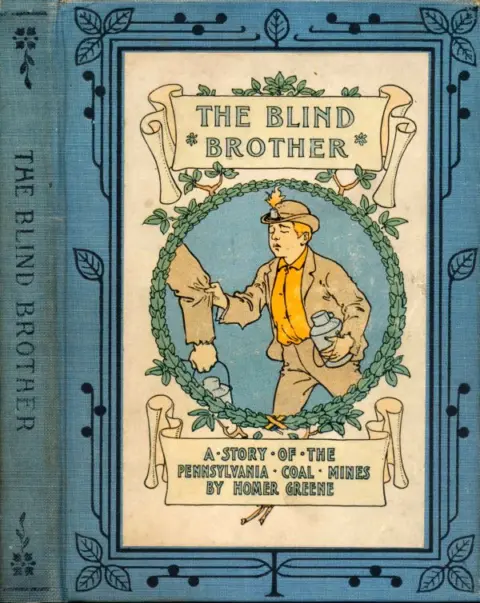
"The Blind Brother: A Story of the Pennsylvania Coal Mines" by Homer Greene is a novel written in the late 19th century. The story revolves around two brothers, Tom and Bennie Taylor, who are navigating the harsh realities of life in the Pennsylvania coal mines during a time of labor strikes. Tom, the older brother, is determined to help his blind sibling regain his sight, highlighting themes of familial loyalty, sacrifice, and the moral dilemmas faced by the working class. At the start of the novel, we are introduced to Bennie, a blind boy who works as a door-boy in the coal mine, relying on his older brother Tom for support and guidance. The narrative sets the stage for their struggles as they navigate the complexities of life in a mining community facing turmoil from strikes. A significant moment occurs when Bennie shares his hopes of saving money to seek medical treatment for his blindness, which underscores the brothers' deep bond. As the story unfolds, Bennie becomes lost in the mine, prompting a desperate search by Tom, which ultimately tests their resilience and love for one another amid a backdrop of social unrest and personal sacrifice. This opening sets up a poignant exploration of the intersection of personal dreams and harsh realities.
Introduction adapted from the source catalogue; source summaries may be automatically generated.
Free to read · English · 27,621 words · No account needed
MAKE TIME FOR A GOOD BOOK
On by default. Untick to stop anonymous reading totals. Each page counts after 10 seconds in view. How this works.
Anonymous counting is on unless you have switched it off.
“Well, you see, sir, a bit o’ a lad that works i’ the mines wi’ us, he had lost his brither i’ the slope the day, he had; an’ I gied him a promise to help seek him oot gin he cam’ i’ the evenin’ to say as the lad was no’ foond; an’ I was a-waitin’ up for him, min’ ye.”
“Well, did the lad come?” inquired Lawyer Summons, somewhat
sarcastically.
“He did that, an’ he tellit me as how he’d foond the brither, an’ leadit him hame, an’ would na want me; an’ I said ‘good-nicht’ till the lad, an’ started to bed, an’ the clock struckit eleven.”
“Who was the lad that came to your house?”
“Tom Taylor, sir.”
Rennie started in his seat as the name was spoken, and the blood mounted into his pale forehead as he gazed intently at the witness.
“Did the boy go in the direction of the breaker from your house?”
questioned Summons.
“He did, sir.”
“How long was it after he left you that you heard the cry of fire?”
“Well, maybe the time o’ ten minutes.”
“Could the boy have got beyond the breaker?”
“He must ’a’, sir, he must ’a’; the grass was na growin’ under his feet goin’ doon the hill.”
“Do you think Tom Taylor fired that breaker?”
Sandy stared for a moment in blank amazement.
“Why, the guid Lord bless ye, mon! be ye daft? There ain’t a better boy i’ the roun’ warl’n Tom Taylor!” and Sandy broke into a hearty laugh at the very idea of Tom doing any thing wrong.
But Tom, who sat back in his seat and heard it all, was suddenly startled with the sense of a new danger. Suppose he should be charged with setting fire to the breaker? And suppose Rennie and Carolan should go upon the witness-stand and swear that they saw him running away from the newly kindled blaze, as, indeed, they might and not lie, either,--how could he prove his innocence? Yet he was about to swear Jack Rennie into freedom, knowing him to be guilty of the crime with which he was charged, and, what was still more despicable, he was about to do it for money.
Looked upon in this light, the thing that Tom had promised to do rose very black and ugly in his sight; and the poor delusion that he should tell no lie was swept, like a clinging cobweb, from his mind.
It was while his heart was still throbbing violently under the excitement of this last thought and fear, that he heard some one call,--
“Thomas Taylor!”
“Here, sir,” responded Tom.
Your reading position is saved on this browser. Take it to another device with a library code. Reading pages adapt to text, rather than matching a printed edition.
Homer Greene

Homer Greene

Homer Greene
Homer Greene
BEHIND THE BOOK
This eBook is for the use of anyone anywhere in the United States and most other parts of the world at no cost and with almost no restrictions whatsoever. You may copy it, give it away or re-use it under the terms of the Project Gutenberg License included with this eBook or online at www.gutenberg.org. If you are not located in the United States, you will have to check the laws of the country where you are located before using this eBook. Read the source licence.
The original source file, including credits and licence, is retained by this library. Request an original-format copy at no charge. Please include the book title and Project Gutenberg identifier #45232.
KEEP YOUR CURIOSITY GOING
Coulson Kernahan

Maurice Baring
Frances Wright
Cécile Tormay

Frederic Jesup Stimson

W. H. P. (William Henry Pope) Jarvis