
The Lone Wolf Returns
Louis Joseph Vance
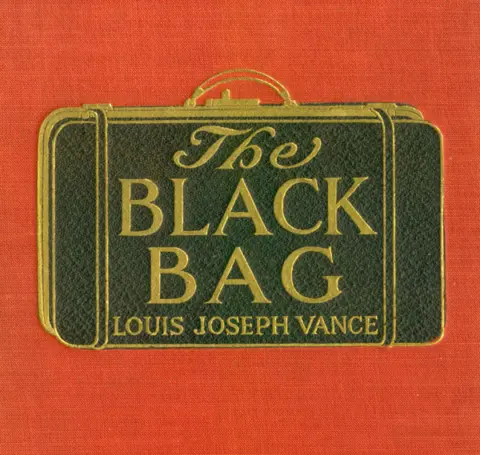
THE CLASSIC COLLECTION · 1908
"The Black Bag" by Louis Joseph Vance is a novel written in the early 20th century. The story follows Philip Kirkwood, a young American artist who finds himself in a challenging situation after a disaster in San Francisco leaves him stranded and nearly penniless in London. Struggling with feelings of isolation and despair, Kirkwood encounters a series of unusual characters that set the stage for a tale filled with adventure and intrigue. The opening of the book presents Philip Kirkwood in his bleak London hotel room, reflecting on his misfortunes and contemplating the future. He is soon visited by Mr. Brentwick, an elder friend who expresses concern over Kirkwood’s plans to return to America. After their conversation, Kirkwood meets Mr. Calendar, an enigmatic figure who offers a dubious proposition involving a passage to America in exchange for a "trifling service." Unfazed by Calendar's odd behavior, Kirkwood navigates a mysterious encounter with a young woman named Dorothy Calendar, leading to a series of fraught events where danger lurks in unexpected corners and sets the tone for the adventures to come.
Introduction adapted from the source catalogue; source summaries may be automatically generated.
Free to read · English · 95,038 words · No account needed
MAKE TIME FOR A GOOD BOOK
On by default. Untick to stop anonymous reading totals. Each page counts after 10 seconds in view. How this works.
Anonymous counting is on unless you have switched it off.
“Not really?”
“It was your way of looking at—things, that made me guess it: the painter’s way. I have often noticed it.”
“As if mentally blending colors all the time?”
“Yes; that and—seeing flaws.”
“I have discovered none,” he told her brazenly.
But again her secret cares were claiming her thoughts, and the gay, inconsequential banter died upon her scarlet lips as a second time her glance ranged away, sounding mysterious depths of anxiety.
Provoked, he would have continued the chatter. “I have confessed,” he persisted. “You know everything of material interest about me. And yourself?”
“I am merely Dorothy Calendar,” she answered.
“Nothing more?” He laughed.
“That is all, if you please, for the present.”
“I am to content myself with the promise of the future?”
“The future,” she told him seriously, “is to-morrow; and to-morrow ...” She moved restlessly in her chair, eyes and lips pathetic in their distress. “Please, we will go now, if you are ready.”
“I am quite ready, Miss Calendar.”
He rose. A waiter brought the girl’s cloak and put it in Kirkwood’s hands. He held it until, smoothing the wrists of her long white gloves, she stood up, then placed the garment upon her white young shoulders, troubled by the indefinable sense of intimacy imparted by the privilege. She permitted him this personal service! He felt that she trusted him, that out of her gratitude had grown a simple and almost childish faith in his generosity and considerateness.
As she turned to go her eyes thanked him with an unfathomable glance. He was again conscious of that esoteric disturbance in his temples. Puzzled, hazily analyzing the sensation, he followed her to the lobby.
A page brought him his top-coat, hat and stick; tipping the child from sheer force of habit, he desired a gigantic porter, impressively ornate in hotel livery, to call a hansom. Together they passed out into the night, he and the girl.
Beneath a permanent awning of steel and glass she waited patiently, slender, erect, heedless of the attention she attracted from wayfarers.
The night was young, the air mild. Upon the sidewalk, muddied by a million feet, two streams of wayfarers flowed incessantly, bound west from Green Park or east toward Piccadilly Circus; a well-dressed throng for the most part, with here and there a man in evening dress. Between the carriages at the curb and the hotel doors moved others, escorting fluttering butterfly women in elaborate toilets, heads bare, skirts daintily gathered above their perishable slippers. Here and there meaner shapes slipped silently through the crowd, sinister shadows of the city’s proletariat, blotting ominously the brilliance of the scene.
Your reading position is saved on this browser. Take it to another device with a library code. Reading pages adapt to text, rather than matching a printed edition.
Louis Joseph Vance
Louis Joseph Vance
Louis Joseph Vance

Louis Joseph Vance
BEHIND THE BOOK
This eBook is for the use of anyone anywhere in the United States and most other parts of the world at no cost and with almost no restrictions whatsoever. You may copy it, give it away or re-use it under the terms of the Project Gutenberg License included with this eBook or online at www.gutenberg.org. If you are not located in the United States, you will have to check the laws of the country where you are located before using this eBook. Read the source licence.
The original source file, including credits and licence, is retained by this library. Request an original-format copy at no charge. Please include the book title and Project Gutenberg identifier #9779.
KEEP YOUR CURIOSITY GOING
Coulson Kernahan

Maurice Baring
Frances Wright
Cécile Tormay

Frederic Jesup Stimson

W. H. P. (William Henry Pope) Jarvis