The Lone Wolf Returns
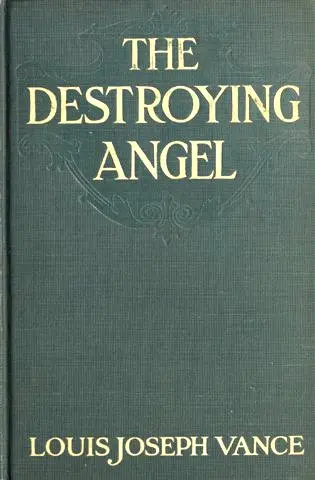
Louis Joseph Vance
THE CLASSIC COLLECTION · 1908
"The Black Bag" by Louis Joseph Vance is a novel written in the early 20th century. The story follows Philip Kirkwood, a young American artist who finds himself in a challenging situation after a disaster in San Francisco leaves him stranded and nearly penniless in London. Struggling with feelings of isolation and despair, Kirkwood encounters a series of unusual characters that set the stage for a tale filled with adventure and intrigue. The opening of the book presents Philip Kirkwood in his bleak London hotel room, reflecting on his misfortunes and contemplating the future. He is soon visited by Mr. Brentwick, an elder friend who expresses concern over Kirkwood’s plans to return to America. After their conversation, Kirkwood meets Mr. Calendar, an enigmatic figure who offers a dubious proposition involving a passage to America in exchange for a "trifling service." Unfazed by Calendar's odd behavior, Kirkwood navigates a mysterious encounter with a young woman named Dorothy Calendar, leading to a series of fraught events where danger lurks in unexpected corners and sets the tone for the adventures to come.
Introduction adapted from the source catalogue; source summaries may be automatically generated.
Free to read · English · 95,038 words · No account needed
MAKE TIME FOR A GOOD BOOK
On by default. Untick to stop anonymous reading totals. Each page counts after 10 seconds in view. How this works.
Anonymous counting is on unless you have switched it off.
“Well,” he stammered, “if I didn’t doubt, let’s say I was
unprejudiced.”
His awkward, well-meant pleasantry, perhaps not conceived in the best of taste, sounded in his own ears wretchedly flat and vapid. He regretted it spontaneously; the girl ignored it.
“You are very kind,” she iterated the first words he had heard from her lips. “I wish you to understand that I, for one, appreciate it.”
“Not kind; I have done nothing. I am glad.... One is apt to become interested when Romance is injected into a prosaic existence.” Kirkwood allowed himself a keen but cheerful glance.
She nodded, with a shadowy smile. He continued, purposefully, to distract her, holding her with his honest, friendly eyes.
“Since it is to be confidences” (this she questioned with an all but imperceptible lifting of the eyebrows), “I don’t mind telling you my own name is really Philip Kirkwood.”
“And you are an old friend of my father’s?”
He opened his lips, but only to close them without speaking. The girl moved her shoulders with a shiver of disdain.
“I knew it wasn’t so.”
“You know it would be hard for a young man like myself to be a very old friend,” he countered lamely.
“How long, then, have you known each other?”
“Must I answer?”
“Please.”
“Between three and four hours.”
“I thought as much.” She stared past him, troubled. Abruptly she said:
“Please smoke.”
“Shall I? If you wish it, of course....”
She repeated: “Please.”
“We were to wait ten minutes or so,” she continued.
He produced his cigarette-case.
“If you care to smoke it will seem an excuse.” He lighted his
cigarette.
“And then, you may talk to me,” she concluded calmly.
“I would, gladly, if I could guess what would interest you.”
“Yourself. Tell me about yourself,” she commanded.
“It would bore you,” he responded tritely, confused.
“No; you interest me very much.” She made the statement quietly,
contemptuous of coquetry.
“Very well, then; I am Philip Kirkwood, an American.”
“Nothing more?”
“Little worth retailing.”
“I’m sorry.”
“Why?” he demanded, piqued.
“Because you have merely indicated that you are a wealthy American.”
“Why wealthy?”
“If not, you would have some aim in life—a calling or profession.”
“And you think I have none?”
“Unless you consider it your vocation to be a wealthy American.”
“I don’t. Besides, I’m not wealthy. In point of fact, I ...” He pulled up short, on the verge of declaring himself a pauper. “I am a painter.”
Her eyes lightened with interest. “An artist?”
“I hope so. I don’t paint signs—or houses,” he remarked.
Amused, she laughed softly. “I suspected it,” she declared.
Your reading position is saved on this browser. Take it to another device with a library code. Reading pages adapt to text, rather than matching a printed edition.
Louis Joseph Vance
Louis Joseph Vance
Louis Joseph Vance
Louis Joseph Vance
BEHIND THE BOOK
This eBook is for the use of anyone anywhere in the United States and most other parts of the world at no cost and with almost no restrictions whatsoever. You may copy it, give it away or re-use it under the terms of the Project Gutenberg License included with this eBook or online at www.gutenberg.org. If you are not located in the United States, you will have to check the laws of the country where you are located before using this eBook. Read the source licence.
The original source file, including credits and licence, is retained by this library. Request an original-format copy at no charge. Please include the book title and Project Gutenberg identifier #9779.
KEEP YOUR CURIOSITY GOING
Coulson Kernahan

Maurice Baring
Frances Wright
Cécile Tormay

Frederic Jesup Stimson

W. H. P. (William Henry Pope) Jarvis