THE CLASSIC COLLECTION✦A Forest Hearth: A Romance of Indiana in the ThirtiesCLASSIC FREE BOOKS
A Forest Hearth: A Romance of Indiana in the Thirties
Charles Major
THE CLASSIC COLLECTION · 1900
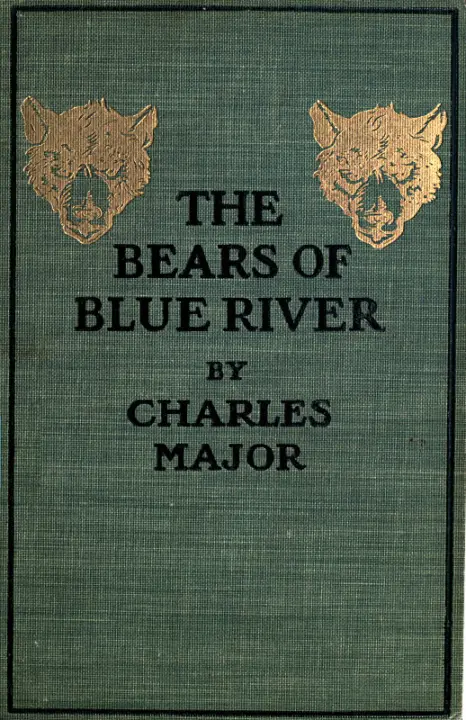
"The Bears of Blue River" by Charles Major is a novel written in the early 20th century. The story revolves around a young boy named Balser Brent, who lives in Indiana during the 1820s, a time characterized by untamed wilderness and the struggles of early settlers. The book follows Balser's adventures, particularly his encounters with bears and other wildlife, as he navigates the challenges and excitement of life in the frontier. At the start of the narrative, we are introduced to Balser and his family, who live in a log cabin near the Big Blue River. The opening portion of the book sets the scene of this rustic life, highlighting the natural beauty and dangers that surround them. Balser, at about thirteen years old, is depicted as a courageous and somewhat impulsive boy who has dreams of hunting bears. The initial conflict arises as Balser attempts to catch fish but encounters a huge black bear, leading to a tense and thrilling showdown that marks the beginning of his adventures in the wilderness. This encounter not only establishes Balser's bravery but also foreshadows the challenges he will face in his quest to overcome the formidable wildlife in the region.
Introduction adapted from the source catalogue; source summaries may be automatically generated.
Free to read · English · 44,346 words · No account needed
MAKE TIME FOR A GOOD BOOK
On by default. Untick to stop anonymous reading totals. Each page counts after 10 seconds in view. How this works.
Anonymous counting is on unless you have switched it off.
When Balser had fixed himself firmly on the limb he proceeded at once to load his gun. This was no slight matter under the circumstances; for, aside from the fact that his position in the tree was an uneasy one, the branches were in his way when he began to use his ramrod. Balser had hardly poured the powder into his gun, when the bear again rose on its hind legs, and put its front paws upon the body of the tree, with evident intent to climb after the boy who had wounded it and had so insultingly twisted its nose. Bears like to scratch the bark of trees, and seem to take the same pride in placing their marks high upon the tree-trunks that a young man does in making a long jump or a good shot. Vanity, in this case, proved to be the bear’s undoing, as it has often been with men and boys. When it was reaching upward to make a high scratch, that it thought would be the envy of every bear that would see it, it should have been climbing; for while it was scratching Balser was loading. Not hurriedly, as he had shot, but slowly and deliberately, counting one, two, three with every movement; for when he had shot so hurriedly a few minutes before and had only wounded the bear, he had again learned the great lesson to make haste slowly. The lesson was to be impressed upon Balser’s mind more firmly than ever before he was through with the wounded bear; for to the day of his death he never forgot the events which befell him after he came down from the tree. Although Balser was deliberate, he had no time to waste, for soon the bear began climbing the tree, aided by a few small branches upon the lower part of the trunk, which had given help to Balser. Up the bear went, slowly and surely. Its great red tongue hung out at one side of its mouth, and its black, woolly coat was red and gory with blood from the wound that Balser had inflicted upon its huge neck. Its sharp little eyes were fixed upon Balser, and seemed to blaze with fury and rage, and its long bright teeth gleamed as its lips were drawn back in anger when it growled. Still the bear climbed, and still Balser was loading his gun. Would he have it loaded before the bear reached him? Now the powder was all in—a double charge. Now the first patch was in, and Balser was trying to ram it home. The branches of the trees were in his way, and the ramrod would not go into the gun. Inanimate things are often stubborn just when docility is most needed. Ah! At last the ramrod is in, and the first patch goes home, hard and fast upon the powder. On comes the bear, paw over paw, foot over foot, taking its time with painful deliberation, and, bearlike, carefully choosing its way; for it thinks full sure the boy cannot escape. Hurriedly Balser reaches into his pouch for a bullet. He finds one and puts it to the muzzle of his gun. Ah! worse luck! The bullet will not go in. It is too large. Balser feels with his finger a little ridge extending around the bullet, left there because he had not held the bullet moulds tightly together when he had cast the bullet. The boy impatiently throws the worthless bullet at the bear and puts his hand into the pouch for another. This time the bullet goes in, and the ramrod drives it home. Still there is the last patch to drive down,—the one which holds the bullet,—and still the bear climbs toward its intended victim. Its growls seem to shake the tree and its eyes look like burning embers. The patches and the bullets Balser kept in the same pouch, so, when the bullet has been driven home, the boy’s hand again goes into the pouch for the last patch. He can find nothing but bullets. Down goes his hand to each corner of the pouch in search of a patch; but alas! the patch, like a false friend, is wanting when most needed. On comes the bear. Not a moment is to be lost. A patch must be found; so the boy snatches off his cap of squirrel skin, and with his teeth bites out a piece of the skin which will answer his purpose. Then he dashes the mutilated cap in the bear’s face, only a foot or two below him. Quickly is the squirrel-skin patch driven home, but none too quickly, for the bear is at Balser’s feet, reaching for him with his great, rough, horny paw, as a cat reaches for a mouse. Balser quickly lifts himself to the limb above him, and hurriedly turning the muzzle of his gun right into the great red mouth, pulls the trigger. Bang! And the bear falls to the ground, where it lies apparently dead. It was only apparently dead, though, as you will presently see. Balser breathed a sigh of relief as the bear fell backward, for he was sure that he had killed it. No bear, thought he, could survive a bullet driven by the heavy charge of powder behind the one which had sped so truly into the bear’s mouth. Again Balser failed to make haste slowly. He should have remained in his secure position until he was sure that the bear was really dead; for a badly wounded bear, although at the point of death, is more dangerous than one without a scar. Without looking at the bear Balser called Jim to come to him, and began climbing down the tree, with his carbine slung over his shoulder, and his back to the bear. All this happened in a very short space of time. In fact, the time during which Balser was loading his gun, and while the bear was climbing the tree, was the same time in which the dogs were freeing themselves from the wagon; and Balser’s second shot was heard by Jim just as the dogs went bounding off to Balser’s relief. When the boy jumped to the ground, lo! the bear was alive again, and was on its feet, more ferocious than ever, and more eager for fight. Like our American soldiers, the bear did not know when it was whipped.
Your reading position is saved on this browser. Take it to another device with a library code. Reading pages adapt to text, rather than matching a printed edition.
Charles Major
Charles Major
Charles Major
Charles Major
BEHIND THE BOOK
This eBook is for the use of anyone anywhere in the United States and most other parts of the world at no cost and with almost no restrictions whatsoever. You may copy it, give it away or re-use it under the terms of the Project Gutenberg License included with this eBook or online at www.gutenberg.org. If you are not located in the United States, you will have to check the laws of the country where you are located before using this eBook. Read the source licence.
The original source file, including credits and licence, is retained by this library. Request an original-format copy at no charge. Please include the book title and Project Gutenberg identifier #54915.
KEEP YOUR CURIOSITY GOING
Coulson Kernahan

Maurice Baring
Frances Wright
Cécile Tormay

Frederic Jesup Stimson

W. H. P. (William Henry Pope) Jarvis