THE CLASSIC COLLECTION✦The Web of TimeCLASSIC FREE BOOKS
The Web of Time
Robert E. (Robert Edward) Knowles
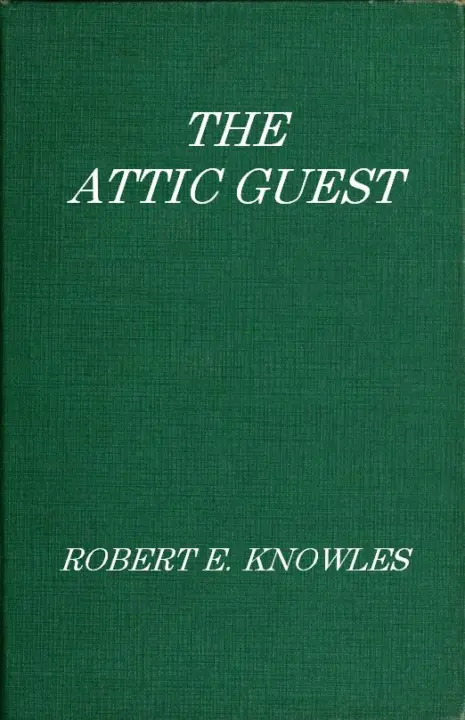
THE CLASSIC COLLECTION · 1909
"The Attic Guest" by Robert E. Knowles is a novel written in the early 20th century. The story opens in a quaint Southern town, focusing primarily on the life of Helen Randall, an eighteen-year-old girl who is navigating her first experiences with love and societal expectations, all set against the backdrop of an upcoming visit from a minister. The narrative weaves together themes of youthful innocence, burgeoning romance, and the complexities of family dynamics in a traditional Southern setting. The opening of the novel presents a lively dialogue among Helen's family members as they prepare for the arrival of their guest, expected to be a minister from the Presbytery meeting. Helen's mother and uncle engage in humorous debates about the accommodations for the incoming elder, while Helen herself is more preoccupied with attending a dance and her growing feelings for Charlie Giddens, a young man who visits her often. The chapter effectively sets the stage for Helen’s inner turmoil and excitement, hinting at the romantic entanglements and personal growth she is likely to face as the story unfolds.
Introduction adapted from the source catalogue; source summaries may be automatically generated.
Free to read · English · 85,795 words · No account needed
MAKE TIME FOR A GOOD BOOK
On by default. Untick to stop anonymous reading totals. Each page counts after 10 seconds in view. How this works.
Anonymous counting is on unless you have switched it off.
"Yes, my boy--yes, please God, your father will get in," though I could hardly speak for the tears that choked me, so full of elemental power was the pleading of the child.
"Come, Nancy," and the old tar's voice was very tender; "come close up beside me. My foot ain't hurtin', Nancy--an' my heart ain't hurtin'--nothin's hurtin' any more. I've cast anchor."
"What d'ye say, Gus?" his wife asked in a wondering voice.
"I've cast anchor--where the preacher read. You'll leave the book, sir?" his voice swelling for a moment--"an' you're sure ye marked the place?"
"Yes," I said, "I'll leave it--and it's marked."
"Call me mate," the strange impulse prompting him again.
"I marked it, mate--and I turned down the page."
"Then sing me that again--that bit about the gale."
"What gale, mate?"
"That gale--the gale of life--that's how it went before."
I knew now what he meant. Nancy's face was in her hands and little
Tim's eyes were fixed lovingly on me as I began. When I came to the
lines:
"Hide me, oh my Saviour hide
Till the storm of life is past"
the dying man suddenly interrupted: "That'll do," he said, his voice barely audible, "that's the bit--that's enough--that, an' the place ye marked."
We were soon all standing by his bed. The struggle was quickly over. Suddenly his face assumed an expression of peace so deep that I thought the harbour had been really won. But his eyes opened wide and both hands went feebly out; Nancy took one in hers, the other clasped by little Tim.
"The anchor holds," he murmured; "Nancy, the anchor holds."
A moment later his wife turned from the bed, her apron to her face, groping her way with bitter outcry towards the adjoining room. Tim followed; and through the open door I could hear the boy's shaking voice:
"Don't cry, mammy; oh, mammy, don't cry so hard. Dad got in,
mother--the preacher got him in."
I sat up till Gordon got home that night, for I had much to discuss with him. The precious document, with its wizard tidings of mining shares, was still before me as he entered; and I broke out with some word about what Mr. Bradwin had said. But when I looked up and saw the far-off look of peace on Gordon's face, I knew it was sprung from some other source than this.
"You seem so happy, Gordon," I said; "what makes it?"
He told me; but when he spoke about that last scene--he has called it
the anchor scene ever since--his voice faltered so he could hardly go
on.
Your reading position is saved on this browser. Take it to another device with a library code. Reading pages adapt to text, rather than matching a printed edition.
Robert E. (Robert Edward) Knowles
Robert E. (Robert Edward) Knowles
BEHIND THE BOOK
This eBook is for the use of anyone anywhere in the United States and most other parts of the world at no cost and with almost no restrictions whatsoever. You may copy it, give it away or re-use it under the terms of the Project Gutenberg License included with this eBook or online at www.gutenberg.org. If you are not located in the United States, you will have to check the laws of the country where you are located before using this eBook. Read the source licence.
The original source file, including credits and licence, is retained by this library. Request an original-format copy at no charge. Please include the book title and Project Gutenberg identifier #56675.
KEEP YOUR CURIOSITY GOING
Coulson Kernahan

Maurice Baring
Frances Wright
Cécile Tormay

Frederic Jesup Stimson

W. H. P. (William Henry Pope) Jarvis