THE CLASSIC COLLECTION✦The Web of TimeCLASSIC FREE BOOKS
The Web of Time
Robert E. (Robert Edward) Knowles
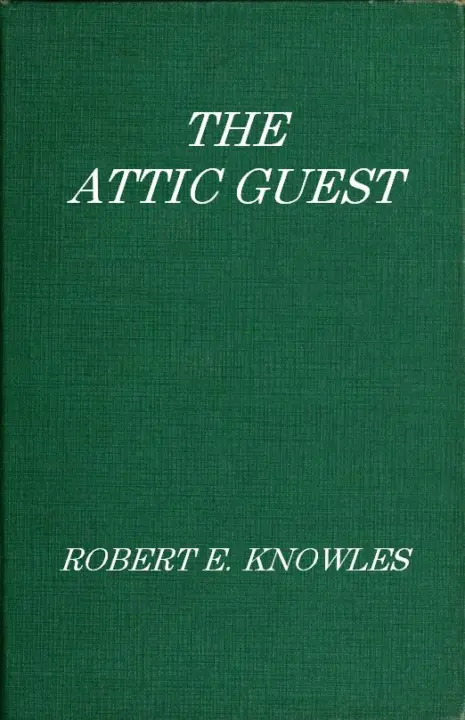
THE CLASSIC COLLECTION · 1909
"The Attic Guest" by Robert E. Knowles is a novel written in the early 20th century. The story opens in a quaint Southern town, focusing primarily on the life of Helen Randall, an eighteen-year-old girl who is navigating her first experiences with love and societal expectations, all set against the backdrop of an upcoming visit from a minister. The narrative weaves together themes of youthful innocence, burgeoning romance, and the complexities of family dynamics in a traditional Southern setting. The opening of the novel presents a lively dialogue among Helen's family members as they prepare for the arrival of their guest, expected to be a minister from the Presbytery meeting. Helen's mother and uncle engage in humorous debates about the accommodations for the incoming elder, while Helen herself is more preoccupied with attending a dance and her growing feelings for Charlie Giddens, a young man who visits her often. The chapter effectively sets the stage for Helen’s inner turmoil and excitement, hinting at the romantic entanglements and personal growth she is likely to face as the story unfolds.
Introduction adapted from the source catalogue; source summaries may be automatically generated.
Free to read · English · 85,795 words · No account needed
MAKE TIME FOR A GOOD BOOK
On by default. Untick to stop anonymous reading totals. Each page counts after 10 seconds in view. How this works.
Anonymous counting is on unless you have switched it off.
"Do you suppose we could afford a carriage for the Ashtons' dinner?" I asked Gordon one evening, the evening before the function in question.
Gordon hesitated. "I'm afraid not, my dear," he said; "surely it isn't
very far to walk."
"Everybody else will have one," I remonstrated, a little ruefully.
"Well," he answered cheerfully, "most of them can afford it better than we can. And those who can't," as he smiled, rather disdainfully I thought, "a good many of those who can't, will have one just the same--even if they daren't look the butcher and the baker in the face. There are a good many like that in Hertford, you know--in St. Andrew's Church, for that matter, I'm afraid," he added. "But a minister couldn't afford that any better than the other," he concluded, reaching for the elaborate invitation I held in my hand the while.
"Gordon," I said suddenly, and I fear my face showed what prompted the question, "have you ever thought what a good time we'd have had, if you had been something else--if you had been a doctor, I mean, or a politician, or something of that sort? Or a lawyer," I added; "yes, a lawyer--what a stunning lawyer you'd have made, Gordon. You'd be getting five times your present income, if you'd been a lawyer."
"Nonsense," he said, in his rather blunt Scotch way.
"It's nothing of the sort," I answered. "You know as well as I do there are a dozen lawyers in Hertford who could buy and sell you over and over again, so far as money is concerned--and they haven't got half the brains you have--aren't in the same class with you as public speakers. And yet here you are, the minister of a lot of fashionable people and----"
"We have a good many now that aren't fashionable, thank heaven," he interrupted, as if he were quite proud of it; "you'd be surprised, Helen, if you only knew how many poor people have connected with St. Andrew's since I came. But that doesn't please you much, does it, dear?" a shadow coming over the eager face.
"Why?" I asked. Yet I knew the meaning and the truth of his words.
"You don't love the poor people," he answered, his words coming slow, as if with pain; his eyes pleadingly fixed on mine.
"What makes you say that, Gordon?" and my voice shook a little.
"Because I see it every day, dear. You don't care for that part of my work at all," and his voice was inexpressibly sad. "I know what you mean by what you've just said--about wishing I had been a lawyer."
Your reading position is saved on this browser. Take it to another device with a library code. Reading pages adapt to text, rather than matching a printed edition.
Robert E. (Robert Edward) Knowles
Robert E. (Robert Edward) Knowles
BEHIND THE BOOK
This eBook is for the use of anyone anywhere in the United States and most other parts of the world at no cost and with almost no restrictions whatsoever. You may copy it, give it away or re-use it under the terms of the Project Gutenberg License included with this eBook or online at www.gutenberg.org. If you are not located in the United States, you will have to check the laws of the country where you are located before using this eBook. Read the source licence.
The original source file, including credits and licence, is retained by this library. Request an original-format copy at no charge. Please include the book title and Project Gutenberg identifier #56675.
KEEP YOUR CURIOSITY GOING
Coulson Kernahan

Maurice Baring
Frances Wright
Cécile Tormay

Frederic Jesup Stimson

W. H. P. (William Henry Pope) Jarvis