THE CLASSIC COLLECTION✦The Web of TimeCLASSIC FREE BOOKS
The Web of Time
Robert E. (Robert Edward) Knowles
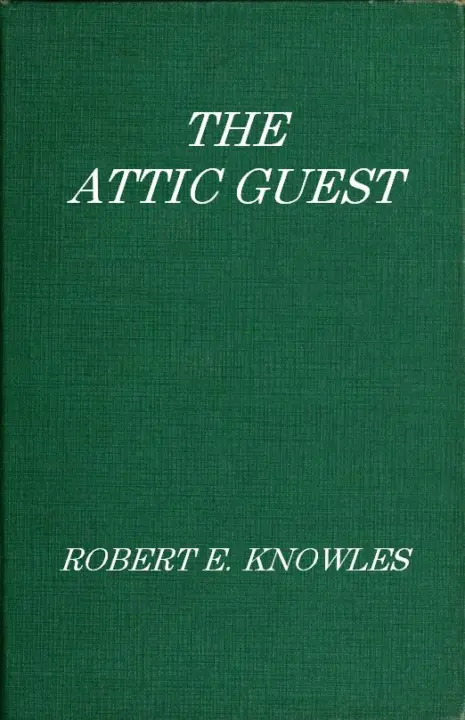
THE CLASSIC COLLECTION · 1909
"The Attic Guest" by Robert E. Knowles is a novel written in the early 20th century. The story opens in a quaint Southern town, focusing primarily on the life of Helen Randall, an eighteen-year-old girl who is navigating her first experiences with love and societal expectations, all set against the backdrop of an upcoming visit from a minister. The narrative weaves together themes of youthful innocence, burgeoning romance, and the complexities of family dynamics in a traditional Southern setting. The opening of the novel presents a lively dialogue among Helen's family members as they prepare for the arrival of their guest, expected to be a minister from the Presbytery meeting. Helen's mother and uncle engage in humorous debates about the accommodations for the incoming elder, while Helen herself is more preoccupied with attending a dance and her growing feelings for Charlie Giddens, a young man who visits her often. The chapter effectively sets the stage for Helen’s inner turmoil and excitement, hinting at the romantic entanglements and personal growth she is likely to face as the story unfolds.
Introduction adapted from the source catalogue; source summaries may be automatically generated.
Free to read · English · 85,795 words · No account needed
MAKE TIME FOR A GOOD BOOK
On by default. Untick to stop anonymous reading totals. Each page counts after 10 seconds in view. How this works.
Anonymous counting is on unless you have switched it off.
"Not wasted, dear," he answered quietly; "a man's never wasted where he does his best. But I'm glad for your sake," he went on more brightly; "I don't think I'd have gone, only I thought you'd be happier there."
"I'd be happy anywhere with you," I replied in bridal bliss. "I'd have come to you just the same if you'd been assistant minister of an Indian church at the North Pole. But I'm glad," my happy words went on, "I'm so glad we're going to be among congenial people. And I'm sure we'll have a lovely time--we'll have a lovely social life, I mean."
"I hate social life--society life, at least," Gordon suddenly broke out in a voice that quite startled me; "and if they think I'm going to be a gossipy tea-drinking parson, they'll soon find their mistake."
"But, Gordon," I remonstrated seriously, "you shouldn't look at it that way. Consider the influence you can have over them--that is, through their social life. I think the minister of rich people has the greatest chance in the world--to do them good, I mean. And I'll help you--I'll help you, dearest."
"How?" my husband enquired after a little pause.
"Well," I answered slowly; "oh, well, I like that sort of thing. I'm not much good, you know, at--at--religious work, prayer-meetings and things," I floundered on; "but I can--I can do that part, because I like it. I'll try and help you, Gordon--in that department, you know," I concluded, realizing, I fear, that it wasn't a very heroic field.
"I want my little wife to help me in all the departments," he answered, smiling. "And you will, won't you, dearest--you'll love my work for its own sake, won't you?"
Which I promised swiftly. "But I think I'll love it more in that kind of a church," I added frankly, "than I would at Rocanville. And of course I won't play cards with them, or dance--or anything like that," I affirmed piously, looking to Gordon for an approving smile; "but I suppose it won't be any harm for me to go to those things, will it, dear?"
"I hadn't thought of that," he said, looking out over the shining bay; "but I want my wife to find her life-work in mine--and to help me be a truer and better minister, no matter where our field of work may be."
All of which I promised, with the gladdest, happiest heart. And I told Gordon I wanted him to write me out a little prayer, a kind of missionary prayer, for opening meetings with, and all that sort of thing. Gordon said I was a ritualist.
Your reading position is saved on this browser. Take it to another device with a library code. Reading pages adapt to text, rather than matching a printed edition.
Robert E. (Robert Edward) Knowles
Robert E. (Robert Edward) Knowles
BEHIND THE BOOK
This eBook is for the use of anyone anywhere in the United States and most other parts of the world at no cost and with almost no restrictions whatsoever. You may copy it, give it away or re-use it under the terms of the Project Gutenberg License included with this eBook or online at www.gutenberg.org. If you are not located in the United States, you will have to check the laws of the country where you are located before using this eBook. Read the source licence.
The original source file, including credits and licence, is retained by this library. Request an original-format copy at no charge. Please include the book title and Project Gutenberg identifier #56675.
KEEP YOUR CURIOSITY GOING
Coulson Kernahan

Maurice Baring
Frances Wright
Cécile Tormay

Frederic Jesup Stimson

W. H. P. (William Henry Pope) Jarvis